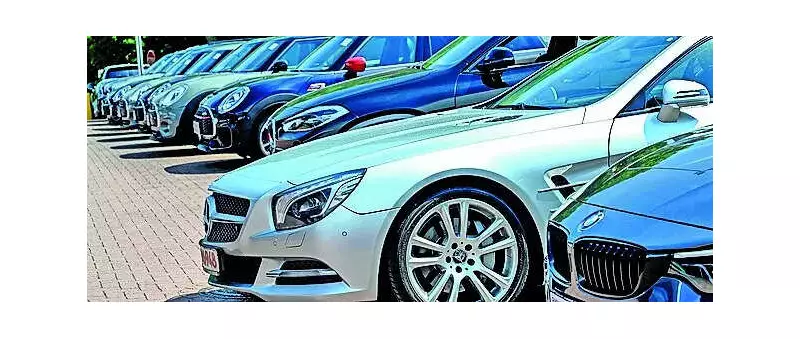
India-EU Trade Deal Reshapes Luxury Car Market, EVs on Hold
New Delhi: The landmark Free Trade Agreement (FTA) between India and the European Union is set to dramatically alter the landscape for luxury automobile imports, offering significant advantages to established players like Mercedes-Benz, BMW, and Audi. Under the new terms, import tariffs for cars with a cost, insurance, and freight (CIF) value above approximately ₹16.5 lakh—translating to an on-road price of around Rs 25 lakh—will be slashed from a prohibitive 110% to a much more manageable 30% in the first year. This duty is scheduled to gradually decrease further, reaching as low as 10% over a decade-long transition period.
Quota System and Segment-Specific Benefits
The agreement introduces an annual import quota of 2.5 lakh vehicles from the EU. Within this overall limit, officials have clarified that there will be three distinct segments, with steeper duty reductions applied to larger, more expensive cars. This structured approach aims to balance market access with domestic industry protection. Importantly, the deal includes a reciprocal element: for every European car sold in India under this quota, Indian car manufacturers will gain the option to export 2.5 vehicles to the 27-nation European bloc, potentially boosting India's own automotive exports.
Electric Vehicles Face a Five-Year Delay
While traditional luxury carmakers stand to gain immediately, the news is less favorable for electric vehicle (EV) manufacturers, most notably Tesla. Concessions specifically for electric vehicles under the FTA will only come into effect after a five-year waiting period. This delay is designed to provide a protective window for India's burgeoning domestic EV manufacturing sector, safeguarding investments in local production for at least half a decade.

Other Winners and Protective Measures
Beyond the German luxury giants, other significant beneficiaries include the Stellantis group, which owns popular brands like Jeep and Citroen, and the Skoda-Volkswagen alliance. To encourage domestic manufacturing, the agreement stipulates that there will be no out-of-quota reduction in tariffs. This means once the annual quota is exhausted, the standard high duties will apply, incentivizing companies to increase local production volumes. Furthermore, there is no duty reduction on Completely Knocked Down (CKD) kits, which will continue to face a 16% levy. The deal also extends limited duty concessions for a specified number of trucks, while buses have been entirely excluded from the tariff benefits.
Industry and Government Perspectives
Commerce and Industry Minister Piyush Goyal emphasized the careful calibration of the agreement. "India will open its door for greater import of auto components and automobiles having ensured sensitive items are kept out of ambit or given sufficient transition period," he stated. He highlighted the negotiation success in balancing EU interest in larger automobiles (worth Rs 16-22 lakh) with India's focus on smaller, more affordable vehicles, creating a "win-win" scenario for both German and Indian auto industries.
However, European luxury carmakers have tempered expectations of immediate price cuts for consumers. Mercedes-Benz India Managing Director Santosh Iyer pointed out that rupee depreciation has largely negated any potential tariff benefit. "Over 90% of our business is CKD units, so there is no foreseeable price reduction," he explained, though he acknowledged the agreement could boost market sentiment and support long-term investment plans. BMW Group India CEO Hardeep Singh Brar noted that 95% of their sales are already made-in-India vehicles.
Skoda Auto Volkswagen India MD and CEO Piyush Arora viewed the FTA positively for expanding product choices and facilitating long-term technology transfer and investment.
Indian Automakers Express Cautious Optimism
Domestic manufacturers have welcomed the deal, appreciating its calibrated approach. Shailesh Chandra, Managing Director of Tata Motors Passenger Vehicles and President of the Society of Indian Automobile Manufacturers (SIAM), stated the agreement "must give us a win-win between increased global participation on the one hand and growth of domestic auto industry with investments and employment on the other hand."

Echoing this sentiment, Mahindra Group CEO Anish Shah remarked that the deal "will not change competitive dynamics... as it lowers in-quota duties only at higher-priced segments." He suggested this would enhance scale in segments core to the Make-in-India initiative for global markets. The five-year protection for EV investments was a key point of reassurance for Indian companies like Tata and Mahindra as they ramp up their electric vehicle portfolios.