India and EU Conclude Historic Free Trade Agreement Amid Global Trade Realignment
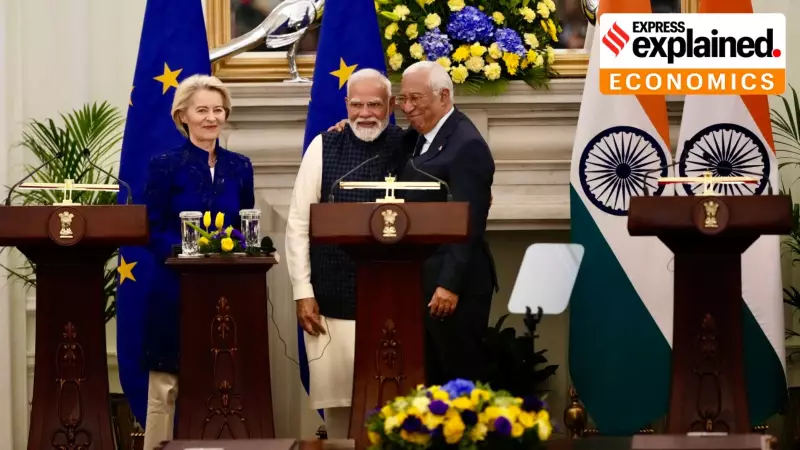
Prime Minister Narendra Modi and European Commission President Ursula von der Leyen announced the formal completion of negotiations for the long-awaited India-EU Free Trade Agreement (FTA) during the India-EU summit on Tuesday. This landmark deal concludes nearly two decades of discussions that began in 2007, with the most significant progress occurring in the past six months.
Accelerated Negotiations Under US Tariff Pressure
The rapid advancement of talks coincided with escalating protectionist measures from the United States, which have created global economic uncertainty. While the European Union continues to face potential US tariffs related to tech regulations and Greenland, India has been grappling with steep 50% tariffs imposed by Washington since August last year.
These tariff threats served as a catalyst, pushing both India and the EU to reevaluate their negotiating positions amid rapid geo-economic transformations that have challenged multilateral institutions like the World Trade Organization.

US Protectionism Reshaping Global Trade Alliances
US Secretary of Commerce Howard Lutnick's declaration at Davos that globalization has "failed" the West represents a significant shift away from liberal trade principles. This evolving US trade policy has particularly impacted India and the EU, as Washington remains the largest export market for both economies.
The situation has created several challenges:
- Indian labor-intensive sectors face ongoing 50% tariffs
- EU-US relations remain volatile despite a limited trade agreement
- Both economies face threats of additional tariff increases
- Competitors like Vietnam and Bangladesh are gaining market share
Strategic Diversification Beyond Chinese Dependence
One of the primary motivations for reviving India-EU negotiations in 2022 was addressing China's growing trade dominance. Both economies import substantial industrial requirements from China, despite Beijing's record $1.2 trillion annual trade surplus and ongoing supply chain control.
Both partners have implemented measures to reduce this dependence:
- The EU imposed tariffs up to 35% on Chinese electric vehicles in 2024
- India maintains over 100% duties on imported automobiles while opening the sector selectively through FTAs
- Both face US pressure to decrease reliance on Chinese products and manufacturing
The COVID-19 pandemic exposed vulnerabilities in China-centric supply chains, prompting both India and the EU to pursue diversification strategies for more resilient economic networks.
Brexit and Parallel Trade Agreements Paved the Way
India's recent trade agreement with the United Kingdom significantly influenced the EU negotiations. New Delhi's market access provisions for the UK, particularly in the automobile sector, established precedents that addressed previous EU concerns that had stalled talks in 2013.
For the UK, the India agreement represented the largest post-Brexit trade deal, with projections indicating substantial export growth in beverages, tobacco, and motor vehicles. This success demonstrated the mutual benefits possible through strategic trade partnerships.
A New Era in India-EU Economic Relations
The completed FTA represents more than just a trade agreement—it signifies a strategic realignment in response to global economic shifts. Both India and the EU have been actively pursuing alternative trade partnerships, with Brussels concluding a deal with Mercosur and New Delhi signing agreements with the UK, New Zealand, and Oman.
This agreement positions both economies to navigate the challenges of US protectionism, Chinese economic influence, and evolving global trade dynamics while creating new opportunities for mutual economic growth and strategic partnership.