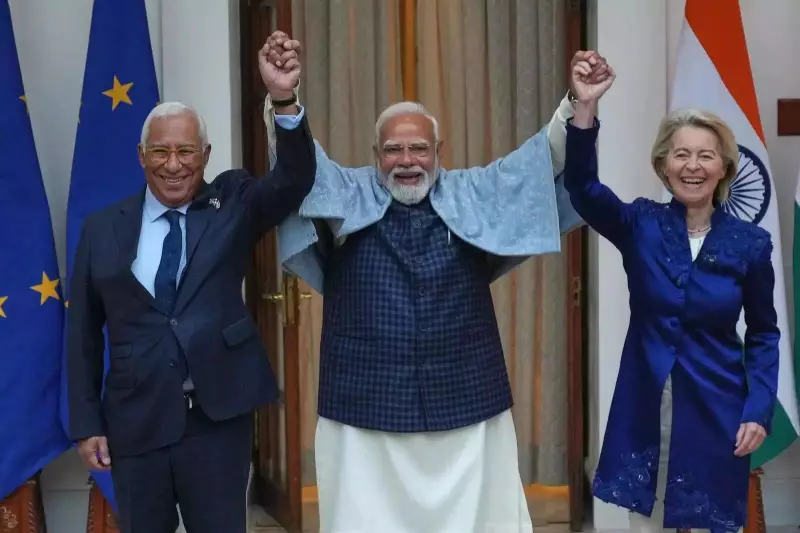
NEW DELHI: In a landmark development for global trade, India and the European Union on Tuesday announced the finalization of what is being hailed as the "mother of all FTAs." This comprehensive free trade agreement is set to usher in a new era of economic cooperation, with gradual tariff reductions planned for a staggering 96% of exports from both sides. Notably, contentious items such as cereals and dairy products have been kept outside the ambit of this deal, addressing key sensitivities.
A Strategic Response to Global Trade Turmoil
The timing of this agreement is particularly significant, coming against the backdrop of stiff tariffs imposed on India by US President Donald Trump. This move is expected to bring much-needed cheer to Indian exporters who have been actively seeking to diversify their markets and mitigate the uncertainties triggered by international trade turmoil. By forging stronger ties with the EU, India aims to create a more resilient trade framework.
Leadership Perspectives on the Historic Pact
Prime Minister Narendra Modi emphasized the transformative nature of the agreement, stating, "This is not just a trade agreement. It is a new blueprint for shared prosperity." The conclusion of talks, which began 18 years ago, marks a major diplomatic achievement. The negotiations gained renewed impetus over the past year as Trump's aggressive tariff policies pushed both sides to accelerate their efforts.

European Commission President Ursula von der Leyen echoed this sentiment, highlighting the broader implications: "We have created a free trade zone of two billion people, with both sides set to benefit... We are not only making our economies stronger - we are also delivering security for our people in an increasingly insecure world."
Key Benefits for Indian Exporters
The FTA promises substantial advantages for several key Indian sectors. Industries such as textiles, marine products, leather and footwear, gems and jewellery, toys, and sports goods will gain zero-duty access to the European market. This competitive edge is crucial, as it helps Indian products compete more favorably with exports from countries like Bangladesh, which currently enjoys a 12% duty advantage in garments and textiles, and Vietnam, which benefits from significant advantages in footwear, clothing, and electronics due to its existing trade pact with the EU.
Advantages for Indian Consumers
For Indian consumers, the agreement translates into more affordable access to a range of European goods. Items such as chocolates, olives, cars priced above Rs 25 lakh, as well as wine, vodka, and beer are expected to become cheaper due to reduced tariffs. The EU had specifically pushed for duty cuts on automobiles and wine, and the deal will see tariffs on cars plummet from over 100% to as low as 10%.
However, these benefits will be implemented in a phased manner. In the case of wine and cars, lower tariffs will apply to a specified number of units annually, with gradual reductions over time. An official involved in the negotiations noted, "Small cars have been protected, which is the bulk of the Indian market," ensuring that domestic interests are safeguarded.
Boosting 'Make in India' Initiatives
Another significant aspect of the FTA is its potential to boost India's manufacturing sector. European companies will now have the opportunity to manufacture in India and export their products while enjoying zero-duty benefits on a host of items. This provision is expected to provide a substantial boost to the 'Make in India' initiative, attracting foreign investment and enhancing India's position as a global manufacturing hub.
Overall, the India-EU FTA represents a strategic pivot in international trade dynamics, offering mutual economic gains while addressing contemporary challenges in the global marketplace.