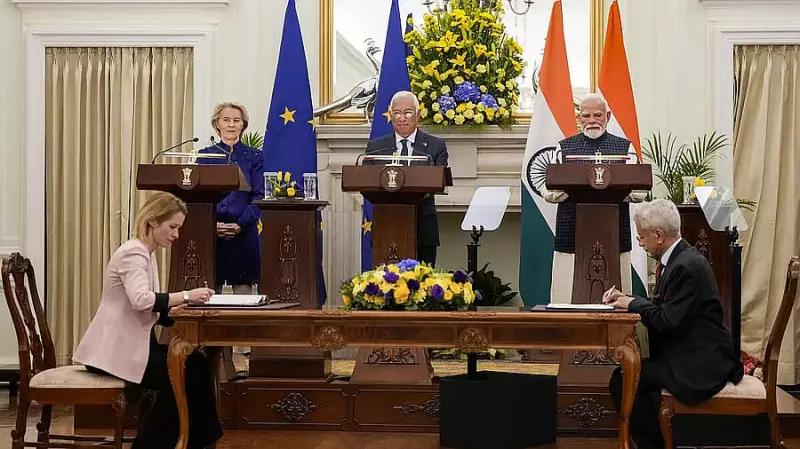
India–EU Trade Agreement: A Strategic Move for Economic Diversification and Geopolitical Balance
In the evolving landscape of global trade, the India-European Union trade deal emerges as a pivotal development with far-reaching implications. This agreement represents more than just a commercial partnership—it serves as a strategic instrument for India to diversify its economic engagements beyond traditional allies like the United States while simultaneously establishing a counterbalance to China's growing influence in international markets.
The Core Strategic Benefits of the India-EU Partnership
The primary advantage of this trade agreement lies in its potential to reduce India's economic dependency on any single nation, particularly the United States. By forging stronger ties with the European Union, India can:
- Access diverse markets across 27 European countries
- Enhance export opportunities in technology, pharmaceuticals, and services
- Create alternative supply chains that are less vulnerable to geopolitical tensions
- Attract European investment in India's manufacturing and infrastructure sectors
This diversification strategy is particularly crucial in an era where trade relationships are increasingly influenced by political considerations and security concerns.

The Critical Role of Investment Protection Agreements
While the trade deal itself represents significant progress, experts emphasize that the real benefits will only materialize when complemented by a comprehensive investment protection agreement. Such an agreement would provide European investors with the confidence and legal safeguards necessary to commit substantial capital to Indian projects.
The investment protection component is essential because:
- It addresses concerns about regulatory stability and dispute resolution mechanisms
- It creates a predictable environment for long-term European investment in India
- It facilitates technology transfer and knowledge sharing between Indian and European companies
- It supports India's domestic manufacturing initiatives like Make in India
Counterbalancing China's Economic Influence
Beyond economic diversification, the India-EU trade agreement serves as an important strategic counterweight to China's dominance in global trade. As China continues to expand its economic influence through initiatives like the Belt and Road, India's strengthened partnership with Europe creates:
- Alternative trade routes and economic corridors
- Competitive pressure on Chinese manufacturing and export models
- Enhanced cooperation on technology standards and digital governance
- Shared approaches to addressing unfair trade practices
This alignment with European partners allows India to participate more effectively in shaping global trade norms and regulations, particularly in emerging areas like digital trade and sustainable development.
Implementation Challenges and Future Prospects
The successful implementation of the India-EU trade deal requires careful navigation of several complex issues:
- Harmonizing regulatory standards across different sectors
- Addressing concerns about market access for agricultural products
- Balancing intellectual property rights with access to essential medicines
- Ensuring that benefits are distributed equitably across different regions of India
Despite these challenges, the agreement represents a significant step forward in India's foreign economic policy. When combined with a robust investment protection framework, it has the potential to transform India's economic relationships, reduce strategic vulnerabilities, and position the country as a more influential player in the global economic order.
The timing of this agreement is particularly significant, coming at a moment when global supply chains are being reconfigured and countries are reevaluating their economic dependencies. For India, the EU partnership offers not just immediate trade benefits but long-term strategic advantages in an increasingly multipolar world.