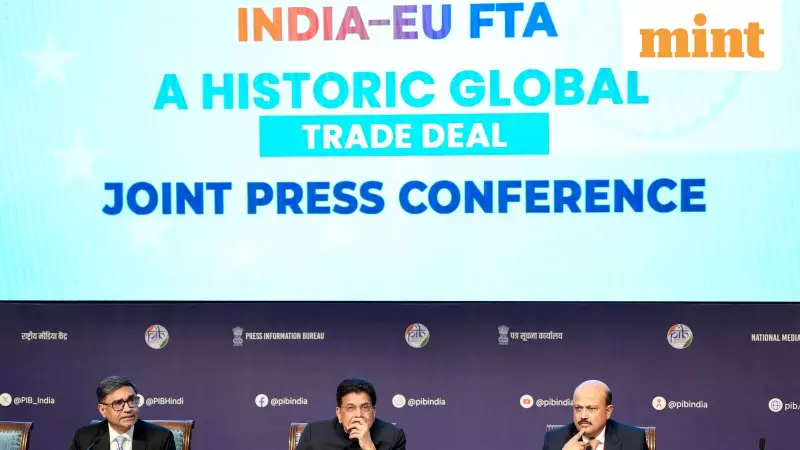
India-EU Trade Agreement: A Landmark Deal with Complex Implications
The recent conclusion of the free trade agreement between India and the European Union represents a significant milestone in international trade relations. This comprehensive pact, often described as the "mother of all deals," arrives at a crucial moment of global economic upheaval, offering substantial relief and new opportunities for both economies.
Broad Scope and Mutual Benefits
What makes this agreement particularly impressive is its extensive coverage across multiple sectors. The FTA provides for mutual easing of tariff barriers across a wide range of goods and service categories, creating unprecedented market access opportunities. Only the most sensitive products on either side will maintain high tariff protections, reflecting a balanced approach to liberalization.
India's strategic opening of traditionally shielded sectors such as automobiles and spirits demonstrates a calculated approach to international trade. Equally noteworthy is the agreement's breadth, which extends beyond traditional trade matters to include provisions for talent maximization and high-tech cooperation between the two economic powers.

Areas Requiring Closer Examination
While the overall framework appears promising, several aspects deserve more detailed scrutiny. The European Union's carbon border adjustment mechanism presents particular challenges for Indian exporters. New Delhi appears to have secured only a promise of flexibility should other EU trading partners receive relief, which may feel like a partial concession rather than a comprehensive solution.
However, it's important to recognize that carbon reduction aligns with India's own climate objectives, even as the country navigates the practical implications of these environmental regulations. The extent to which the EU will ease its non-tariff barriers remains somewhat unclear, though concessions in other areas appear substantial and potentially beneficial for Indian businesses.
Strategic Positioning in Global Trade
This agreement brightens India's export prospects significantly at a time when global trade relationships have become increasingly complex, resembling what economists describe as a "spaghetti bowl" of interconnected agreements. While India has maintained distance from emerging trade blocs in Eastern regions, cultivating win-win relationships with major market economies like the European Union represents sound strategic positioning.
The successful conclusion of this deal naturally raises questions about future trade negotiations. With an EU agreement now in place, attention may turn to the possibility of a similar arrangement with the United States, potentially creating even broader access to Western markets for Indian exporters.
As India celebrates this diplomatic and economic achievement, the real work begins with detailed implementation and monitoring. The agreement's finer points will require careful examination to ensure that theoretical benefits translate into practical advantages for Indian businesses across various sectors.