

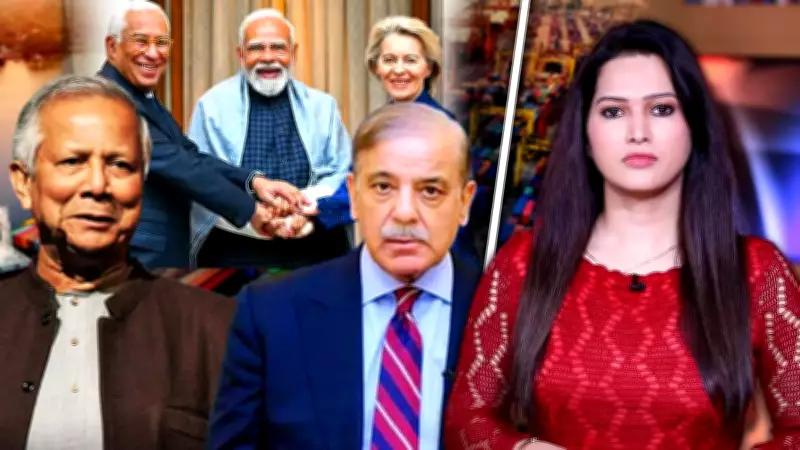
How India's Landmark EU Trade Deal Is Transforming European Market Dynamics
The recently negotiated India-European Union Free Trade Agreement represents a seismic shift in global trade patterns, particularly for South Asia. For decades, neighboring economies like Pakistan and Bangladesh have benefited from preferential access to the lucrative European market. However, this new agreement fundamentally alters that landscape, placing India at the forefront of European trade relations.
The End of Preferential Access for Pakistan and Bangladesh
Historically, both Pakistan and Bangladesh enjoyed significant advantages when exporting to European nations. Pakistan's textile industry and Bangladesh's garment sector built their export models around these preferential tariffs. The India-EU FTA changes this equation dramatically by granting approximately 93 percent of Indian exports eventual tariff-free entry into Europe.
This development effectively eliminates the price advantages that smaller South Asian economies have long relied upon. Pakistani textile manufacturers now face direct competition from Indian counterparts who can offer similar products without the burden of import duties. Meanwhile, Bangladesh confronts a particularly challenging moment as it transitions away from Least Developed Country status just as Indian manufacturers gain zero-duty market access.

India's Strategic Trade Advancement
India's journey to this trade agreement has been remarkable. Despite facing high tariff barriers in previous years, Indian exporters managed to expand trade with the European Union by an impressive 90 percent over the past decade. This growth demonstrates both the resilience of Indian industry and the strong demand for Indian products in European markets.
With the removal of these duty barriers, economic projections suggest exponential growth potential. The elimination of tariffs creates unprecedented opportunities for Indian manufacturers across multiple sectors, from textiles and garments to pharmaceuticals and automotive components.
Geopolitical Implications and Regional Realignment
While the formal ratification of the FTA may require additional time, its geopolitical message resonates clearly across international corridors. The agreement signals India's emergence as a central player in global trade architecture, moving beyond its previous peripheral position.
This development represents more than just an economic arrangement—it marks the rewriting of South Asia's traditional trade hierarchies. The region's economic landscape is undergoing fundamental transformation, with India positioned to capture significant market share that was previously distributed among multiple regional players.
The strategic implications extend beyond immediate economic concerns. The India-EU agreement establishes new patterns of trade dependency and influence that will shape diplomatic relations and economic partnerships for years to come. As implementation progresses, observers will monitor how Pakistan and Bangladesh adapt their export strategies to this new competitive reality.






