

India and Gulf Cooperation Council Formally Launch Free Trade Agreement Negotiations
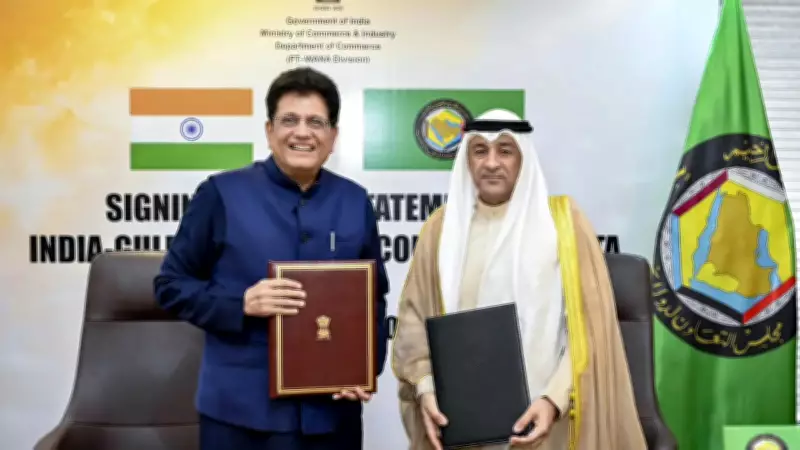
In a significant development for international trade relations, India and the Gulf Cooperation Council (GCC) have officially commenced negotiations for a comprehensive Free Trade Agreement (FTA). This formal launch follows the signing of a joint statement by Union Commerce and Industry Minister Piyush Goyal and GCC Secretary General Jasem Mohamed Albudaiwi in New Delhi, marking a pivotal moment in bilateral economic cooperation.
Milestone Agreement to Deepen Economic Ties
The joint statement, along with previously signed Terms of Reference (ToR), establishes the framework for what both sides describe as a "comprehensive and mutually beneficial agreement." Minister Goyal emphasized that this development represents "a significant milestone in the relationship between India and GCC countries," highlighting how ties rooted in shared history and cultural connections will gain fresh momentum through this broad-based trade arrangement.
Goyal further noted that "amidst global uncertainties, it is most opportune that discussions are starting on negotiating a robust trading arrangement which would harness mutual synergies and complementarities." This statement underscores the strategic timing of these negotiations as both regions seek to strengthen economic resilience in an unpredictable global landscape.

GCC as India's Largest Trading Partner Bloc
The economic significance of this partnership cannot be overstated. The GCC remains India's largest trading partner bloc, with bilateral trade reaching an impressive $178.56 billion during the 2024-25 fiscal year. This substantial figure includes:
- Indian exports worth $56.87 billion
- Imports from GCC countries totaling $121.68 billion
This trade volume accounts for approximately 15.42% of India's total global trade, demonstrating the critical importance of GCC markets to the Indian economy. Over the past five years, trade between India and GCC nations has grown at an average annual rate of 15.3%, indicating strong and consistent economic engagement.
Trade Composition and Economic Significance
The trade relationship features complementary economic structures. India's key exports to GCC countries include:
- Engineering goods
- Rice
- Textiles
- Machinery
- Gems and jewellery
Conversely, India's imports from the GCC are dominated by:
- Crude oil
- Liquefied Natural Gas (LNG)
- Petrochemicals
- Precious metals, particularly gold
GCC Secretary General Albudaiwi emphasized that the proposed FTA would serve as "an important tool to further strengthen trade and investment ties between India and GCC countries by infusing predictability and certainty for businesses." This statement highlights how formal trade agreements can create more stable business environments for companies operating across both regions.
Broader Economic Context and People-to-People Connections
The GCC economies collectively represent a substantial market of approximately 61.5 million people with a combined GDP of $2.3 trillion at current prices, ranking ninth globally. Beyond trade, the region serves as a major source of foreign investment for India, with cumulative Foreign Direct Investment (FDI) exceeding $31.14 billion as of September 2025.
Human connections further strengthen this economic partnership. Nearly 10 million Indian nationals live across GCC countries, creating what officials describe as a "living bridge" that enhances both economic and people-to-people ties. This substantial diaspora, combined with the strong presence of Indian companies throughout the region, creates natural synergies that the proposed FTA aims to formalize and expand.

The formal launch of FTA negotiations between India and the GCC represents a strategic move to institutionalize and expand an already robust economic relationship. As both sides work toward a comprehensive agreement, businesses and economies across the partnership stand to benefit from enhanced market access, reduced trade barriers, and strengthened economic cooperation in an increasingly interconnected global economy.





