

India and GCC Sign Terms of Reference to Resume Free Trade Agreement Negotiations
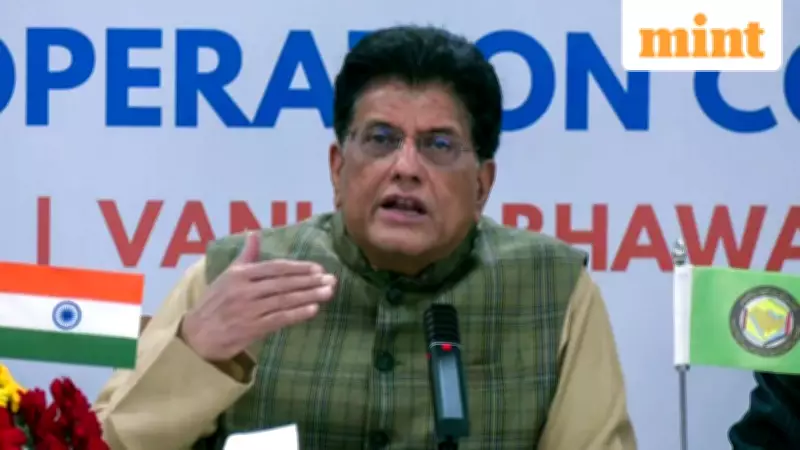
India and the Gulf Cooperation Council (GCC) have taken a significant step toward strengthening economic ties by agreeing on the terms to begin negotiations for a comprehensive free trade agreement (FTA). Union Commerce Minister Piyush Goyal announced this development during the Terms of Reference (ToR) signing ceremony held on Thursday, 5 February.
Ceremony Marks Resumption of Long-Paused Talks
The signing of the terms of reference, which outlines the scope and modalities for the proposed trade deal, was presided over by Minister Piyush Goyal. This event marks the resumption of FTA negotiations between India and the GCC after a substantial gap. Previous rounds of talks occurred in 2006 and 2008, but the third round was postponed as the GCC halted negotiations with all countries and economic groups, according to PTI reports.
Goyal Highlights Benefits of the Proposed FTA
Minister Goyal emphasized that the free trade agreement will play a crucial role in boosting bilateral trade and investments between India and the GCC nations. He also noted that the pact could help diversify India's energy sources, a strategic move given the region's significance in global energy markets. Reuters reported these remarks, underscoring the potential economic and strategic advantages.

Additionally, Goyal highlighted the human dimension of this partnership, pointing out that nearly 10 million Indians live and work in the GCC region, contributing to both economies and fostering cultural exchanges.
Composition and Economic Context of the GCC
The Gulf Cooperation Council comprises six Arab states: Bahrain, Kuwait, Oman, Qatar, Saudi Arabia, and the United Arab Emirates (UAE). These nations are key partners for India in trade and energy security.
Trade Dynamics Between India and the GCC
The trade basket between India and the GCC reveals a complementary relationship. India primarily imports crude oil and natural gas from Gulf countries such as Saudi Arabia and Qatar. In return, India exports a diverse range of goods, including pearls, precious and semi-precious stones, metals, imitation jewellery, electrical machinery, iron and steel, and chemicals to these nations.
Recent Trade Figures Show Growth
Recent data indicates a positive trend in bilateral trade. India's exports to the GCC grew by approximately 1 per cent to $57 billion in the 2024-25 fiscal year, up from $56.32 billion in 2023-24. Imports saw a more substantial increase, rising by 15.33% to $121.7 billion in 2024-25 from $105.5 billion in the previous year.
Overall, bilateral trade between India and the GCC has expanded to $178.7 billion in 2024-25, compared to $161.82 billion in 2023-24, reflecting the growing economic interdependence and the potential for further enhancement through the FTA.
Strategic Implications and Future Prospects
The resumption of FTA talks after a 16-year hiatus signals a renewed commitment to deepening economic cooperation. This agreement is expected to not only enhance trade flows but also strengthen diplomatic and cultural ties, benefiting millions of Indian expatriates and fostering mutual growth in sectors beyond energy, such as technology, manufacturing, and services.






