

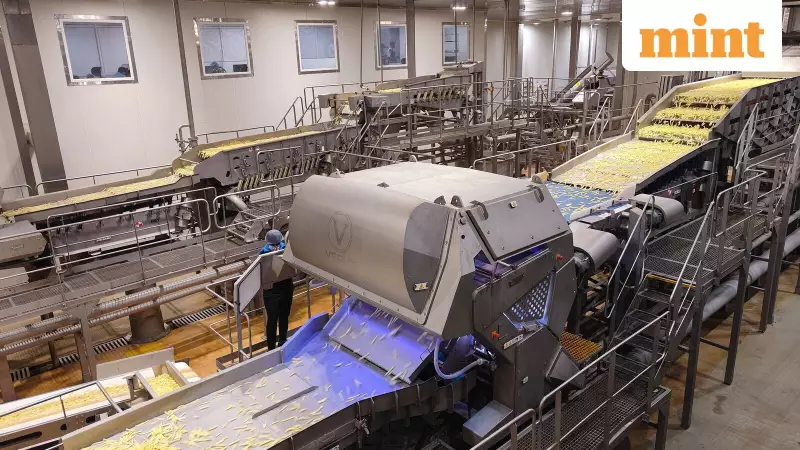
India Moves to Regulate Food Processing Machinery Amid Surging Chinese Imports
The Indian government is formulating new technical standards for food processing machinery, aiming to impose mandatory Quality Control Orders (QCOs) in response to a significant surge in imports of substandard equipment, primarily from China. This strategic move targets the enhancement of safety, hygiene, and performance benchmarks across the nation's vast food processing sector.
The Import Challenge and Safety Concerns
A recent government study revealed a critical dependency on foreign equipment, with China accounting for 41% of India's $843 million worth of food-processing equipment imports. Germany, Italy, the Netherlands, and Turkey follow as other major suppliers. This influx of low-cost machinery has raised alarms over frequent breakdowns, low operational efficiency, and significant safety risks, which conflict with the industry's ambitions to expand into high-value processed foods and global exports.
Officials from the food processing and consumer affairs ministries are actively drafting standards that will form the foundation of the upcoming QCOs. These orders will make compliance with Bureau of Indian Standards (BIS) norms compulsory for all such machinery sold in the domestic market. One senior official highlighted that the market is flooded with equipment that fails to meet Indian safety or hygiene standards, posing a direct risk to both processors and consumers.

Potential Impact on Industry and MSMEs
The proposed regulatory framework is expected to reshape supply chains and could increase certification costs. Experts warn that the implementation must be phased and testing capacity expanded to avoid disrupting thousands of Micro, Small, and Medium Enterprises (MSMEs).
Vinod Kumar, President of the India SME Forum, emphasized that small processors who depend on affordable Chinese machinery would be the most affected. He noted that certification could add 20–30% to machinery costs, potentially forcing many small units to postpone expansion or exit the market altogether. Industry executives also point to practical hurdles, such as the difficulty in obtaining visas for Chinese technicians to repair broken machinery, leading to costly operational delays.
A Growing Sector and the Path to Self-Reliance
This push for quality comes as India's food-processing industry demonstrates robust growth. According to the Indian Brand Equity Foundation (IBEF), the market was valued at ₹30.50 trillion ($367.5 billion) in 2024 and is projected to reach ₹45.84 trillion ($552.29 billion) by FY26. A study by Crisil Intelligence estimates the total demand for food-processing equipment at ₹350-400 billion, growing at 5–7% annually.
Currently, India's import dependency for this machinery stands at about 17.5%. The proposed QCOs are seen as a crucial step toward boosting domestic manufacturing quality and reducing this heavy reliance. The Crisil study recommended that regulations clearly specify permissible stainless-steel grades for food-contact surfaces and mandate metal composition marking to prevent contamination risks.
The Broader QCO Landscape
This initiative for the food processing sector is particularly notable as the government is simultaneously rolling back some QCOs in other areas like textiles, plastics, and metals to boost manufacturing. Quality Control Orders legally mandate BIS certification for the manufacture, import, or sale of a product. While the regime expanded rapidly after 2014, recent rollbacks have adjusted the number of products under mandatory quality norms to 743.
The final proposal for food processing machinery is still in the discussion stage, with inter-ministerial meetings underway. A calibrated approach, as suggested by industry stakeholders like Arun Kumar Garodia, former chairman of the EEPC, will be vital to improve quality without stalling the industry's growth trajectory.






