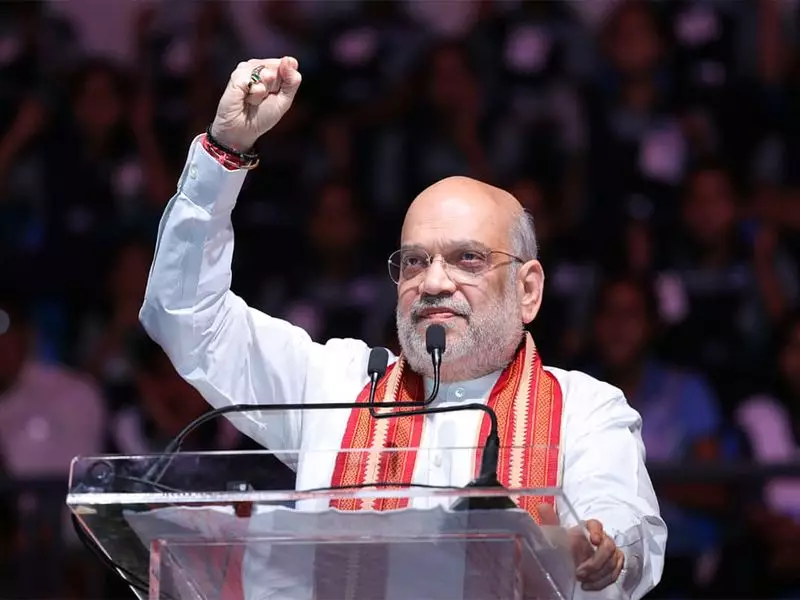
Union Home Minister and Minister of Cooperation, Amit Shah, has described the recently concluded Free Trade Agreement (FTA) between India and New Zealand as a significant milestone for the Narendra Modi-led government. He asserted that the pact will unlock new gateways to prosperity for both nations by significantly enhancing bilateral trade and investment flows.
A Strategic Leap in Bilateral Relations
Speaking at a post-budget seminar organized by the Ministry of Commerce and Industry, Shah emphasized the strategic importance of this agreement. He highlighted that the India-New Zealand FTA is a testament to the government's proactive and forward-looking foreign trade policy. The deal, he noted, is designed to create a win-win situation, fostering economic growth and generating employment opportunities in key sectors across both economies.
The Home Minister pointed out that the agreement goes beyond mere tariff reductions. It encompasses comprehensive chapters on trade in goods and services, investment promotion, cooperation in areas like digital trade and intellectual property rights, and mechanisms for resolving disputes. This holistic approach, according to Shah, ensures a stable and predictable business environment for entrepreneurs and investors from both countries.

Key Benefits and Sectoral Opportunities
The FTA is expected to provide a major boost to several Indian industries. Sectors such as information technology, pharmaceuticals, textiles, and agriculture are poised to gain greater market access in New Zealand. Conversely, Indian consumers and industries will benefit from high-quality imports from New Zealand, including in areas like dairy and forestry products, under mutually agreed terms.
Amit Shah underscored that this agreement aligns perfectly with the Modi government's broader vision of transforming India into a global manufacturing and export hub. By integrating with the economy of a developed, high-standard trading partner like New Zealand, Indian businesses can upgrade their quality standards and global competitiveness. The pact is also seen as a stepping stone for India's deeper engagement with the broader Asia-Pacific region.
A New Chapter in Economic Diplomacy
Shah credited the success of the negotiations to the strong and decisive leadership of Prime Minister Narendra Modi. He stated that the government's consistent focus on 'Atmanirbhar Bharat' (Self-Reliant India) is not about isolation but about building the domestic capacity to engage with the world from a position of strength. The New Zealand FTA, he argued, is a prime example of this philosophy in action.
The seminar served as a platform to discuss the implementation roadmap for the FTA. Officials from the commerce ministry outlined plans to create awareness among Indian exporters about the specific provisions and opportunities under the agreement. The focus will be on ensuring that small and medium enterprises (SMEs) are equipped to leverage the new trade preferences effectively.
In conclusion, Amit Shah's remarks positioned the India-New Zealand Free Trade Agreement as more than just a commercial treaty. He framed it as a new milestone in India's economic diplomacy under the Modi government, one that promises to open enduring gateways to shared prosperity, innovation, and a stronger strategic partnership between the two democracies.