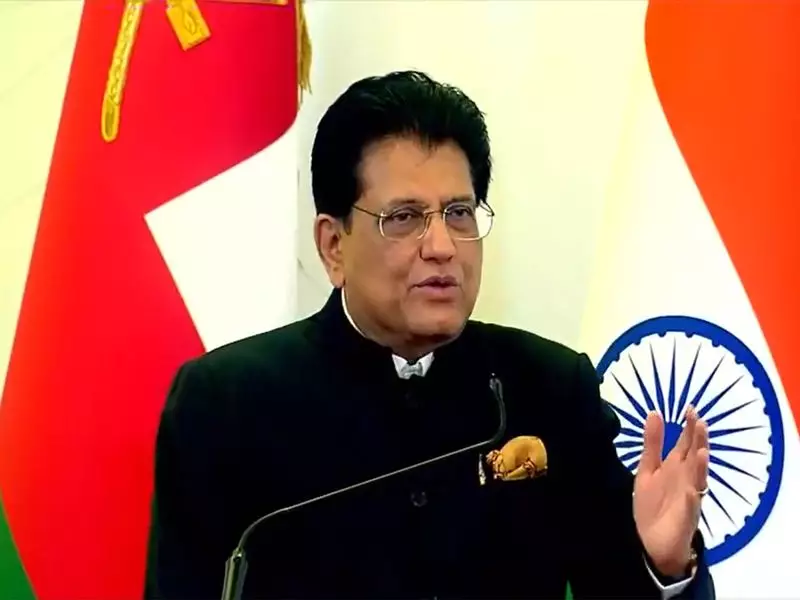
In a significant move to deepen economic integration, India and the Sultanate of Oman have officially signed a landmark trade agreement. The Comprehensive Economic Partnership Agreement (CEPA) was inked on Saturday, marking a new chapter in the millennia-old relationship between the two nations. Union Minister for Commerce and Industry, Piyush Goyal, who was present at the signing ceremony, described the moment as a "watershed" event with the potential to transform bilateral trade and investment.
A Strategic Partnership Forged in History
The agreement is the culmination of extensive negotiations and reflects the strong strategic and cultural ties that have connected India and Oman for centuries. Minister Goyal emphasized that the pact builds upon this historic foundation, aiming to create a robust framework for a modern, mutually beneficial economic partnership. The CEPA is designed to provide a substantial boost to trade in goods and services, facilitate investments, and create new opportunities for businesses and professionals in both countries.
Oman holds a unique position as a key maritime partner for India in the Gulf region and is a crucial part of New Delhi's extended neighborhood policy. The signing of this agreement is seen as a strategic step to strengthen India's economic footprint in the Middle East, a region of vital importance for energy security and trade logistics.

Key Benefits and Provisions of the India-Oman CEPA
The Comprehensive Economic Partnership Agreement encompasses a wide range of areas designed to liberalize and enhance economic cooperation. A major focus is on tariff elimination and reduction. India has offered duty concessions on a vast array of goods, which is expected to make Indian products like textiles, electronics, machinery, and automobiles more competitive in the Omani market.
Conversely, Oman will provide duty-free access to Indian exports across numerous sectors. This reciprocal market access is anticipated to provide a significant fillip to bilateral trade, which currently stands at approximately $12.388 billion. The pact also includes strong chapters on:
- Trade in Services: Opening doors for Indian professionals in sectors like IT, healthcare, accounting, and architecture to offer their services in Oman.
- Investment Promotion: Creating a more transparent and predictable environment to attract Omani investment into India and encourage Indian companies to set up operations in Oman.
- Rules of Origin: Ensuring that the benefits of the agreement are availed by products genuinely made in India or Oman.
- Technical Barriers to Trade (TBT) and Sanitary and Phytosanitary (SPS) Measures: Facilitating smoother trade while maintaining health, safety, and environmental standards.
Economic Impact and Future Prospects
The India-Oman CEPA is projected to have a far-reaching positive impact on both economies. For India, it promises to boost exports, generate employment, and attract foreign direct investment. Key Indian industries poised to benefit include engineering products, pharmaceuticals, chemicals, and agricultural produce. The agreement is also expected to make Indian manufacturing more competitive by providing access to raw materials at lower costs.
For Oman, the pact offers access to India's vast and growing consumer market, along with opportunities for collaboration in technology, innovation, and skills development. The Ministry of Commerce and Industry highlighted that the agreement will contribute to Oman's vision for economic diversification, known as 'Oman Vision 2040'.
Minister Piyush Goyal expressed confidence that the CEPA will act as a catalyst for a new era of prosperity. He stated that the agreement is a "win-win" for both nations, fostering not just economic growth but also people-to-people connections. The successful conclusion of this pact with Oman adds to India's growing network of trade agreements and underscores its commitment to engaging deeply with global partners under its 'Act East' and 'Neighbourhood First' policies.

The implementation of the India-Oman Comprehensive Economic Partnership Agreement is now the next critical step. Businesses and exporters in both countries are gearing up to leverage the new opportunities, setting the stage for a significant expansion in the economic dimension of this ancient relationship.