

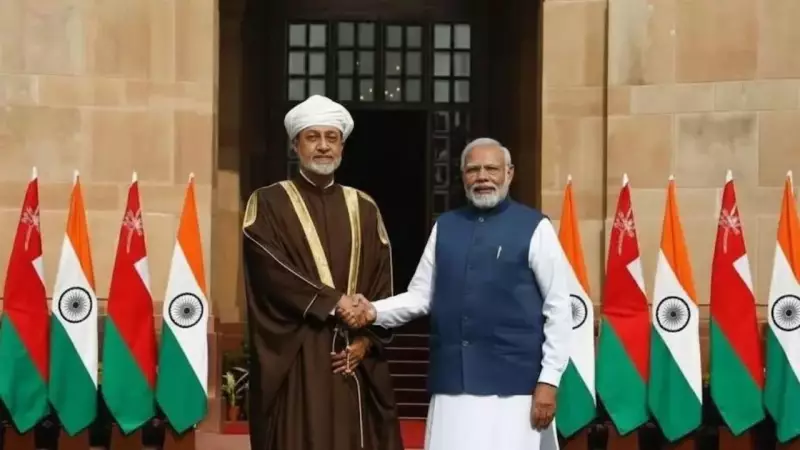
In a significant move to deepen strategic and economic ties in the Persian Gulf region, India and Oman have inked a landmark trade agreement. The Comprehensive Economic Partnership Agreement (CEPA) is poised to provide a major boost to Indian exporters navigating challenging global markets.
A Gateway to the Gulf: Key Provisions of the Pact
The agreement, signed by Commerce & Industry Minister Piyush Goyal and Omani Minister of Commerce, Industry and Investment Promotion Qais bin Mohammed Al Yousef during Prime Minister Narendra Modi's visit, offers substantial tariff concessions. Oman will allow 98% of Indian exports to enter duty-free, while India will remove tariffs on 77% of imports from the Gulf nation.
Sensitive sectors such as agriculture, dairy, gold, and oil & gas have been shielded from tariff elimination. While Omani dates, marbles, and select petrochemicals will gain zero-duty access, this will be for limited quantities only. The pact is scheduled for implementation in the first quarter of 2026.

This deal marks India's second such agreement in West Asia, following the one with the UAE. Bilateral trade currently stands skewed, with Indian exports to Oman at $4.1 billion in FY25 against imports of $6.6 billion. Officials are confident the CEPA will help bridge this gap rapidly.
Winning Sectors and Strategic Gains
The agreement is expected to have a transformative impact across multiple industries. India aims to become the largest supplier of electronic goods to Oman, mirroring its success in the UAE. Sectors like automobiles, plastics, and engineering goods, which have faced headwinds elsewhere, are likely to find a lucrative market.
Indian professionals and service providers will benefit from eased visa regulations. Furthermore, Oman has agreed to fast-track approvals for Indian pharmaceutical products and accept India's halal and organic food certifications, simplifying market access. The deal also opens the AYUSH market for India, and a social security agreement is in the works.
"Today, we are taking a historic step forward in India-Oman ties, whose positive impact will be felt for decades to come. CEPA will energise our ties in the 21st century," said PM Modi. An official projected that exports could grow by at least $2 billion in a year or two from the current base.
Negotiation Nuances and Broader Trade Strategy
The negotiations, which began two years ago, saw intense discussions. Oman pushed hard for concessions on nearly 500-600 tariff lines but secured benefits for only around 18-20 items, including 10 petrochemical products like polypropylene and polyethylene. India protected its domestic industry, especially with new projects planned in these sectors.
While agreeing to import 2,000 tonnes of Omani dates, India avoided tariff cuts on chocolates and did not extend the same concessions on gold and oil & gas as it did for the UAE. This careful calibration highlights the government's focus on protecting domestic interests.
The Oman CEPA is a crucial part of India's trade diversification strategy. It gains urgency after punitive tariffs from the US hit Indian exports, prompting accelerated negotiations with multiple partners like the EU, UK, and New Zealand. Following recent pacts with the European Free Trade Association and the UK, the Oman deal strengthens India's footprint in a critical region, offering an alternative gateway for trade with Africa and beyond.






