India Takes Firm Stand Against China-Led Investment Agreement at WTO Conference
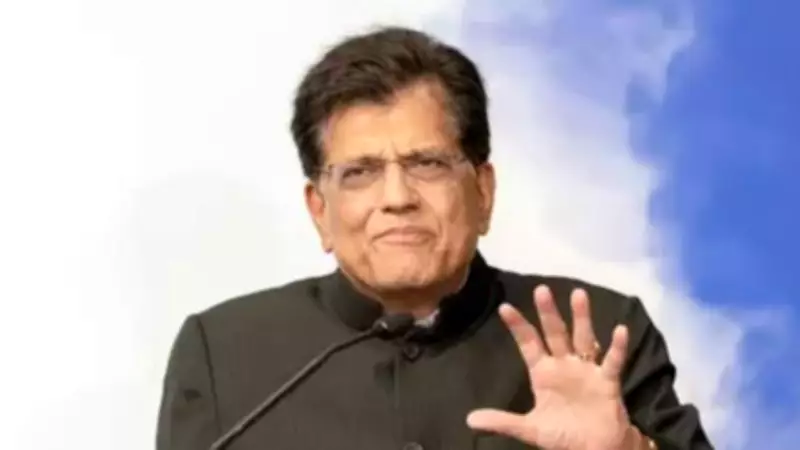
India has taken a strong and principled position at the World Trade Organisation, opposing the incorporation of the China-led Investment Facilitation for Development (IFD) Agreement into the global trade body's framework. Commerce and Industry Minister Piyush Goyal raised significant concerns about the systemic implications of such a move during the ongoing 14th ministerial conference (MC14) in Yaounde, Cameroon.
Minister Goyal's Concerns About WTO's Foundational Structure
In a detailed social media post, Minister Goyal expressed serious reservations about how the IFD agreement could potentially weaken the WTO's foundational principles. "Incorporation of the IFD agreement risks eroding the functional limits of the WTO and undermining its foundational principles," Goyal stated emphatically. He emphasized that India drew inspiration from Mahatma Gandhi's philosophy of truth prevailing over conformity in taking this stand.
The minister highlighted that India showed courage in standing alone on this contentious issue, refusing to agree to the IFD Agreement's incorporation into the WTO framework as an Annex 4 Agreement. This position represents a continuation of India's earlier opposition during the WTO's 13th ministerial conference in Abu Dhabi.

Understanding the Annex 4 Agreement Framework
The proposed IFD Agreement would fall under Annex 4 of the WTO Agreement, which contains Plurilateral Trade Agreements that are binding only on members that have accepted them. This differs significantly from multilateral agreements that apply to all WTO members regardless of their individual acceptance.
Minister Goyal explained that as part of ongoing WTO reform discussions, members are currently deliberating on establishing proper guardrails and legal safeguards for plurilateral agreements before integrating any such outcomes into the broader framework. "In view of the systemic issue at hand, India showed openness to have good faith, comprehensive discussions and constructive engagement under the WTO Reform Agenda," he added, indicating India's willingness to engage in meaningful dialogue while maintaining its principled position.
Background of the Investment Facilitation for Development Agreement
The Investment Facilitation for Development proposal was first introduced in 2017 by China along with a group of countries that rely significantly on Chinese investments, including those with sovereign wealth funds. If adopted, the agreement would be binding only on signatory members, creating a tiered system within the WTO framework.
India's opposition reflects broader concerns about maintaining the integrity of multilateral trade systems and ensuring that new agreements don't undermine the foundational principles that have governed global trade for decades. The country's stance at MC14 demonstrates its commitment to preserving the WTO's institutional strength while remaining open to constructive reform discussions.