

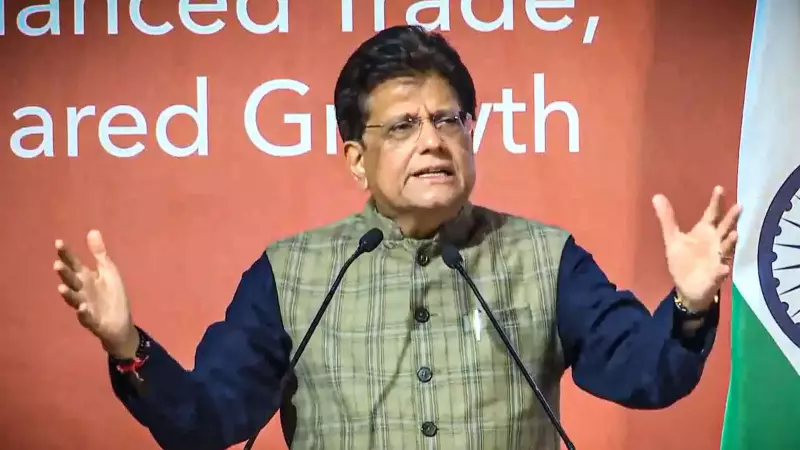
Union Minister for Commerce and Industry, Piyush Goyal, has reaffirmed the deep and strategic partnership between India and Russia, describing Moscow as a "trusted friend" of New Delhi. The minister's remarks came as he highlighted that the ambitious bilateral trade target set for 2025 has been achieved well ahead of schedule.
A Friendship That Withstands All Temperatures
Invoking the words of Prime Minister Narendra Modi, Goyal emphasized the resilience of the Indo-Russian bond. He quoted the PM saying that no matter how low the temperature falls, the friendship between the two nations remains warm. This metaphor underscores a relationship that has endured geopolitical shifts and global uncertainties.
Trade Target Surpassed, New Goals Ahead
Reflecting on the pivotal 2014 summit between PM Modi and Russian President Vladimir Putin, Goyal delivered significant economic news. The $30 billion bilateral trade goal set for 2025 has already been exceeded. This early achievement marks a major milestone in economic engagement between the two countries.

However, the minister stressed that this is not the finish line. He called for a concerted effort to diversify the trade basket and address existing trade imbalances. Currently, the trade relationship is heavily weighted, and Goyal advocated for a more balanced economic exchange to ensure mutual and sustainable growth.
Removing Barriers for a Flourishing Partnership
The key to unlocking the next level of cooperation, according to Goyal, lies in the elimination of persistent trade barriers. He urged both Indian and Russian stakeholders to work collectively to identify and dismantle these obstacles. This, he argued, would pave the way for enhanced strategic and economic ties, creating a more prosperous future for both nations.
Goyal's vision extends beyond mere numbers. He envisions a partnership that flourishes through collective efforts, addressing imbalances, and building a roadmap for long-term, mutual benefit. The early surpassing of the trade target is seen as a strong foundation upon which to build a more diversified and resilient economic relationship.






