

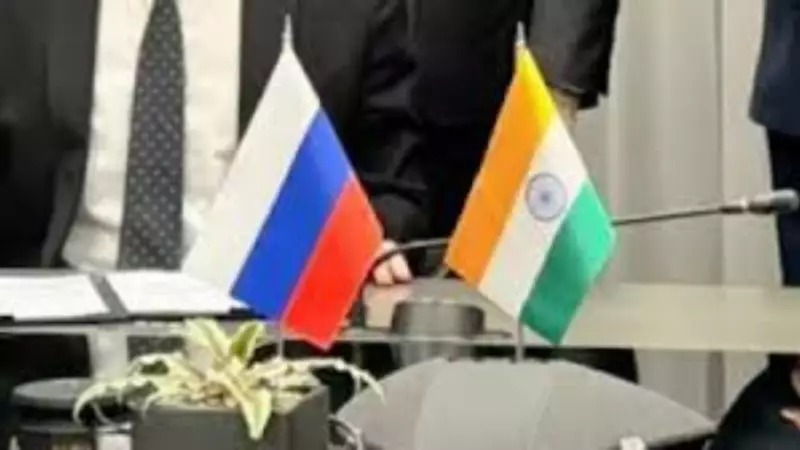
India is actively pursuing a significant expansion of its trade footprint within the Russia-led Eurasian Economic Union (EAEU), with formal negotiations for a comprehensive trade agreement now underway. Officials have identified key export sectors poised for growth, including pharmaceuticals, chemicals, engineering goods, machinery, automotive products, and agricultural and marine goods.
Navigating Barriers and Setting Priorities
As discussions progress, the initial focus is on establishing the frequency of talks, identifying indicative products for export growth, and addressing sensitive areas where imports might be restricted. An official highlighted that India is particularly keen to resolve over 65 non-tariff barriers currently hampering its marine exports to Russia, the EAEU's largest member. This move is part of a broader strategy to reduce India's substantial trade deficit with Moscow, which stands at approximately $59 billion.
For the crucial pharmaceutical sector, Indian officials have pinpointed four major hurdles: a cumbersome registration process, clinical trial requirements, restricted market access, and complex price registration protocols. These issues are expected to be central to the negotiations, especially with the upcoming visit of Russian President Vladimir Putin, which brings fresh impetus to resolving trade impediments.

Strategic Exclusions and Key Imports
In a strategic decision, India has indicated it is not inclined to include gold and other precious metals in the proposed trade pact. This caution stems from experience, following a surge in gold and silver imports after its trade agreement with the UAE. On the import side, Russia remains a vital partner for India. Oil alone constitutes nearly 21% of India's total imports, with other significant imports including hydrocarbons, fertilizers, and vegetable oils.
Despite the strong trade relationship, India's share in Russia's overall import basket remains modest at around 2.3%, indicating substantial room for growth. The ongoing Free Trade Agreement (FTA) negotiations with the five-nation EAEU bloc—comprising Armenia, Belarus, Kazakhstan, Kyrgyzstan, and Russia—are designed to address a wide array of issues beyond tariffs.
Broad Scope of Negotiations and Future Prospects
The FTA talks are set to cover customs procedures, sanitary measures, technical regulations, competition policy, intellectual property rights, and e-commerce. The EAEU market presents a significant opportunity, especially for Indian Micro, Small, and Medium Enterprises (MSMEs). Officials have also noted that India could consider a separate services agreement with Russia, as the current EAEU framework negotiations primarily focus on goods and not services.
Trade agreements like this typically aim to lower or eliminate import duties, facilitate the movement of professionals, and promote cross-border investments. India already has operational FTAs with several countries, including Singapore, Japan, South Korea, Malaysia, and Australia, which have provided similar benefits. The successful conclusion of an EAEU deal would mark a major step in diversifying India's trade partnerships and boosting exports in high-potential sectors.






