

India Takes Formal Step Toward Free Trade Agreement with Gulf Cooperation Council
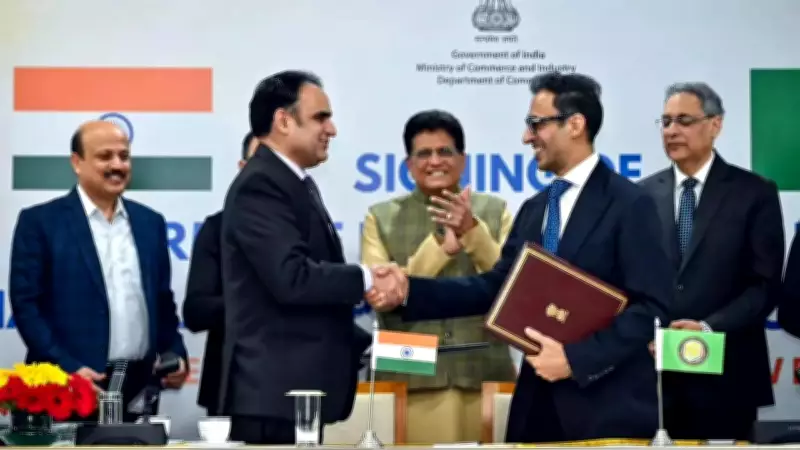
In a significant move to deepen economic ties, India signed the terms of reference (ToR) for negotiations with the Gulf Cooperation Council (GCC) on Thursday. This formal step paves the way for a comprehensive free trade agreement (FTA) with the six-member bloc, which represents India's largest trading partner group.
Defining the Framework for Future Negotiations
The signed terms of reference establish the precise scope, structure, and modalities for the upcoming FTA negotiations. This development comes as India continues to aggressively pursue trade agreements with advanced economies worldwide. Commerce and Industry Minister Piyush Goyal emphasized that this agreement will build upon India's existing strong relationships with GCC nations.
India already maintains a comprehensive economic partnership agreement with the United Arab Emirates and has finalized a similar pact with Oman, which is scheduled for implementation in the coming months. The GCC comprises Bahrain, Kuwait, Oman, Qatar, Saudi Arabia, and the United Arab Emirates.

Substantial Trade Partnership with Growing Momentum
The Gulf Cooperation Council represents a crucial trade and investment partner for India, with bilateral trade accounting for over 15% of India's total global commerce. Current trade figures reveal substantial economic engagement:
- Indian exports to GCC nations: Approximately $57 billion
- Indian imports from GCC countries: Around $122 billion
- Average annual trade growth over the past five years: About 15%
Minister Goyal highlighted that the proposed FTA would create new opportunities across multiple sectors including food processing, infrastructure development, petrochemicals, information and communication technology, and various service industries.
Key Negotiation Points and Strategic Importance
Several critical elements are expected to feature prominently in the upcoming negotiations. Visa arrangements for Indian workers and professionals along with investment facilitation are anticipated to be crucial discussion points in the coming months. The success of India's bilateral trade deal with the UAE has demonstrated the potential benefits of such agreements.
GCC chief negotiator Raja Al Marzouqi described the signing as sending a strong signal during a period of global uncertainty. "It's important for us at this time to try to be more cooperative to avoid any risk that our global economy is facing as a result of uncertainty," he stated.
On the Indian side, Additional Secretary in the Commerce Ministry Ajay Bhadoo will serve as the chief negotiator for the FTA discussions.
Part of Broader Trade Strategy
Minister Goyal positioned the GCC negotiations within India's broader trade strategy, noting that the country is building upon recent agreements with nations ranging from New Zealand to the United Kingdom, European Union, and United States. Additional negotiations with countries like Chile and Canada are also in the pipeline.
"In recent months, we have finalized FTAs that cover over 30 countries and all of them are complementary economies, with which India does not compete," Goyal explained.
The commerce minister further elaborated on potential benefits, suggesting that the elimination of duties and non-tariff barriers could significantly boost agricultural and fisheries exports, enhance energy and food security, attract greater investments, and generate employment opportunities in both regions.
Historical Context and Renewed Momentum
India and the GCC had previously initiated FTA discussions, but negotiations were suspended several years ago when the six-nation bloc halted all free trade agreement talks. The proposal gained renewed momentum following India's successful agreement with the UAE, though progress was delayed as not all GCC member countries were initially aligned.
This latest development represents a concrete step toward revitalizing what could become one of India's most significant regional trade partnerships, potentially transforming economic relations between South Asia and the Arabian Peninsula.






