

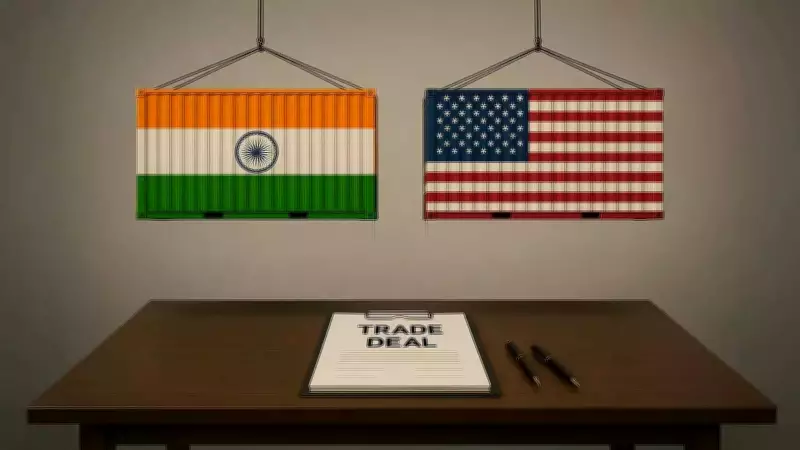
India Closely Monitoring US Supreme Court Ruling on Trump Tariffs
The Indian government announced on Saturday that it is actively studying the implications of a landmark US Supreme Court decision that struck down President Donald Trump's sweeping unilateral tariffs. The Ministry of Commerce & Industry issued a formal statement acknowledging the development and its potential impact on bilateral trade relations.
Official Government Response
In its official communication, the ministry stated, "We have noted the US Supreme Court judgement on tariffs yesterday. President Trump has also addressed a press conference in that regard. Some steps have been announced by the US administration." The statement further emphasized, "We are studying all these developments for their implications." This cautious approach reflects India's strategic assessment of how the legal and policy changes might affect its economic interests.
Supreme Court Verdict Details
The remarks follow Friday's significant 6–3 ruling by the United States Supreme Court, which determined that Trump's expansive global tariffs violated federal law. Chief Justice John Roberts, writing for the majority, concluded that the tariffs exceeded the statutory authority granted by existing legislation. This judicial setback represents a notable check on presidential trade powers.

Trump's Immediate Reaction and New Tariff Announcement
Responding to the court's decision, President Trump characterized it as a "terrible decision" and swiftly announced the implementation of a new 10% global tariff, declaring it "effective immediately." He invoked Section 122 of the Trade Act of 1974, which permits the US president to impose temporary import surcharges of up to 15% for 150 days to address balance-of-payments deficits.
Trump elaborated, "Effective immediately, all the national security tariffs under Section 232 and existing Section 301 tariffs remain in place... Today, I will sign an order to impose a 10% global tariff under Section 122 over and above our normal tariffs already being charged." This move indicates a continued aggressive stance on trade policy despite the judicial rebuke.
Impact on India-US Trade Relations
Importantly, Trump addressed the specific implications for India, asserting that the India-US trade deal would remain unaffected by these developments. He explained, "Nothing changes, they'll be paying tariffs, and we will not be paying tariffs. So, the deal with India is they pay tariffs. This is a reversal for what it used to be."
Trump praised Prime Minister Narendra Modi, calling him "a great gentleman, a great man, actually," but added, "he was much smarter than the people that he was against in terms of the United States. He was ripping us off, India. So we made a deal with India, it's a fair deal now, and we are not paying tariffs to them and they are paying tariffs. We did a little flip." This commentary highlights the ongoing negotiations and recalibrations in the bilateral trade relationship.
Broader Context and Future Implications
The situation underscores the volatile nature of international trade dynamics and the complex interplay between judicial oversight and executive action. India's careful study of these developments suggests a measured approach to navigating potential economic repercussions, while Trump's rapid policy shift demonstrates the administration's determination to maintain a protectionist trade agenda.
As global markets and trading partners react to these changes, the Indian government's analysis will likely focus on:
- The specific sectors that might be impacted by the new 10% global tariff
- Legal precedents set by the Supreme Court ruling
- Long-term implications for the India-US trade agreement
- Strategic responses to protect domestic industries
The evolving scenario presents both challenges and opportunities for India's trade policy framework, requiring vigilant monitoring and adaptive strategies in the coming weeks.






