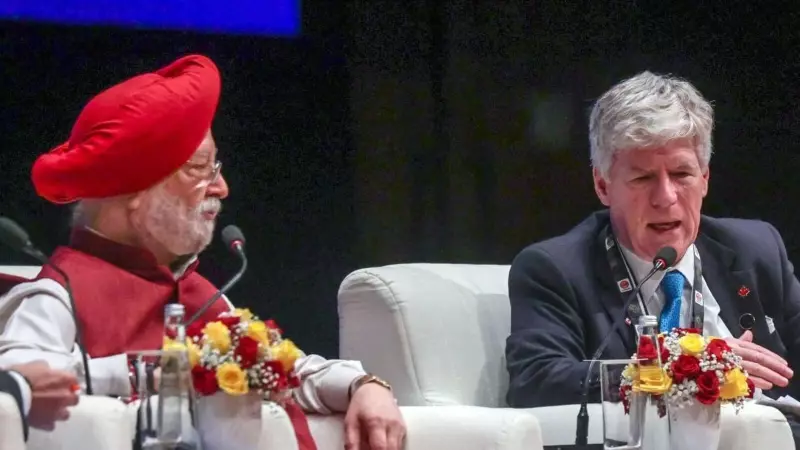
India is set to make strategic investments in Canada's critical minerals sector, with plans to dispatch a delegation soon to negotiate mutual cooperation in this vital industry. This announcement was made by Oil Minister Hardeep Singh Puri following a high-level meeting with Canadian Minister of Energy and Natural Resources Tim Hodgson during India Energy Week in Goa.
Strengthening Bilateral Energy Partnerships
During the discussions, both nations pledged to intensify two-way energy trade, creating a symbiotic relationship that benefits both economies. The agreement involves the provision of Canadian liquefied natural gas (LNG), liquefied petroleum gas (LPG), and raw petroleum to India, alongside the shipment of processed fuel products from India to Canada.
Critical Minerals: A Strategic Priority
Minister Puri emphasized India's particular interest in Canada's critical minerals resources, stating: "Canada has critical minerals... they also have four small modular reactors (SMRs) -- areas we are interested in." These minerals, including lithium, cobalt, and rare earth components, are essential for manufacturing electric vehicle batteries, solar panels, wind turbines, and advanced military hardware.

Government-run Oil India Ltd (OIL), which falls under Puri's ministry, is part of a consortium actively seeking to acquire these essential minerals. With China currently dominating the global supply chain for these resources, diversifying sources has become a geopolitical imperative for India's energy security and technological advancement.
Delegation to Explore Investment Opportunities
OIL Chairman and Managing Director Ranjit Rath confirmed that a representative team will shortly travel to Canada to explore specific opportunities for funding mining operations of these critical materials. This move represents a significant step in India's strategy to secure reliable supply chains for materials crucial to its renewable energy and electric mobility ambitions.
Joint Statement Highlights Mutual Benefits
A joint statement released after the ministerial meeting underscored the importance of energy security and supply diversification for both nations. The document noted: "Canada has stated its goal of becoming an energy superpower in clean and conventional energy, with export diversification as a priority while India, as the epicentre of the global energy landscape, offers a natural and symbiotic partnership grounded in scale, stability, and long-term opportunity."
India's Growing Energy Profile
The partnership comes at a time when India's energy consumption patterns are reshaping global markets. As the world's third-largest oil consumer, fourth-largest LNG purchaser, third-biggest LPG user, and holder of the fourth-largest refining capacity, India is projected to account for more than one-third of global energy demand growth over the next two decades.
Meanwhile, Canada is expanding its existing and developing liquefied natural gas projects, increasing crude oil production and shipments to Asian markets, and advancing liquefied petroleum gas sales to the region. This alignment of interests creates substantial opportunities for collaboration.
Infrastructure and Investment Synergies
Minister Puri also indicated that Indian companies might seek participation in planned LNG shipping hubs to help secure energy resources more effectively. The joint statement further elaborated: "The ministers recognise the importance of joint commercial and investment partnerships in each other's energy sector. Canada is acting quickly to build energy projects and supply products to international markets, with Asia as a priority region."
This developing partnership between India and Canada represents a strategic alignment of energy interests that could significantly impact global energy markets while supporting both nations' economic and environmental objectives.