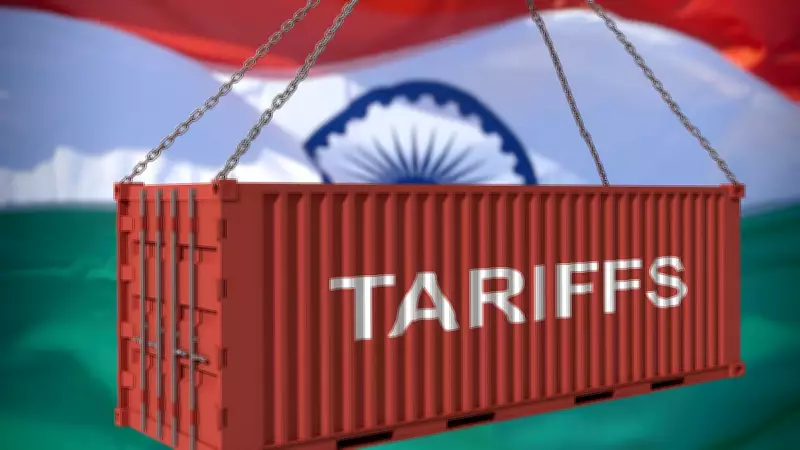
Representatives from India's commerce ministry and key industry bodies are set to testify before the US Trade Representative (USTR) on July 8 to counter a proposed tariff move. The officials will present India's stance at a public hearing, aiming to prevent the imposition of additional duties on Indian goods.
Who Is Representing India?
The Indian delegation includes officials from the commerce ministry, as well as representatives from the Agricultural and Processed Food Products Export Development Authority (APEDA), the Federation of Indian Chambers of Commerce and Industry (FICCI), the Confederation of Indian Industry (CII), and the Automotive Component Manufacturers Association (ACMA). These entities will present data and arguments to demonstrate that the proposed tariffs are unjustified and would harm bilateral trade.
Context of the Tariff Proposal
The USTR had earlier proposed tariffs on certain Indian products, citing trade imbalances and alleged unfair trade practices. India has consistently opposed these measures, arguing that they violate World Trade Organization (WTO) norms. The public hearing on July 8 is part of the USTR's process to gather stakeholder input before finalizing any tariff actions.

India's Counterarguments
India is expected to highlight its compliance with WTO rules and the benefits of continued duty-free access for Indian exports under the Generalized System of Preferences (GSP) program, which the US revoked in 2019. The Indian side will also emphasize the growth in bilateral trade, which reached $191 billion in 2025, and argue that tariffs would hurt American consumers and businesses.
Potential Impact
If the US proceeds with the tariffs, Indian exports in sectors like agriculture, automobiles, and engineering goods could face higher costs, affecting competitiveness. Industry bodies like ACMA have warned that auto component exports worth $2.5 billion annually could be at risk. The hearing outcome will be crucial for India-US trade relations, which have seen tensions over market access and intellectual property rights.
Next Steps
Following the hearing, the USTR will review submissions and could modify or withdraw the tariff proposal. The Indian government has also been engaging in diplomatic channels to resolve the issue bilaterally. The testimony on July 8 is a key step in India's strategy to protect its export interests.