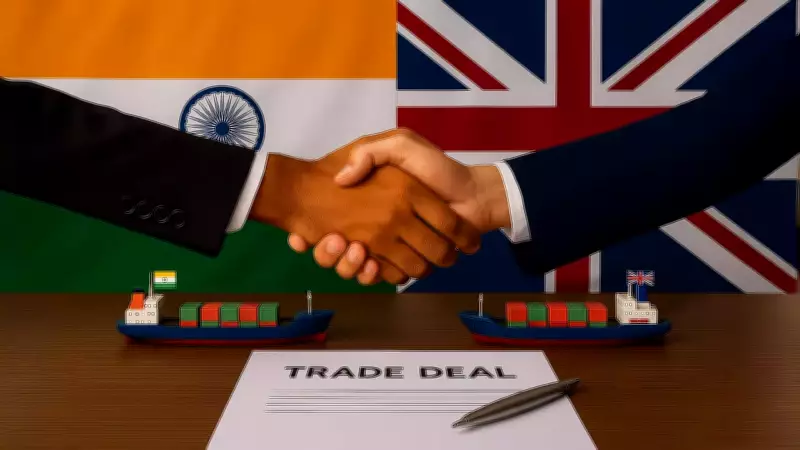
India and the United Kingdom are set to hold discussions this week on Britain's steel safeguard measures and its proposed Carbon Border Adjustment Mechanism (CBAM), with both issues emerging as significant obstacles to the implementation of the bilateral free trade agreement signed last year, according to sources cited by PTI.
Key Meeting Scheduled
The issues are expected to feature prominently during the visit of UK Minister of State for Trade Policy Chris Bryant on June 2. Bryant is scheduled to hold bilateral talks with India's Commerce and Industry Minister Piyush Goyal in New Delhi.
According to sources familiar with the matter, the steel safeguard measures and CBAM have become a "sticking point" in the rollout of the Comprehensive Economic and Trade Agreement (CETA), which was signed on July 24, 2025. Both issues will be discussed during the UK minister's visit, the sources said, indicating that the implementation of the pact could remain difficult until a resolution is reached.

Steel Safeguard Measures
Starting July 1, 2026, the UK will limit tariff-free steel imports by reducing overall quota volumes by 60 percent compared to the existing steel safeguard framework. Imports exceeding those quotas will attract a 50 percent tariff. The measure will apply to steel products that can also be manufactured within the UK. Britain already had safeguard measures involving import quotas, but the new regime further reduces those quotas.
Carbon Border Adjustment Mechanism
Another major concern for India is Britain's decision to implement a Carbon Border Adjustment Mechanism from 2027. According to economic think tank GTRI, India's exports worth USD 775 million to the UK could be impacted by the proposed carbon tax on products such as iron and steel, aluminium, fertiliser, and cement.
After the European Union, the UK will become the second major economy to implement a CBAM-type mechanism. The UK refers to it as an import carbon pricing mechanism and plans to initially cover sectors including iron, steel, aluminium, fertiliser, hydrogen, ceramics, glass, and cement. The tax could range between 14 percent and 24 percent of the import value after the full phase-out of free allowances under the Emission Trading System (ETS).
India's Concerns and Possible Retaliation
During a visit to London in 2025, Goyal had flagged India's concerns over the proposal and conveyed that New Delhi may consider retaliatory measures if Britain proceeds with the carbon tax plan. India's exports of iron and steel and related products to the UK stood at USD 893.4 million in 2025-26, forming a significant portion of the country's total merchandise exports of USD 13.4 billion to Britain.
Sources also said India could explore rebalancing the impact of the UK's steel measures against the tariff concessions offered to British Scotch whisky under the trade pact. Under the CETA, India agreed to reduce import duties on UK whisky and gin from 150 percent to 75 percent initially and further to 40 percent in the tenth year of the agreement. Popular Scotch whisky brands in India include Johnnie Walker, Chivas Regal, and The Glenlivet, with Johnnie Walker among the country's best-selling Scotch labels.