

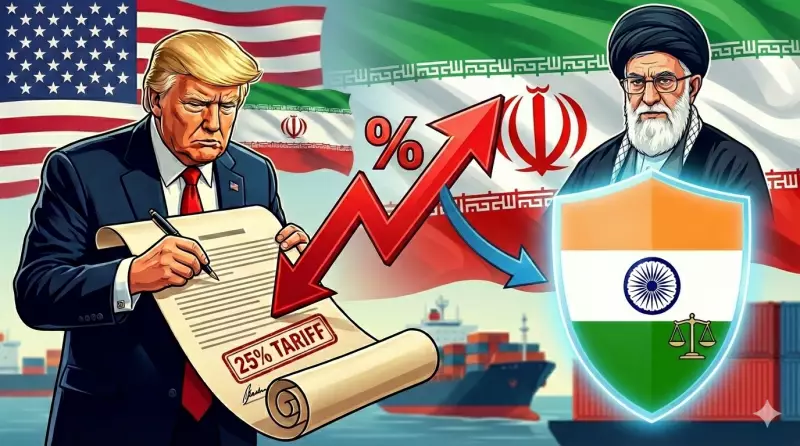
India Unlikely to Face Major Impact from US Tariffs on Iran Trade
India is unlikely to experience significant economic effects from the 25 percent tariff recently announced by former US President Donald Trump on countries conducting business with Iran. Government sources cited by news agency ANI indicate that India's limited trade exposure with Tehran provides a strong buffer against potential disruptions.
Minimal Trade Exposure Provides Protection
The newly announced US tariffs are likely to have minimal impact on India because Iran does not rank among the nation's top 50 trading partners. Government officials emphasized this point while discussing the potential consequences of the tariff announcement.
India's total trade with Iran stood at approximately $1.6 billion last year. This figure represents just 0.15 percent of India's overall trade volume. Economic analysts expect this number to decline further during the current financial year due to broader external economic factors affecting global trade patterns.

India's Small Share in Iranian Imports
Of Iran's total imports amounting to about $68 billion in 2024, the United Arab Emirates, China, Turkiye and the European Union together accounted for the majority of trade activity. India's share was only $1.2 billion, representing just 2.3 percent of Iran's total imports for that year.
Export industry representatives have downplayed concerns about potential negative effects. Ajay Sahai, director general of the Federation of Indian Export Organisations (FIEO), stated that Indian companies and banks maintain full compliance with US Office of Foreign Assets Control regulations.
Humanitarian Trade Provides Additional Protection
Sahai explained that India engages only in permitted humanitarian trade with Iran, primarily involving food items and pharmaceutical products. This information was reported by news agency PTI following discussions with export industry leaders.
"There is, therefore, no basis to anticipate any adverse impact on India," Sahai said confidently. He noted that India's trade with Iran largely falls outside the scope of sanctions due to its humanitarian nature, providing additional protection against potential tariff effects.
In the 2024-25 financial year, India's total trade with Iran reached $1.68 billion. This included $1.24 billion in exports, primarily from the agricultural and pharmaceutical sectors, according to PTI reports.
Other Challenges Facing Exporters
Industry representatives have flagged other challenges that present greater concerns than the proposed US tariffs. Sahai identified the sharp depreciation of the Iranian currency as a more significant issue for exporters.
This currency depreciation weakens consumer purchasing power within Iran and raises risks of cancelled contracts for Indian exporters. These factors create more immediate challenges than the potential tariff effects.
Rice exporters have reported that their current exposure to Iran remains limited. Many are increasingly routing shipments through the United Arab Emirates to manage risks associated with the Iranian market, according to ANI reports.
Cautious Optimism Among Exporters
Overall, exporters maintain a cautious but optimistic outlook regarding the proposed US tariff. They believe the measure will have little direct effect on India given the small trade volumes involved and the humanitarian nature of most shipments.
The combination of limited trade exposure, humanitarian trade focus, and existing risk management strategies provides Indian businesses with multiple layers of protection against potential tariff impacts. Industry experts continue monitoring the situation but express confidence in India's economic resilience.






