

India-US Trade Deal Paves Way for $100 Billion Electronics Export Opportunity
The recently finalized trade agreement between India and the United States has created significant momentum for India's electronics manufacturing sector, with industry experts projecting bilateral electronics trade could reach $100 billion as part of the broader $500-billion trade target between the two nations. This development comes as the new framework promises enhanced market access and smoother technology transfers, positioning India as a more attractive destination for global electronics production.
Tariff Reduction and Competitive Advantage
On Monday, India and the United States concluded months of negotiations with US President Donald Trump announcing an immediate reduction of tariffs on Indian goods to 18% from the previous 50%. This substantial tariff cut provides India with a competitive edge over key manufacturing rivals like Vietnam, which faces a 20% reciprocal tariff. The improved tariff structure is expected to make India a more favorable option for companies implementing "China+1" diversification strategies, allowing the country to capture a larger share of global electronics manufacturing.
Current Electronics Export Landscape
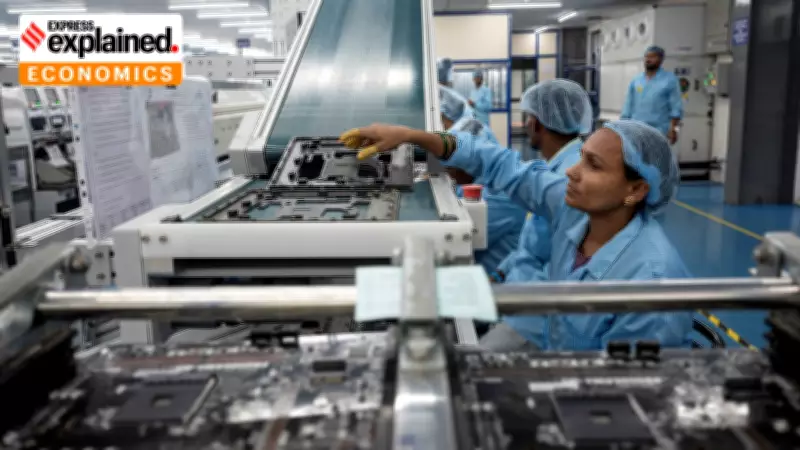
India's electronics industry has demonstrated remarkable growth in recent years, with exports reaching approximately Rs 3.27 lakh crore (around $38 billion) during the 2024-25 fiscal year. The United States already serves as India's largest electronics export market, and the new trade agreement is anticipated to accelerate this relationship further. The electronics manufacturing sector, concentrated in states including Tamil Nadu, Karnataka, Uttar Pradesh, and Maharashtra, currently employs more than two million workers directly and supports an extensive network of component suppliers, assemblers, and technology service providers.

Industry Perspectives and Future Outlook
Union IT Minister Ashwini Vaishnaw emphasized the complementary strengths of both nations, stating: "US and India have complementary strengths. Both countries can co-create technologies and co-develop solutions that will benefit the world. A trade deal between the US and India will lead to a brighter future for both countries... (it) is a win-win deal."
Industry leaders have expressed optimism about the agreement's potential impact. Ashok Chandak, president of SEMI India and IESA, noted: "The India-US trade deal can be a major catalyst for India's electronics, semiconductor, and technology ecosystem. By improving market access, enabling smoother flow of capital equipment and advanced technologies... the agreement significantly enhances India's attractiveness as a global manufacturing and innovation hub."
Pankaj Mohindroo, Chairman of the India Cellular and Electronics Association (ICEA), added: "This is a positive and competitive outcome for India. At the agreed 18% rate, India remains well placed relative to key manufacturing peers, and retains its attractiveness as a global manufacturing and export hub... We see strong potential for expanded technology collaboration and envision electronics trade reaching $100 billion within the broader $500 billion India–US trade ambition."
Apple's Role and Supply Chain Development
Apple has emerged as a significant contributor to India's electronics exports, benefiting from government subsidies under the production-linked incentive (PLI) scheme for smartphone manufacturing. The company has established a comprehensive supply chain network in India to meet its manufacturing requirements, with India currently accounting for nearly a quarter of all iPhone production globally, second only to China. This development comes despite previous tensions when US President Donald Trump had threatened to impose a 25% tariff on Apple if it sold India-made iPhones in the US market.

Broader Economic Context
The trade agreement follows India's efforts to address several US demands through budgetary measures and aggressive pursuit of trade deals with other major economies, including the United Kingdom and the European Union. The electronics sector represents a crucial component of India's economic strategy, with the government identifying it as a key economic driver for future growth and employment generation.
The combination of tariff advantages, improved market access, and enhanced technology collaboration through initiatives like iCET and TRUST is expected to strengthen trusted supply chains and deepen technological partnerships between the two nations. Industry experts believe this will accelerate semiconductor design and manufacturing, boost electronics value addition, and expand cooperation across artificial intelligence, data centers, and advanced manufacturing sectors.





