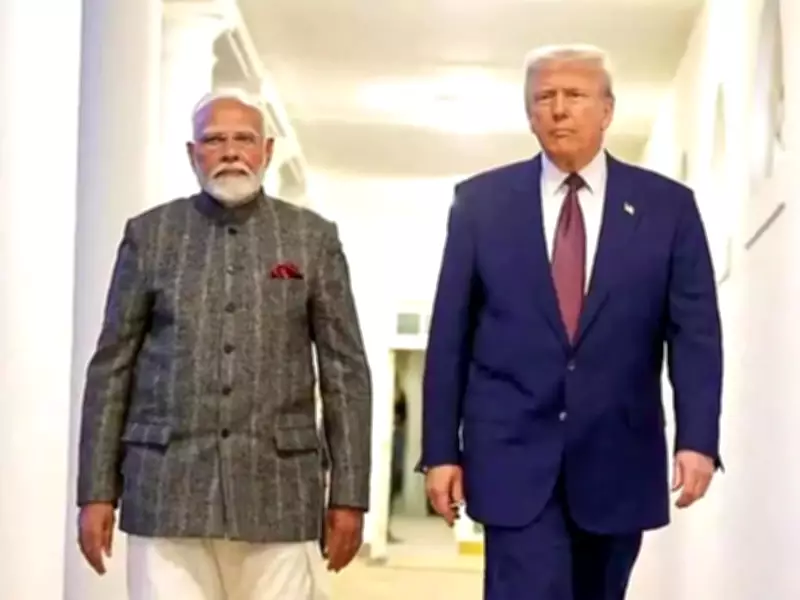
In a significant diplomatic and economic breakthrough, India and the United States have announced the finalization of a comprehensive trade deal. This landmark agreement was confirmed following a telephone conversation between US President Donald Trump and Indian Prime Minister Narendra Modi.
Key Provisions of the India-US Trade Agreement
The centerpiece of this bilateral trade pact is the establishment of an 18% reciprocal tariff rate for Indian goods exported to the United States. This represents a substantial reduction from previous tariff levels and positions India favorably within the global trade landscape.
Concurrently, India has committed to reducing tariffs on US exports to zero, effectively eliminating trade barriers for American products entering the Indian market. This reciprocal arrangement aims to foster balanced economic cooperation between the two nations.

Political Leadership and Diplomatic Exchanges
Prime Minister Narendra Modi enthusiastically welcomed the agreement, describing it as a wonderful announcement in a social media post. He emphasized the significance of collaboration between the world's largest democracies, stating that such cooperation benefits our people and unlocks immense opportunities for mutually beneficial partnership.
Modi further acknowledged President Trump's leadership, noting that India fully supports his efforts for peace and expressing anticipation for taking the bilateral relationship to unprecedented heights.
President Trump reciprocated these sentiments, praising Modi as one of my greatest friends and a Powerful and Respected Leader of his Country. He highlighted their discussion on trade matters and conflict resolution in Ukraine as key components of their dialogue.
Comparative Tariff Advantages for India
The 18% tariff rate secured by India under this agreement places the country in an advantageous position relative to other major trading partners of the United States. Comparative analysis reveals:
- India: 18% tariff rate
- Pakistan: 19% tariff rate
- Indonesia: 19% tariff rate
- Vietnam: 20% tariff rate
- Bangladesh: 20% tariff rate
- China: Effective tariff rate ranging between 30-35%
This favorable positioning represents a significant improvement from earlier tariff impositions. India initially faced a 26% tariff rate in April 2025, which was subsequently increased to 25% in August 2025, and later escalated to 50% with additional penal tariffs specifically targeting India's crude oil imports from Russia.
Resolution of Russian Oil Controversy
A crucial aspect of the trade deal involves the resolution of tensions surrounding India's energy imports from Russia. The Trump administration had previously imposed a 25% additional penal tariff, accusing India of indirectly financing Russia's military actions in Ukraine.
Reports indicate that the new 18% reciprocal tariff effectively removes these penal tariffs related to Russian crude oil procurement. While official confirmation is pending, this development represents a significant de-escalation of trade tensions between the two nations.
Broader Economic Commitments and Implications
Beyond tariff adjustments, the agreement encompasses several substantial economic commitments from India:
- Cessation of Russian crude oil purchases
- Increased procurement of US energy products, with potential additional imports from Venezuela
- Commitment to purchase over $500 billion worth of American products across multiple sectors including energy, technology, agriculture, and coal
- Elimination of non-tariff barriers against US exports
President Trump framed these commitments as contributing to conflict resolution in Ukraine, stating that reduced Russian oil purchases would help END THE WAR in Ukraine by diminishing financial support for military operations.
Strategic Significance and Future Prospects
This trade agreement represents more than mere economic adjustment—it signifies a strategic recalibration of India-US relations. By addressing contentious issues like energy imports while establishing favorable trade terms, both nations have demonstrated their capacity for pragmatic diplomacy.

The deal's comprehensive nature, encompassing tariff reductions, energy policy adjustments, and substantial purchase commitments, suggests a deepening economic interdependence between the world's largest democracy and its most powerful economy.
As details continue to emerge, this agreement is poised to reshape bilateral trade dynamics while potentially influencing broader geopolitical alignments in an increasingly multipolar world order.