

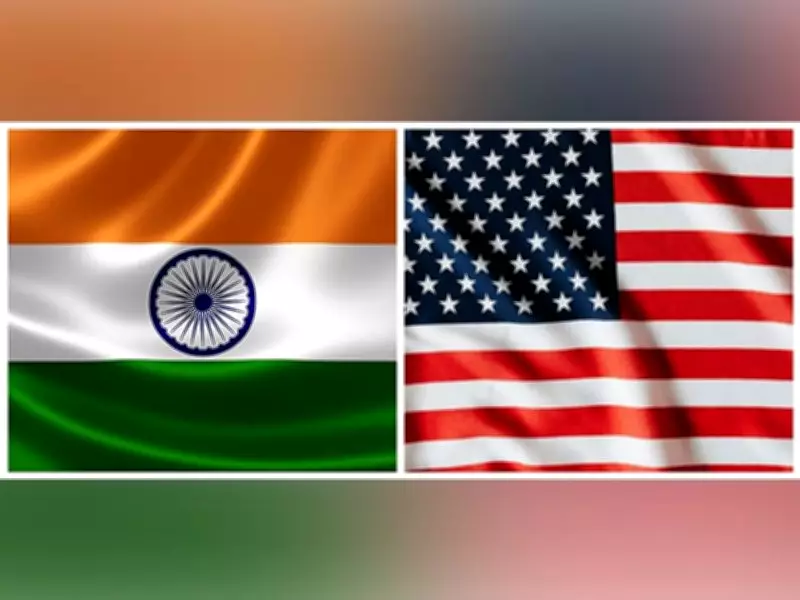
India to Sign US Trade Deal After New Global Tariff Framework is Finalized
India will proceed with signing its proposed trade agreement with the United States only after a new global tariff framework being developed by Washington becomes clear, the government announced on Monday. This indicates that the timeline for the much-anticipated deal is directly linked to the evolving changes in the US tariff regime.
Revised US Tariff Architecture Forms Basis for Agreement
Addressing a briefing in New Delhi, Rajesh Agarwal, Commerce Secretary in the Ministry of Commerce and Industry, stated that the United States is currently working on a revised tariff architecture globally. This new structure will form the foundational basis for the eventual bilateral agreement between the two nations.
"The US deal was originally scheduled to be signed in March. However, tariffs under the International Emergency Economic Powers Act do not exist per se due to recent rulings by the Supreme Court of the United States," Agarwal explained, indicating that the previously set March deadline for signing the deal will no longer apply.

He further elaborated that a baseline tariff structure has now emerged on the international stage. "Under Article 122, tariffs of approximately 10 per cent exist globally now. The US is actively trying to recreate a comprehensive tariff architecture worldwide. Once that process is successfully completed, it will be more advantageous and appropriate to sign the deal," he added.
Agreement Timing Linked to Tariff Stability
According to Secretary Agarwal, the trade agreement will be formally concluded when the new tariff framework stabilizes and becomes operational. "Whenever we are fully prepared, the US side will also be ready with the newly established tariff architecture. That precise moment will represent the most opportune time to officially sign the deal," he emphasized, highlighting the synchronized approach required for the pact's finalization.
Global Trade Disruptions and Logistical Challenges
The Commerce Secretary's comments arrive amid wider disruptions to global trade patterns caused by the ongoing conflict involving Iran, Israel, and the United States in the West Asia region. Agarwal openly acknowledged that this geopolitical crisis has created significant logistical challenges affecting both sea and air cargo movement.
"There are substantial logistical challenges currently being faced by trade operators. Air cargo is also encountering certain operational difficulties because of widespread disruptions in international flight schedules," he noted.
He added that the turbulent situation could potentially impact both Indian exports and imports, though he reassured that trade flows were unlikely to collapse entirely. "It may have some measurable impact on trade volumes, but commerce will not be completely wiped out. Imports will also suffer because numerous countries remain dependent on India for multiple product categories," Agarwal stated.
Government Measures to Mitigate Supply Chain Disruptions
To proactively address these emerging bottlenecks, the Indian government has established an inter-ministerial coordination mechanism. An inter-ministerial group operating under the Directorate General of Foreign Trade is now meeting daily to assess ongoing developments and work out practical solutions to mitigate supply chain disruptions.
In related developments, Agarwal confirmed that India continues to steadily increase its purchases of crude oil from Russia, a trend that has notably accelerated since the outbreak of geopolitical tensions affecting global energy markets.
Progress on India-Canada Free Trade Agreement
Separately, the Commerce Secretary provided updates on negotiations for a free trade agreement with Canada. "Both sides are already engaged in substantive discussions virtually and are likely to hold further virtual engagements throughout this month," Agarwal revealed.
He added that the first round of physical, in-person negotiations for the India-Canada FTA is expected to take place in either April or May, marking a significant step forward in bilateral trade relations.






