

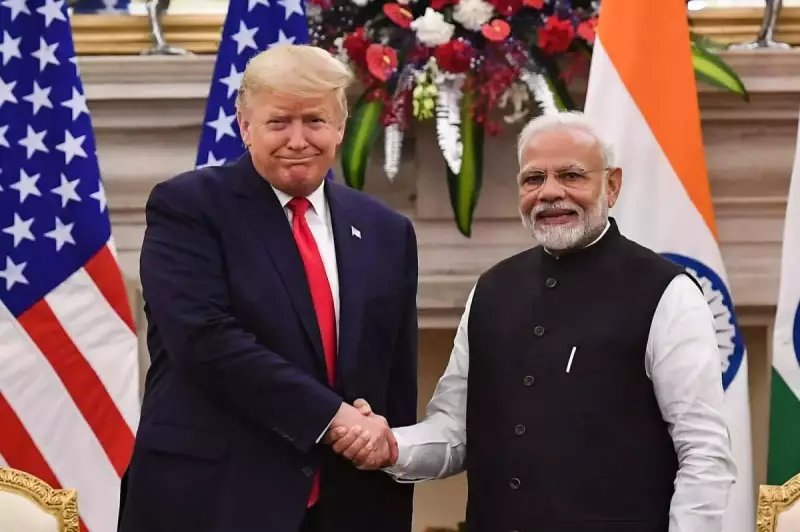
In a candid revelation, US Commerce Secretary Howard Lutnick has detailed the reasons behind the collapse of a much-anticipated trade agreement between the United States and India. He attributes the failure to a combination of poor timing, political hesitation from New Delhi, and the uniquely competitive negotiation style of former President Donald Trump.
The "Staircase" Model and the Missed Opportunity
Lutnick, speaking on the All-In podcast hosted by venture capitalist Chamath Palihapitiya, explained that India "did not grab the opportunity the United States presented." He described the Trump administration's approach as a "staircase" model for trade talks. In this strategy, the first country to seal a deal gets the most favorable terms, setting a baseline. Every subsequent agreement must then offer better terms to the US, moving "up and to the right," making later deals more expensive for the other nation.
"The first stair gets the best," Lutnick stated. "After that, everyone says, 'I want the UK deal.' And the answer is no — they were first." The United Kingdom, he noted, acted swiftly under a tight two-Friday deadline, with Prime Minister Keir Starmer personally calling Trump to finalize the agreement.

India's Three-Friday "Shot Clock" and Political Discomfort
In contrast, India was given a three-Friday "shot clock" to conclude negotiations. During this period, Trump publicly hinted that India could be next, a move intended to spur action. However, New Delhi hesitated. A key sticking point, according to Lutnick, was the need for Prime Minister Narendra Modi to personally call President Trump to close the deal.
"I said, you've got to have Modi call the president," Lutnick recounted. "They were uncomfortable doing so. Modi didn't call." This reluctance was linked to internal political considerations and the optics of such a direct appeal. As the deadline lapsed, the US administration moved on, securing deals with other Asian nations like Indonesia, the Philippines, and Vietnam.
The Cost of Delay and a Future on Less Favorable Terms
By the time Indian officials re-engaged, the staircase had already ascended. Lutnick said India sought terms comparable to a midpoint between the UK and Vietnam deals, which would have meant tariffs between 15% and 20%. This was no longer possible. "They said, 'But you agreed,'" Lutnick recalled. "And I said, then — not now."
Lutnick used a vivid metaphor from his trading days, comparing India's position to being stuck on the wrong side of a seesaw, where every move worsens the situation. He clarified that the breakdown was not due to hostility but misaligned timing and domestic constraints in India. However, he emphasized the Trump administration's impatience: "There are a lot of countries... But the train doesn't wait."
The episode highlights a shift in US trade policy under Trump, prioritizing speed and leverage. While Lutnick expressed confidence that the two nations would eventually "work it out," he made it clear any future agreement would be on less favorable terms for India. For New Delhi, this failed deal stands as a stark lesson on the cost of hesitation with an administration that views trade as a competitive race with clear winners and losers.






