

India-US Trade Agreement Reaches Final Technical Stages, Tariffs Set for Major Reduction
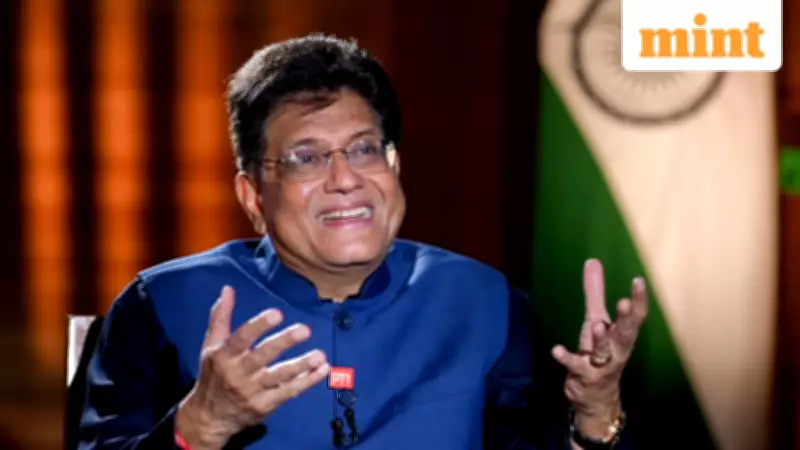
Union Commerce and Industry Minister Piyush Goyal has announced that the India-US trade pact is currently in the final stages of technical detailing between negotiating teams from both nations. This development marks a significant milestone in bilateral trade relations, with the agreement expected to bring substantial benefits to Indian exporters and the broader economy.
Substantial Tariff Reduction to Boost Indian Exports
Once the agreement takes effect, US tariffs on Indian goods will see a dramatic reduction from the current steep rate of 50% down to 18%. This substantial decrease is anticipated to revive the competitiveness of Indian exports in the American market, providing a much-needed boost to various sectors that have been struggling under the weight of punitive duties.
Goyal emphasized that the trade pact protects all sensitive sectors for New Delhi, particularly demonstrating the government's commitment to the welfare of farmers, fishermen, and the dairy sector. The minister stated that what commerce ministry officials couldn't achieve over several months was accomplished by Prime Minister Narendra Modi in a single day through well-negotiated terms.

Comprehensive Sectoral Benefits and Strategic Gains
The agreement opens up significant opportunities for Indian exporters across multiple industries:
- Textiles and apparel
- Plastics and rubber goods
- Leather and footwear
- Gems and jewellery
- Organic chemicals
- Machinery and aircraft components
Rajesh Rokde, Chairman of the All India Gem & Jewellery Domestic Council, projected that the tariff reduction could increase India's jewellery export business by 25% to 50%, giving the sector a powerful boost in the US market.
Goyal also highlighted that India's growing demand for information and communication technology products, data centre equipment, high-quality technology, innovation, and raw materials would be supported by the deal. At a time when India is scaling up manufacturing, digital infrastructure, and data centre capacity, the agreement enables access to best-in-class technologies and critical inputs at more competitive costs.
Agricultural Safeguards and Strategic Alignment
In agriculture, certain goods have been allowed under tariff rate quotas (TRQs), but these products are not sensitive from India's perspective and have negligible domestic production, thereby limiting any adverse impact on Indian farmers. This careful balancing act demonstrates the government's commitment to protecting domestic agricultural interests while expanding trade opportunities.
The government views this agreement as a significant strategic gain, as it aligns India's trade policy with its broader push on electronics manufacturing, artificial intelligence, cloud infrastructure, and advanced industrial capabilities. This alignment strengthens the foundations of the country's growth trajectory and the overall Indian economy.
Historical Context and Recent Developments
India and the US agreed to conclude a comprehensive bilateral trade agreement on 13 February last year, during Prime Minister Narendra Modi's meeting with President Donald Trump. Talks toward expanding annual bilateral trade to $500 billion by 2030 had been plagued by tariff threats and slow progress until recent breakthroughs.
Until President Donald Trump's return to the White House on 20 January 2025, US tariffs were largely a non-issue for Indian exporters. That low-tariff environment ended in April 2025 when Washington imposed sweeping reciprocal duties, sending the US trade-weighted average tariff into double digits for the first time in decades.

The timing of Trump's announcement is notable as it follows India's Union Budget for FY27, parts of which sought to address challenges arising from higher US tariffs. This development also comes days after New Delhi announced the conclusion of negotiations for what it described as the "mother of all trade deals" with the European Union on 27 January, underscoring India's strategic push to lock in major trade pacts with key global partners.
Economic Impact and Export Performance
According to official data, exports to the US, India's largest overseas market, rose month-on-month in December, indicating that demand held up despite higher tariffs, even as exporters faced pricing and margin pressures. Exports in December rose to $7.01 billion from $6.98 billion in November, despite stiff tariffs.
Shipments in the first nine months (April–December) of the current fiscal year also rose about 10% to $65.88 billion. Bilateral goods trade between India and the US stood at $105.31 billion during April–December, with India recording a trade surplus of $26.45 billion.
Madhavi Arora, Chief Economist at Emkay Global Financial Services Ltd., noted that while the trade deal removes a major source of uncertainty for India's exports, it should not lead to complacency. "India will need to continue negotiating pragmatically with other markets, build scale in select export verticals, and improve export efficiency to sustain growth," she added.
Market Reactions and Future Outlook
In a strategy note, Bernstein, a global equity research firm, suggested that while the removal of the 25% punitive tariffs could provide positive momentum in the near term, the impact may not last beyond a month. The firm indicated that a broader India-US trade deal is likely to remain volatile and subject to frequent policy changes.
According to Elara Securities, among export sectors, gems and jewellery (which accounted for 11.5% of India's exports to the US in CY24), textiles and apparel (with an average tariff of 3.2%), and machinery and equipment (which made up 8.1% of exports) are expected to be the immediate beneficiaries of the trade deal.
Arvind Shrivastava, Secretary of the Department of Revenue, Ministry of Finance, stated that the India-US trade deal will further expand and deepen trade between two of the world's largest economies. "It will create more opportunities for our labour-intensive and manufacturing sectors in the US market and give impetus to mutually beneficial collaboration in high and advanced technology sectors," he emphasized.
As the technical teams work to finalize the agreement's details, clarity on unanswered issues is expected only after the release of the joint statement. Key questions remain regarding India's commitments on Russian oil purchases, potential replacements with US and Venezuelan crude, specific duty-free access for US products, and the exact nature of the revised 18% tariff structure.





