

Historic India-US Trade Deal Finalized After Months of Negotiations
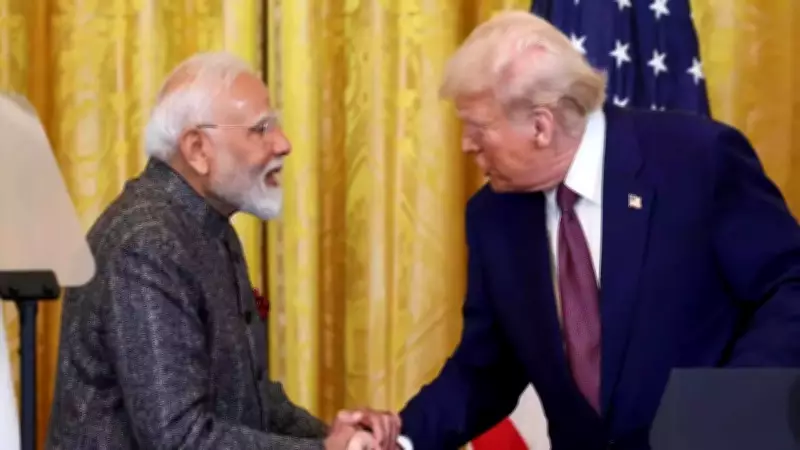
In a landmark development for global trade, United States President Donald Trump and Indian Prime Minister Narendra Modi have announced the finalization of a comprehensive trade agreement between the two nations. This significant breakthrough comes after months of intense negotiations that began in early 2025 following Prime Minister Modi's visit to the United States shortly after President Trump's inauguration.
Immediate Agreement Following High-Level Conversation
The announcement came on Monday after President Trump held a telephonic conversation with Prime Minister Modi, whom he described as a "great friend" and a "powerful leader." The US President revealed that the agreement was finalized immediately following their discussion, marking the culmination of prolonged diplomatic efforts between the two countries.
This development was preceded by a "stay tuned" teaser from newly appointed US Ambassador to India Sergio Gor, who shared on social media platform X that President Trump had just spoken with Prime Minister Modi, hinting at imminent major news.

Major Tariff Reductions and Trade Barrier Removal
In a significant de-escalation of trade tensions, President Trump confirmed that the United States will immediately lower its reciprocal tariff on Indian goods from 25% to 18%. This reduction follows a challenging period where the US administration had imposed a steep 50% punitive tariff on Indian exports to America, representing one of the most substantial tariffs ever levied by the United States.
According to Trump's announcement, half of the previous 25% tariff was specifically linked to India's purchase of Russian crude oil. In return for this tariff reduction, India has committed to:
- Moving toward zero tariffs on US products
- Eliminating non-tariff barriers on American goods
- Adopting a "Buy American" policy at significantly higher levels
Massive Procurement Commitment from India
Under the terms of the new agreement, India has committed to purchasing over $500 billion worth of US products across multiple critical sectors. According to President Trump's post on Truth Social, this massive procurement will span:
- Energy products and technology
- Agricultural commodities
- Coal and other strategic resources
- Various other critical sectors
US Treasury Secretary Scott Bessent had previously hinted at this breakthrough, framing the rollback of punitive tariffs as a victory for American pressure tactics in trade negotiations.
Strategic Shift in Energy Procurement
One of the most significant aspects of the agreement involves India's energy security strategy. As part of the deal, Prime Minister Modi has reportedly agreed to stop purchasing Russian oil and instead significantly increase imports from the United States and potentially Venezuela.
President Trump emphasized that this strategic shift aims to end the war in Ukraine by cutting off indirect financing through oil purchases. This represents a major change for India, which as the world's third-largest oil importer had recently emerged as the largest buyer of discounted Russian seaborne crude following Western sanctions on Moscow.
The recent US sanctions on Russian oil majors had already forced Indian refiners to cut back on crude oil procurement from Russia, making this formal agreement a logical next step in India's energy diversification strategy.
Protection of Sensitive Sectors Maintained
Despite these substantial commitments, India has successfully maintained its firm stance on protecting sensitive domestic industries. The country has ensured that its agriculture and dairy sectors remain protected under the new trade framework, preserving strategic autonomy in these critical areas.
Several issues related to India's protection of its agriculture and dairy sector, along with its imports of crude oil from Russia, had become significant pain points during the final stages of trade negotiations. India's ability to maintain protections in these areas while securing broader trade benefits represents a diplomatic achievement.

Rapid Succession of Major Trade Agreements
The finalized agreement with the United States comes just days after India concluded a massive free trade agreement with the European Union, which leaders on both sides described as the "mother of all deals." While the EU remains India's largest trading partner as an economic bloc, the United States continues to be India's single largest trading partner as a country.
This rapid succession of two major trade deals highlights India's growing economic leverage and its successful efforts to provide relief for exporters who have been hit hard by global tariff fluctuations and trade uncertainties.
Background and Ministerial Insights
A few days before the announcement, Commerce Minister Piyush Goyal had indicated that the trade deal might be sealed soon. Speaking about the negotiations, Goyal emphasized that "every free trade agreement stands on its own legs" and noted the positive working relationship with his US counterpart.
The minister had expressed optimism about closing the deal quickly, describing his relationship with the US trade representative as both professionally productive and personally friendly. This diplomatic groundwork appears to have paved the way for the successful conclusion of negotiations.
The India-US trade deal represents a significant milestone in bilateral relations, potentially reshaping trade patterns between the world's largest democracy and its most powerful economy. The agreement balances substantial economic commitments with strategic autonomy, setting a new template for international trade negotiations in an increasingly complex global landscape.





