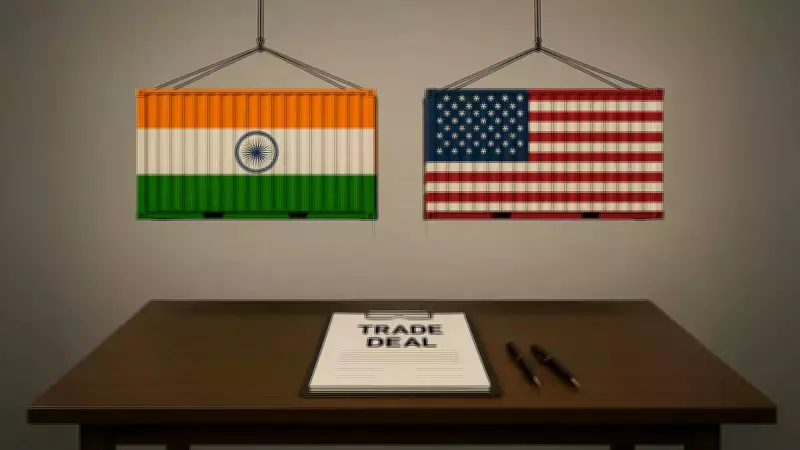
India-US Trade Deal: GTRI Sounds Caution Amid Trump's Tariff Announcement
Even as US President Donald Trump has announced an immediate reduction in tariff rates on India to 18%, the Global Trade Research Initiative (GTRI) has struck a cautious note on what the trade deal could mean for India. In a detailed analysis following Trump and Prime Minister Narendra Modi's social media posts, Ajay Srivastava, founder of GTRI, emphasized that caution, not celebration, is warranted at this stage.
Unverified Claims in Trump's Announcement
Trump's Truth Social post on the trade deal made several significant claims that have not been officially confirmed by Indian authorities. These include:
- India will stop buying Russian oil
- India will step up purchase of US oil
- India may buy oil from Venezuela
- India has agreed to reduce tariff on US products to 0%
- India has agreed to spend $500 billion on US energy, technology and other goods
None of these assertions has received official confirmation from the Indian government, raising questions about the actual terms of the agreement.

Critical Questions Remain Unanswered
GTRI highlights that several important questions related to the India-US trade deal remain unanswered. The tariff reduction itself presents confusion - while Trump says US tariffs will fall from 25% to 18%, his post also references India stopping Russian oil purchases, which was previously linked to punitive tariffs of 50%. This creates uncertainty about whether the cut is actually from 50% to 18%, or whether Trump misstated the starting tariff level.
Reports quoting White House officials suggest that the 25% tariff linked to Russian crude will also be removed, but this lacks official documentation.
Comparative Tariff Context
The think tank provides important context by noting that the US has already agreed to reciprocal tariff rates with several other countries under trade agreements concluded between May and October 2025:
- 10% for the United Kingdom
- 15% for the European Union and Japan
- 19% for Indonesia and Malaysia
- 20% for Bangladesh and Vietnam
This comparative framework helps assess whether India's 18% rate represents a favorable position in global trade terms.
Persisting Levies and Sectoral Concerns
Even after the India-US deal, certain levies will remain unchanged according to current information. Section 232 duties of 50% on steel, aluminium, copper and similar products will continue, as will a 25% tariff on select auto components. Meanwhile, zero-duty treatment will remain in place for pharmaceuticals, aircraft and aircraft parts, as well as some mechanical and electronic items.
Trump has claimed that India will eliminate both tariff and non-tariff barriers on American products, but his remarks do not clarify the scope of goods covered by this pledge. India has previously resisted opening sensitive sectors such as food grains, genetically modified products, and other regulated imports, making this a potentially contentious area.
The $500 Billion Question
Perhaps the most striking claim in Trump's announcement is that India will purchase more than $500 billion worth of US goods. Currently, India's yearly imports of merchandise and energy from the US are below $50 billion. Reaching $500 billion would likely require more than 20 years, suggesting the figure refers to a long-term aspiration rather than a near-term commitment.
According to Ajay Srivastava, "The headline figure of $500 billion in US purchases also lacks credibility without a timeframe. India's current annual imports from the US are under $50 billion, suggesting this is, at best, a long-term aspiration rather than a binding obligation."
A Call for Prudence
Srivastava concludes with a strong recommendation for measured response: "Trade deals are serious business. Until there is a joint statement, negotiated text, and clarity on enforceability, this should be treated as a political signal—not a concluded trade deal. Caution, not celebration, is warranted."

The GTRI analysis suggests that while the tariff reduction announcement appears positive on surface, the lack of official confirmation for multiple claims, unanswered questions about implementation, and potentially unrealistic purchase targets warrant a careful, measured approach from Indian policymakers and stakeholders.