India-US Trade Pact Reaffirms Strategic Partnership Amid Global Trade Shifts
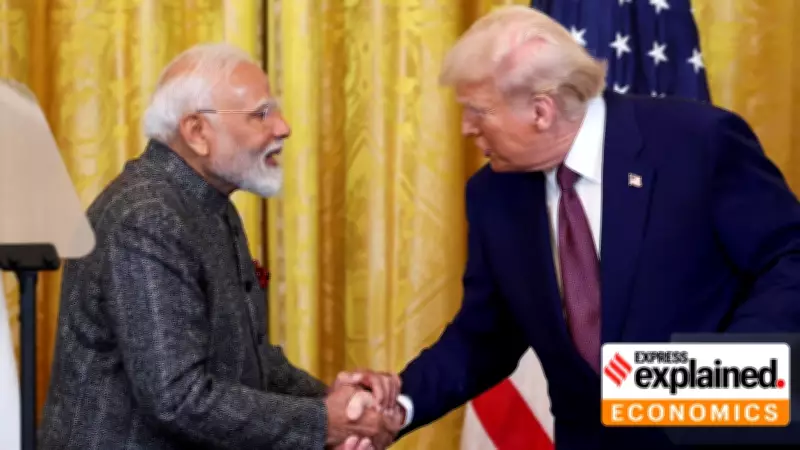
The recently announced India-United States trade agreement has brought into sharp focus a geopolitical reality that had begun to appear uncertain: India's pivotal role as a steadfast American ally and a crucial counterweight to China in the evolving architecture of international commerce. This landmark deal, which slashes US tariffs on Indian goods to 18 per cent from a previous high of 50 per cent, serves as a powerful testament to Washington's strategic calculus, reinforcing New Delhi's position at a time when global trade norms are being actively rewritten.
Analyzing the Tariff Reduction and Its Implications
On the surface, an 18 per cent headline tariff rate positions India favorably against its competitors for access to the lucrative American consumer market. However, experts caution that the true measure of this agreement's benefit to India will be found in its intricate details and fine print. The negotiation process highlighted distinct approaches: while India's earlier pact with the European Union was characterized by balanced, mutual concessions, the US under President Donald Trump has often pursued a more extractive negotiation strategy. Nevertheless, after intensive discussions over the past week, the two nations achieved a convergence on reciprocal tariffs, successfully navigating several previously contentious 'sticky issues'.
Key Commitments and Economic Context
A cornerstone of this agreement is India's commitment to significantly increase its procurement of American goods. This includes a substantial pledge to purchase over $500 billion worth of US energy products such as natural gas and coal, advanced technology products, and nuclear equipment. To appreciate the scale of this commitment, consider that India's total goods imports for the fiscal year 2025 amounted to approximately $720.24 billion. This deal arrives at a critical juncture for Indian policymakers, who have been grappling with mounting concerns over capital outflows and the resultant pressure on the Indian rupee. The agreement is widely expected to help stabilize these outflows, particularly from portfolio investors, potentially leading to a stronger rupee and a positive rally in domestic financial markets.

Strategic Positioning in the Global Trade Landscape
With this US agreement following closely on the heels of trade pacts with the United Kingdom and the European Union, India's standing on the global trade map has undergone a significant transformation. The nation now enjoys a pronounced advantage over several East Asian economies, which had been advancing rapidly through substantial Chinese investments. As large Western markets continue to impose anti-dumping duties and other restrictive measures on Chinese products, India finds itself in an opportune position to capture market share and deepen its economic integration with Western nations.
India now boasts formal trade agreements with two of the world's three largest economies—the United States and the European Union. Concurrently, there are emerging signs of a potential thaw in trade relations with China. Looking ahead, India's ability to fully capitalize on these export opportunities will be paramount, especially given its considerable dependency on Chinese imports, which exceeded $112 billion in the last financial year. In response to these developments, China has issued warnings of potential consequences if such trade agreements are perceived to be concluded at its expense, recalling past instances where China's dominance in rare earth elements adversely affected both American corporations and India's automobile sector.
This comprehensive trade deal not only addresses immediate economic concerns but also strategically positions India as a central player in the West's efforts to recalibrate global trade dynamics away from Chinese dominance, opening new avenues for growth and deeper geopolitical collaboration.