

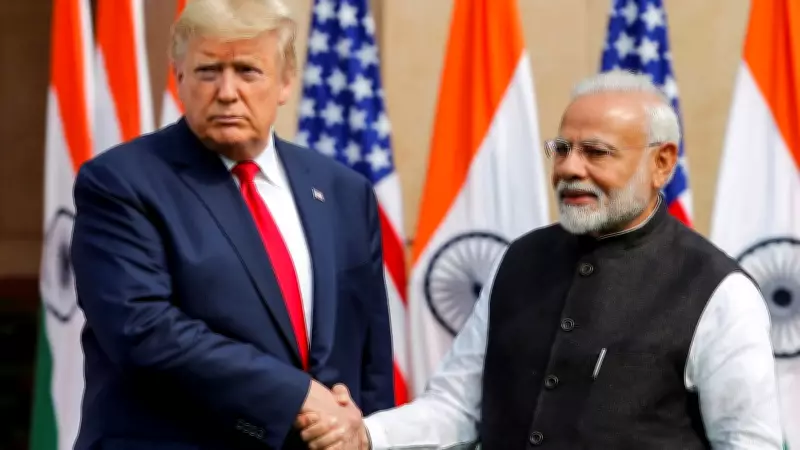
Historic Trade Breakthrough: India and US Agree to Slash Tariffs from 50% to 18%
In a significant diplomatic and economic development, India and the United States have finalized a historic trade deal that will see the US reduce its tariffs on Indian goods from a staggering 50% down to 18%. This announcement, made on Monday, effectively ends nearly eleven months of strained bilateral relations that had plunged to their lowest point in over two decades.
Trump-Modi Conversation Paves the Way for Agreement
The breakthrough came shortly after new US Ambassador to India, Sergio Gor, revealed that President Donald Trump had spoken with Prime Minister Narendra Modi. Ambassador Gor's arrival in New Delhi last month had already signaled a thaw in what had been a frosty period in India-US relations.
Until this agreement, India faced the harshest tariff rates imposed by the United States for two publicly stated reasons:

- A 25% penalty for purchasing Russian oil
- An additional 25% as reciprocal tariffs
These high rates had significantly disadvantaged Indian exports against regional and global competitors in the lucrative US market.
Protracted Negotiations and Diplomatic Challenges
The negotiations had been ongoing since April, characterized by a see-saw dynamic that reflected the complex nature of the discussions. The trade deal's progress had been clouded by President Trump's claim that he brokered the ceasefire between India and Pakistan after their military confrontation in May last year—a claim that India firmly rejected, including Prime Minister Modi during a phone call with Trump in June.
This diplomatic friction sent bilateral ties into a tailspin, with the trade agreement becoming the first casualty of the deteriorating relationship.
The Announcement Sequence
The first indication of progress came when Ambassador Gor posted on social media platform X at 9:16 PM IST: "President Trump just spoke with Prime Minister Modi. STAY TUNED..."
Approximately an hour later, at 10:28 PM IST (11:58 AM in Washington DC), President Trump announced on Truth Social: "It was an honor to speak with Prime Minister Modi, of India, this morning. He is one of my greatest friends and, a Powerful and Respected Leader of his Country."
Trump elaborated on their conversation, stating they discussed trade matters and efforts to end the war between Russia and Ukraine. He noted that Prime Minister Modi agreed to stop buying Russian oil and instead increase purchases from the United States and potentially Venezuela.
Key Elements of the Trade Agreement
President Trump outlined the specifics of the trade deal in his announcement:
- Tariff Reduction: The United States will lower its reciprocal tariff from 25% to 18%, effective immediately
- Reciprocal Concessions: India will move forward to reduce its tariffs and non-tariff barriers against the United States to zero
- Purchase Commitments: Prime Minister Modi committed to 'BUY AMERICAN' at a much higher level, including over $500 billion worth of US energy, technology, agricultural products, coal, and other goods
A US embassy spokesperson confirmed that the 25% tariff penalty for buying Russian oil has been dropped as part of this agreement.
Indian Response and Diplomatic Nuances
Prime Minister Narendra Modi responded on X at 11:02 PM IST: "Wonderful to speak with my dear friend President Trump today. Delighted that Made in India products will now have a reduced tariff of 18%. Big thanks to President Trump on behalf of the 1.4 billion people of India for this wonderful announcement."
Modi emphasized that when two large economies and the world's largest democracies work together, it benefits their people and unlocks immense opportunities for mutually beneficial cooperation. He also acknowledged Trump's leadership as "vital for global peace, stability, and prosperity" and stated that "India fully supports his efforts for peace."

While Modi confirmed the 18% reduced tariff, he did not publicly reference the concessions on oil purchases. However, officials noted that his acknowledgment of Trump's peace efforts represents the closest India has come to publicly recognizing Washington's role in the ceasefire—a point Trump has reiterated more than sixty times since May last year.
Broader Context and Implications
This announcement comes days after talks on the India-EU trade deal concluded last week, positioning India favorably in multiple major trade negotiations simultaneously. The deal also reaffirms India's role as a key US ally and counterbalance to China in the region.
Records indicate an unmistakable downward trend in Indian purchases of Russian oil due to sanctions, market constraints, and political considerations, though Modi did not specifically address Trump's claim about stopping Russian oil purchases or buying from Venezuela.
Diplomatic Timing and Next Steps
The announcement coincided with External Affairs Minister S. Jaishankar's three-day visit to the United States to attend a Washington-led ministerial meeting on critical minerals supply chains. Jaishankar's visit provides an opportunity for President Trump to officially endorse the deal, which can then proceed through legal vetting before implementation.
During his visit, Jaishankar will hold talks with US Secretary of State Marco Rubio and other senior Trump administration officials. The ministerial meeting will focus on supply chain resilience, clean energy transitions, and strategic cooperation in critical minerals.
Positive Reactions from Both Sides
Ambassador Gor expressed enthusiasm on social media: "As I have said many times, President Trump genuinely considers Prime Minister Modi a great friend! Thrilled by the news of the trade deal this evening. The relationship between the United States and India has LIMITLESS POTENTIAL!"
Union Home Minister Amit Shah called it a "big day for India-US relations" and congratulated both leaders for this historic deal that will elevate strategic partnership and benefit both nations.
This agreement marks a significant turnaround in India-US relations, potentially setting the stage for enhanced economic cooperation and strategic alignment between the world's two largest democracies.





