

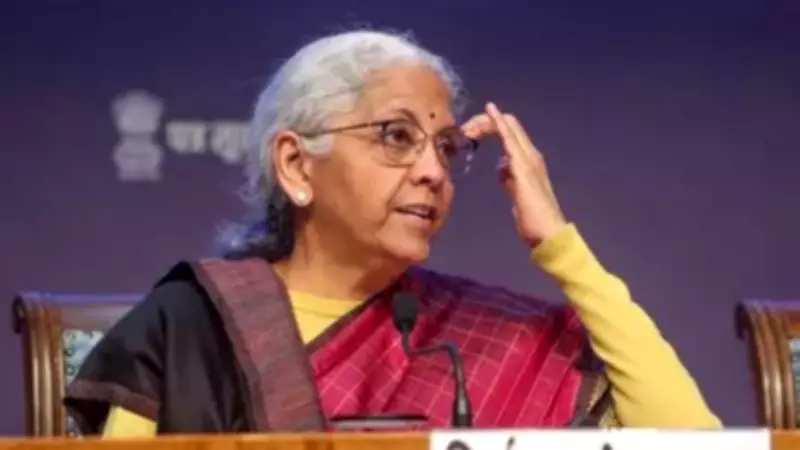
In a significant development for international trade relations, Union Finance Minister Nirmala Sitharaman confirmed on Tuesday that India and the United States have finalized a trade agreement featuring substantial tariff reductions. The announcement marks a pivotal moment in bilateral economic cooperation between the world's two largest democracies.
Historic Tariff Reduction Confirmed
Finance Minister Sitharaman emphasized that while the specific details of the agreement require further elaboration and implementation, the core achievement represents a meaningful reduction in trade barriers. "It's very good news. So it's a reduction in tariff. But the details will have to be announced and worked out. But at the moment, it is a reduction in the tariff," Sitharaman stated during her announcement.
She further clarified the numerical impact, noting, "It's come down to 18, which is very good news. So it's reduction in tariff." This confirmation follows extensive negotiations between the two economic powerhouses and signals a new chapter in their commercial relationship.

Trump's Comprehensive Announcement
The finance minister's statement came just one day after former US President Donald Trump made a comprehensive announcement regarding the finalized trade deal through his Truth Social platform. In his characteristically direct style, Trump revealed multiple dimensions of the agreement that extend beyond simple tariff adjustments.
"It was an Honor to speak with Prime Minister Modi, of India, this morning. He is one of my greatest friends and, a Powerful and Respected Leader of his Country," Trump began, establishing the personal rapport that facilitated the negotiations.
Key Components of the Agreement
According to Trump's detailed post, the agreement encompasses several critical elements:
- Reciprocal Tariff Reduction: The United States will lower its tariff on Indian goods from 25% to 18%, with India committing to corresponding reductions in its own tariffs and non-tariff barriers against American products.
- Energy Cooperation: India has agreed to significantly increase purchases of American energy products, including technology, agricultural goods, coal, and other commodities, potentially exceeding $500 billion in value.
- Geopolitical Alignment: The agreement includes India's commitment to cease purchasing Russian oil and instead source petroleum from the United States and potentially Venezuela, a move Trump suggested would contribute to ending the conflict in Ukraine.
- Buy American Commitment: Prime Minister Modi has committed to substantially increased procurement of American-made products across multiple sectors.
Trump concluded his announcement by emphasizing, "Our amazing relationship with India will be even stronger going forward. Prime Minister Modi and I are two people that GET THINGS DONE, something that cannot be said for most."
Modi's Enthusiastic Response
Prime Minister Narendra Modi promptly confirmed the agreement with equal enthusiasm, posting on social media, "Wonderful to speak with my dear friend President Trump today. Delighted that Made in India products will now have a reduced tariff of 18%. Big thanks to President Trump on behalf of the 1.4 billion people of India for this wonderful announcement."
Modi highlighted the broader significance of the agreement, noting, "When two large economies and the world's largest democracies work together, it benefits our people and unlocks immense opportunities for mutually beneficial cooperation." The Prime Minister also praised Trump's leadership, stating it is "vital for global peace, stability, and prosperity" and expressing India's full support for peace efforts.
Strategic Timing and Context
This landmark agreement arrives shortly after India and the European Union announced what both sides described as the 'mother of all' trade deals. While the European Union collectively represents India's largest trading partner as an economic bloc, the United States maintains its position as India's single largest bilateral trading partner.

The deal also addresses complex energy geopolitics. On Saturday, Trump indicated that India would begin purchasing crude oil from Venezuela, substituting part of its Russian oil imports. He further suggested this move would replace Iranian supplies, though India had already ceased importing Iranian crude in 2019 following US sanctions related to Tehran's nuclear program.
Economic Implications and Future Prospects
The India-US trade agreement represents more than just tariff adjustments—it signifies a strategic realignment of economic priorities between two global powers. The commitment to reciprocal barrier reductions creates a framework for enhanced market access in both directions, potentially boosting exports across multiple sectors including technology, agriculture, manufacturing, and energy.
For Indian exporters, the reduction from 25% to 18% tariffs on goods entering the American market could significantly improve competitiveness and market penetration. Simultaneously, American companies stand to benefit from reduced barriers in one of the world's fastest-growing major economies.
The energy cooperation component, particularly the shift away from Russian oil toward American and potentially Venezuelan sources, carries significant geopolitical weight beyond pure economic considerations. This aspect of the agreement aligns with broader Western efforts to isolate Russia economically while strengthening alternative energy supply chains.
As Finance Minister Sitharaman indicated, the specific implementation details require further elaboration. However, the foundational agreement establishes a clear trajectory toward deeper economic integration between India and the United States, potentially setting new standards for bilateral trade relationships in the 21st century.





