

West Asia Conflict Cripples India's Premium Basmati Rice Exports
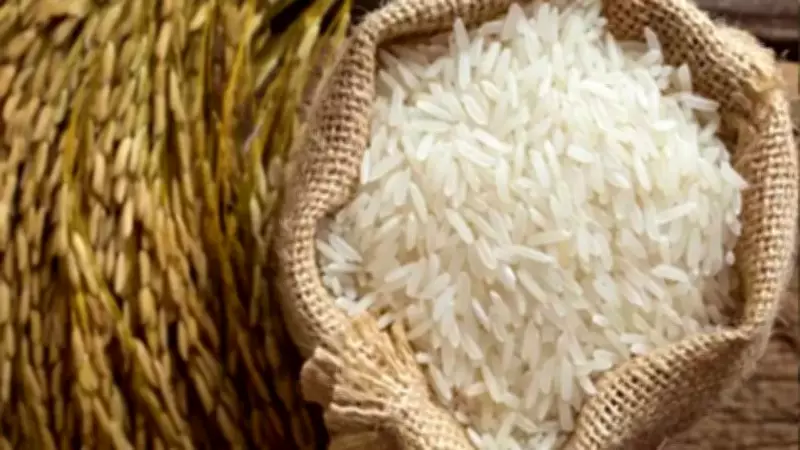
India's lucrative premium basmati rice trade has been plunged into severe crisis as the escalating conflict in West Asia disrupts critical export channels, blocks consignments at ports, and leaves payments worth thousands of crores pending. This situation is raising alarm bells for traders, farmers, and government officials who fear substantial economic repercussions if the instability persists.
Consignments Stuck, Payments Pending: Traders Sound Alarm
A Bhopal-based businessman revealed to ANI that shipments of Premium 1121 Basmati rice, which were previously exported regularly, are now immobilized at ports due to the ongoing geopolitical turmoil. He issued a stark warning that continued disruption could inflict heavy financial losses on Indian traders and severely impact farming communities across the country.
"The Premium 1121 Basmati rice, which we used to export, is currently being held at the ports," the businessman stated. "If this situation continues, Indian traders will face significant losses. Our payments, ranging from Rs 2,000 crores to Rs 25,000 crores, are pending and have not been received, causing immense difficulties for the traders. The government is currently taking its own measures, and if the situation persists, farmers will also face severe problems in the future."

Government Convenes All-Party Meeting Amid Crisis
In response to the widening crisis, the Indian government held a high-level all-party meeting on Wednesday to assess the volatile situation in West Asia. The meeting was chaired by Defence Minister Rajnath Singh and saw participation from senior opposition leaders alongside key Union ministers.
Notable attendees included Union Home Minister Amit Shah, Parliamentary Affairs Minister Kiren Rijiju, Finance Minister Nirmala Sitharaman, External Affairs Minister S Jaishankar, Petroleum and Natural Gas Minister Hardeep Puri, and Foreign Secretary Vikram Misri. This gathering underscores the government's recognition of the conflict's potential to disrupt multiple sectors of the Indian economy.
Ripple Effects Across Workforce and Multiple Industries
The conflict's impact is cascading through India's workforce engaged in trade and logistics. Traders, businessmen, contractors, and factory laborers are all experiencing disruptions as transportation routes become unreliable and payment systems slow down amid the rising tensions in West Asia.
According to a recent Crisil Ratings report, prolonged instability in the region could adversely affect several Indian sectors with significant exposure to West Asian markets. These vulnerable industries include:
- Basmati rice exports
- Fertilizer production and trade
- Diamond polishing operations
- Travel operators and airlines
Energy Dependence and Strait of Hormuz Vulnerability
The Crisil report issued further cautions, highlighting that industries dependent on imported liquefied natural gas (LNG), such as ceramics and fertilizers, may face operational challenges in the near term and will require close monitoring.
It also warned of potential pressure on crude-linked sectors if elevated energy prices persist. These sectors include downstream oil refiners, tire manufacturers, paint producers, specialty chemical companies, flexible packaging firms, and synthetic textile makers.
India's energy vulnerability is particularly acute: the nation imports approximately 85% of its crude oil requirements and half of its LNG needs. Crucially, nearly 40–50% of crude shipments and 50–60% of LNG shipments pass through the strategically vital Strait of Hormuz.
The report added that most shipping vessels have ceased using this route since March 1, 2026, citing heightened security risks. A prolonged disruption, it warned, could tighten global crude and LNG supplies, inevitably pushing prices higher and exacerbating economic strain.
Geopolitical Tensions Remain Elevated Despite Diplomatic Claims
Meanwhile, geopolitical tensions in West Asia continue to simmer at dangerous levels. Even as former US President Donald Trump has claimed that negotiations with Iran are underway and the conflict may soon de-escalate, military preparations suggest otherwise.

The Pentagon is expected to deploy troops from the 82nd Airborne Division to the Middle East as the war enters its fourth week, indicating that a swift resolution remains uncertain. This military mobilization underscores the complex and volatile nature of the crisis that is now directly impacting India's agricultural exports and broader economic interests.





