

India's Strategic Customs Revenue Slowdown: A Calculated Move for Global Trade Competitiveness
The Union Budget for fiscal year 2027 (FY27) has projected a moderated growth rate of 5% in customs duty revenue collection, amounting to ₹2.71 trillion. This represents a significant deceleration from the 11% growth estimated for FY26, a deliberate strategy aimed at enhancing India's trade competitiveness and fostering industrial resilience.
Driving Factors Behind the Revenue Moderation
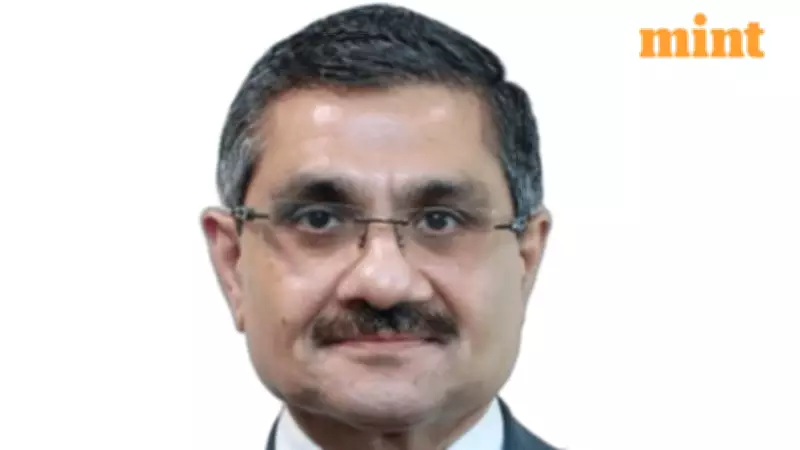
Vivek Chaturvedi, chairperson of India's Central Board of Indirect Taxes and Customs (CBIC), elucidated that this tempered growth projection stems from multiple policy initiatives designed to strengthen domestic manufacturing and secure greater market access globally.
Key elements include:

- Reduction in customs duties on raw materials and critical inputs to bolster the cost-competitiveness of Indian businesses.
- Progressive trade liberalization through Free Trade Agreements (FTAs) with partners like the EU, UK, and the US, which, while lowering tariffs, expand external market opportunities for Indian industries.
- Customs duty exemptions on imports of several capital goods to promote domestic value addition and manufacturing self-reliance.
Chaturvedi emphasized, "Any agreement with preferential market access will be lowering tariffs. That will of course have a revenue impact," while highlighting that FTAs are instrumental in helping Indian industry expand its global footprint.
Strategic Customs Reforms and Procedural Simplifications
The budget proposals introduce comprehensive reforms to streamline customs procedures, significantly reducing time and costs at ports for businesses while enhancing facilitation for individuals.
Notable measures encompass:
- A new scheme for manufacturers offering benefits akin to the Authorised Economic Operators (AEO) program, including quicker shipment clearance, lower inspection rates, expedited tax refunds, deferred duty payment, and acceptance of self-declaration of goods origin.
- Extension of the duty deferral period for AEOs from 15 to 30 days, providing greater liquidity and operational flexibility.
- Development of an integrated customs portal as a single-window system for all trade-related documentation, aimed at improving inter-agency coordination and system agility.
Chaturvedi noted that only one application will need to be filed with customs authorities, with all approvals managed internally by the government, thereby simplifying compliance.
Enhancing Trade Facilitation and Ease of Doing Business
Further reforms focus on removing bottlenecks and modernizing customs processes to support micro, small, and medium enterprises (MSMEs) and address long-standing industry concerns.
Key initiatives include:
- Elimination of the ₹10 lakh value cap for courier exports, enabling MSMEs to send larger consignments and access global markets more efficiently.
- Introduction of a document-based system for handling returns and rejects, minimizing physical interventions and expediting resolutions.
- Amendment of the Customs Act to permit "reverse logistics," allowing uncleared goods to be re-exported, thus resolving a persistent industry challenge.
- Extension of the binding period for advance rulings from three to five years, providing greater tax certainty and stability for businesses.
Passenger Facilitation and Duty Exemptions
The budget also introduces measures to ease international travel and support strategic sectors through targeted duty exemptions.
Highlights involve:

- Liberalization of Transfer of Residence rules, increasing duty-free allowances for personal belongings of residents returning from abroad.
- Removal of value limits on duty-free jewellery for eligible residents and tourists returning after a year abroad, with allowances now based solely on weight (40 gm for ladies, 20 gm for men).
- Provision for passengers to obtain certificates for personal items like jewellery or cameras upon departure, preventing disputes upon re-entry.
- Duty exemptions for capital goods in nuclear power projects, manufacturing of lithium-ion cells for energy storage, and raw materials for electric vehicles, aligning with India's sustainability and energy security goals.
Chaturvedi underscored that the moderate growth projection is a conscious decision aligned with India's long-term vision of building a competitive, resilient manufacturing sector to achieve advanced nation status by 2047. The integrated IT system for customs processes is slated for development within two years, promising a seamless, facilitative trade ecosystem supported by a robust technological backbone.





