

India Secures Transformative Trade Agreements with European Union and United States
In a significant diplomatic and economic breakthrough, India has successfully negotiated comprehensive trade deals with both the European Union and the United States. These landmark agreements represent a strategic shift in India's global positioning, moving the nation from what many perceived as a secondary outcome to a primary, first-best scenario in international trade relations.
The Mother and Father of All Deals: Understanding the Agreements
If the India-European Union trade agreement can be characterized as the mother of all deals, then the parallel India-United States trade agreement undoubtedly qualifies as the father of all deals. While specific details continue to emerge, the fundamental structure has become clear: previously complex penalty structures on Indian exports to the US, including the controversial liberation day tariffs, have been consolidated into a single, streamlined tariff rate.
This consolidated tariff stands at eighteen percent over most-favoured-nation rates, representing one of the most favorable arrangements offered to any trading partner by the United States. This development marks a substantial improvement in bilateral economic relations that had shown signs of strain in recent years.

Restoring Economic and Diplomatic Normalcy
The significance of these agreements extends far beyond mere trade statistics. They represent a restoration of business as usual in both economic and geopolitical dimensions between India and its crucial Western partners. Credit for this renewed rapprochement extends to multiple stakeholders, including Prime Minister Narendra Modi and US President Donald Trump, alongside sustained efforts from economic and diplomatic communities on both sides who worked diligently to stabilize what had become a fragile bilateral relationship.
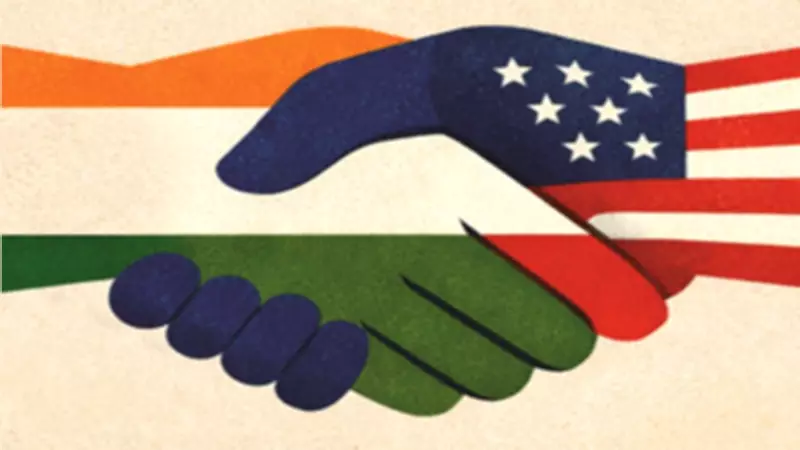
These agreements do more than just improve trade conditions; they restore decades-old diplomatic ties between India and the United States that had recently faced considerable pressure. The restoration of these relationships creates a foundation for broader strategic cooperation in the coming years.
Immediate Economic Benefits for Key Sectors
The immediate beneficiaries of these trade agreements are India's export-oriented industries, particularly:
- Garment and leather exporters who faced declining orders and renegotiated contracts with reduced margins
- Gems and jewellery manufacturers operating within the MSME ecosystem
- Sports goods producers who contribute significantly to employment generation
These sectors had been particularly vulnerable to tariff pressures, with approximately twenty-eight percent of India's textile and garment exports destined for the United States market. The US also represents the largest market for Indian leather and sports goods, making diversification challenging even with the European Union agreement in place.
Strategic Implications and Geopolitical Positioning
Beyond immediate economic benefits, these trade agreements serve broader strategic purposes:
- Restoration of bilateral normalcy following the foundation laid by the Civil Nuclear Agreement
- Strengthening of Quad partnerships involving India, the United States, Australia, and Japan
- Promotion of Indo-Pacific stability in a region central to global trade and diplomacy
The renewed economic understanding contributes to geopolitical stability at a time when global alignments remain fluid in the post-Cold War era. India now positions itself as central to any emerging economic dimensions of international relations, where partnerships will depend increasingly on both economic strength and military capability.
Technology Sector Advantages and Future Prospects
A third significant area poised to benefit is India's information technology sector. Services exports have played a crucial role in maintaining India's balance of payments equilibrium, and concerns had emerged that deteriorating Indo-US relations might adversely affect IT exports—a critical component of services trade.

The United States remains India's largest IT partner and primary destination for outward foreign direct investment. Beyond European partnerships, India's most significant technology collaborations remain centered on American companies and institutions. Given the established connection between foreign direct investment inflows and technology transfer, improved bilateral relations increase the likelihood of sustained investment flows and technological collaboration.
The China-Plus-One Opportunity and Long-Term Vision
Perhaps the most transformative potential lies in India's emerging role as a credible China-plus-one alternative in global supply chains. With strengthened trade ties to both the United States and European Union, India now possesses a unique opportunity to position itself as a reliable manufacturing and services alternative—provided it continues strategic investments in workforce skills development and domestic production capacity.
Combined with India's established strengths in software development and service delivery, the subcontinent is positioned to remain central to global technology ecosystems and international trade in both goods and services. However, viewing these agreements merely as trade deals would represent a significant oversimplification.
The new geopolitics features a distinct economic dimension increasingly described as geo-economics. These dual trade agreements enable India to participate as an important player in the unfolding geo-economic landscape of the twenty-first century, balancing relationships with multiple global powers while advancing its own economic interests and strategic positioning.
The writer is visiting professor at Shiv Nadar University. This analysis represents independent expert perspective on recent trade developments.





