

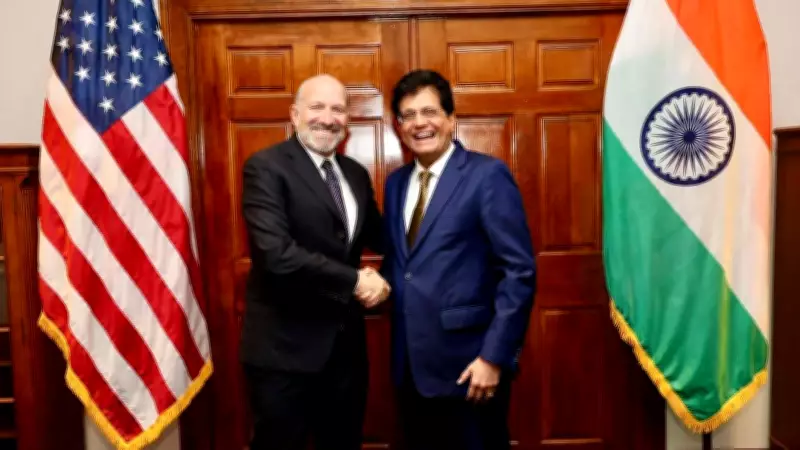
Navigating Trade Barriers: India's Export Strategy in Response to US Tariffs
The landscape of international trade witnessed significant turbulence when the United States implemented substantial tariffs on Indian goods. The imposition of 50% tariffs effective from August 27, 2025, created immediate challenges for Indian exporters, leading to noticeable declines in export figures during September and October. However, this external pressure catalyzed a strategic shift that ultimately strengthened India's trade resilience through calculated diversification efforts.
Immediate Impact and Strategic Response
September marked the first full month under the new tariff regime, revealing both vulnerabilities and opportunities within India's export ecosystem. While specific sectors experienced sharp declines in US-bound shipments, the overall export machinery demonstrated remarkable adaptability. The Commerce and Industry Ministry, under the leadership of Minister Piyush Goyal, accelerated negotiations with multiple trading partners, transforming a potential crisis into an opportunity for broader market access.
Diversification Success Stories
Gems and Jewellery Sector: This industry exemplified the diversification strategy's effectiveness. While exports to the United States plummeted by 76% in September compared to the previous year, the sector's overall performance registered only a marginal 1.5% decline. This resilience was achieved through substantial increases in shipments to alternative markets:

- United Arab Emirates: 79% increase
- Hong Kong: 11% increase
- Belgium: 8% increase
Automotive Components: Similarly, auto component exports to the US dropped by 12%, but strategic redirection to Germany, the UAE, and Thailand resulted in an overall 8% growth for the sector. This demonstrated how targeted market diversification could offset losses from traditional trading partners.
Marine Products: This sector emerged as a particular success story, recording impressive growth of 23% in September and 11% in October. The expansion was driven by substantial increases in exports to China (approximately 60% growth), Japan (37% growth), Thailand (about 70% growth), and various European Union nations.
Trade Agreement Breakthroughs
Concurrently with market diversification, India successfully concluded several significant trade agreements that had previously been stalled. New Delhi signed comprehensive trade deals with the European Union, United Kingdom, and Oman, while also finalizing negotiations with New Zealand. These agreements provided crucial alternative pathways for Indian goods, reducing dependency on any single market.
The Commerce Ministry also revived trade discussions with Canada and Israel, demonstrating a proactive approach to expanding India's trade network. While political considerations had previously disrupted talks with Canada, and negotiations with Israel had stalled in 2022 over perceived limited benefits, both dialogues have now regained momentum, with India exploring a preferential trade agreement with Israel.
Sectoral Challenges and Uneven Impact
Despite overall positive trends, certain labor-intensive, low-margin sectors faced persistent challenges in diversifying their export destinations. Products including cotton garments, sports goods, carpets, and leather footwear continued to struggle against stiff competition from China and ASEAN nations.
Sports goods exports, with approximately 40% traditionally destined for the US market, experienced a 6% overall decline in October as alternative markets proved difficult to establish. The cotton garment sector, competing directly with Vietnam and Bangladesh, saw a 25% decline in US exports, and despite increased shipments to the UAE, Spain, Italy, and Saudi Arabia, overall category exports slipped by 6% in September. Leather footwear similarly registered a 10% overall decline following reduced US demand.
These sectors face particular vulnerability due to working capital constraints and limited capacity to establish production units abroad, making them more susceptible to trade-related disruptions.

Long-Term Outlook and Recent Developments
The State Bank of India's Ecowrap report, released in November, provided encouraging analysis of India's trade resilience. The report noted that India's merchandise exports between April and September registered a 2.9% increase, with cumulative exports to the USA growing by 13% during the same period, despite September showing a 12% year-on-year decline specifically for US-bound shipments.
Most significantly, the trade landscape transformed with the recent India-US trade agreement reached on Monday, which reduced tariffs from 50% to 18%. This development, while welcome, arrives after Indian exporters had already demonstrated their capacity to navigate challenging trade conditions through strategic diversification.
The November export figures further validated this adaptive approach, showing a 19% overall increase in exports, with shipments to the United States specifically jumping by 22%, driven largely by products not subject to reciprocal tariffs.
This episode in India's trade history illustrates how external pressures can catalyze strategic realignment, ultimately strengthening the country's position in global markets through diversified partnerships and resilient export strategies.





