

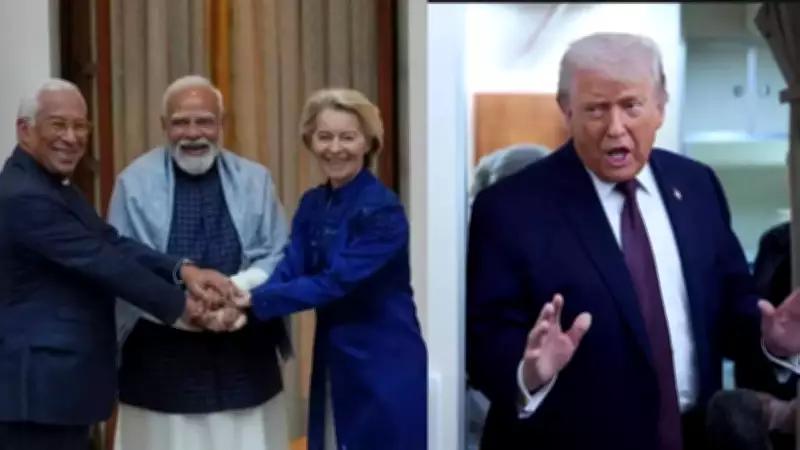
NEW DELHI: India's protracted negotiations with the United Kingdom and the European Union for Free Trade Agreements (FTAs), which had been ongoing for years, received an unexpected boost in February last year. This surge followed Prime Minister Narendra Modi and then-US President Donald Trump's announcement to initiate talks for a bilateral trade agreement between India and the United States.
A Shift in Trade Dynamics
The pattern of negotiations has since repeated with a notable variation. Currently, the impending trade agreement with the European Union appears to have acted as a significant catalyst, compelling the United States to expedite and conclude its long-pending trade negotiations with India.
The Rise of Bilateral Deals
With the World Trade Organization (WTO) in disarray and the restoration of a multilateral trade order not visible on the horizon, bilateral trade deals have become the predominant focus in global commerce. This shift underscores a strategic realignment in how nations are pursuing economic partnerships.

Strong Foundations for India-US Trade Ties
There are compelling reasons why India and the United States should cultivate robust trade relations. Both nations possess distinct comparative advantages and exhibit complementarities that fueled optimism for India to be the first trade deal under Trump's second term. However, the trajectory of negotiations encountered unexpected obstacles unrelated to trade itself.
India's refusal to engage with Trump's assertions regarding Operation Sindoor, coupled with domestic pressures on the US administration to adopt a firm stance against Moscow, led to the imposition of a 25% secondary tariff on India's purchases of Russian crude oil. These geopolitical factors temporarily derailed the prospects of an early agreement.
Persistent Engagement Despite Challenges
Despite these setbacks, the trade deal was never entirely off the table. Even the typically tough-talking American negotiators remained engaged, and India responded with vigorous diplomacy. India allocated substantial resources to secure a trade deal with the US, recognizing its significant exposure to the American market.
While Prime Minister Modi and President Trump maintained communication through phone calls, Commerce and Industry Minister Piyush Goyal and External Affairs Minister S. Jaishankar actively engaged with their counterparts in Washington. Officials from both the commerce and external affairs ministries, along with the Indian embassy in Washington, sustained the dialogue through various ups and downs.
Normalization of Trade Relations
Insiders familiar with the bilateral talks have highlighted that the arrival of Sergio Gor played a pivotal role in "normalizing" trade ties, which had appeared considerably strained just a few months prior. This diplomatic intervention helped bridge gaps and foster a more conducive environment for negotiations.
Expanding India's Trade Horizon
The prolonged negotiations with the United States also prompted India to aggressively pursue trade agreements with other partners that were previously not high on the priority list. Nations and blocs such as New Zealand, Israel, and Mercosur suddenly entered the picture as potential FTA partners.
Additionally, the trade dialogues encompassed a wide array of sectors, including several agricultural products, automobiles, and wine and spirits, reflecting the complex give-and-take inherent in such negotiations.
A Year of Intensive Negotiations
Indian trade negotiators have spent the last twelve months shuttling between meetings with multiple trading partners, adeptly juggling diverse geographies and commodity interests. This frenetic pace underscores India's strategic push to secure advantageous trade pacts across the globe.
Key Breakthroughs and Announcements
While India and the United Kingdom finalized their trade deal in early May, the actions of the US President influenced the bureaucracy in Brussels to adopt a more flexible approach in its talks with India. This flexibility culminated in the announcement of the India-EU trade deal on January 27, following negotiations that had dragged on for an astonishing eighteen years.

The Expanding Scope of Trade Agreements
The current rush for comprehensive trade agreements, covering goods, services, and emerging areas such as intellectual property regimes, support for small businesses, and labor and sustainability standards, has significantly altered India's trade profile.
As a result, over two-thirds of India's exports are now covered by major Free Trade Agreements, with nearly half of its imports also falling within the ambit of these pivotal trade pacts. This marks a transformative shift in how India engages with the global economy, leveraging bilateral deals to secure market access and foster economic growth.





