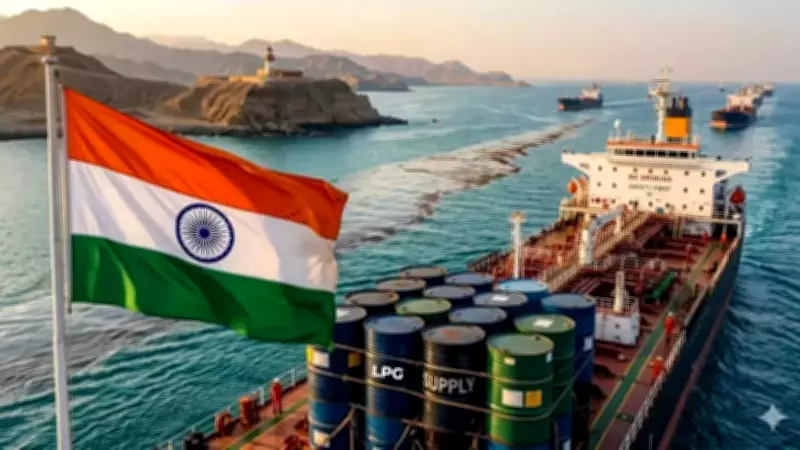
India's LPG Supply Shows Signs of Stabilization Amid Global Tensions
India's pressing liquefied petroleum gas (LPG) shortage is beginning to ease, thanks to the arrival of additional tankers and a ramp-up in domestic production. According to recent ship-tracking data, two more Indian-flagged vessels, Jag Vasant and Pine Gas, are currently making their way through the Strait of Hormuz. These very large gas carriers are following a route that stays close to the Iranian coastline, a path previously used by ships cleared by Iran for safe passage.
Navigating a Critical Chokepoint
The Strait of Hormuz, a vital maritime corridor connecting Persian Gulf energy producers to global markets, has seen restricted access since late February due to US and Israeli strikes. In response, Iran has imposed significant limitations on traffic through a mix of attacks and warnings. Only a select group of vessels, including those from Iran, China, and India—which has negotiated safe passage—have managed to transit this crucial waterway.
Instead of broadcasting specific destinations, both Jag Vasant and Pine Gas are signaling their Indian identity via transponders, a safety measure adopted by other ships on this route. They are likely headed for India, which is actively working to secure LPG supplies essential for household cooking amid ongoing disruptions.

Strategic Movements and Supply Impact
Earlier this month, two other Indian-flagged LPG carriers successfully completed similar transits. Crossing the Strait of Hormuz typically takes up to 14 hours; if the current vessels proceed without issues, they are expected to enter the Gulf of Oman by Monday evening. Notably, ships that have crossed safely have adhered to a route hugging the Iranian coast, suggesting Tehran's enforcement of a traffic management system. Under normal circumstances, vessels would navigate closer to Oman, but an attempt on this conventional path earlier in the month resulted in an attack.
India's recent LPG carriers were granted safe passage after reaching an arrangement with Iran, with one tanker even escorted by the Iranian Navy, as reported by a senior officer to Bloomberg. Ship-tracking data reveals that Jag Vasant entered the Persian Gulf on February 26, loading LPG from Kuwait just before hostilities began on February 28, after which it was stranded. Pine Gas also entered on the same day, taking on a full cargo from Ruwais in the UAE.
Limited Relief and Broader Implications
The movement of these two vessels, along with the earlier pair, is anticipated to provide some respite from shortages. However, Shiv Samrat Kapur, managing director at the India arm of Sentosa Shipbrokers, cautions that the combined cargo of all four ships would only satisfy two to three days of India's consumption. "Iran is using the Strait as a tool of maritime diplomacy, forcing nations to choose between Western alignment and energy stability," he stated. "The transits have proven India's capability to maintain neutral relationships during these times of geopolitical uncertainty."
Domestic Measures to Bolster Supply
In parallel efforts, India has directed ports to prioritize LPG carriers. Last week, the Deendayal Port Authority (Kandla port) issued a notice instructing agents to give berthing precedence to LPG vessels, following a March 10 directive from the Ministry of Ports, Shipping and Waterways. This initiative aims to ensure uninterrupted LPG supply to households nationwide, complementing the strategic imports.
As global tensions persist, India's multifaceted approach—combining diplomatic negotiations, enhanced domestic production, and logistical prioritization—highlights its commitment to stabilizing essential energy supplies amidst challenging geopolitical landscapes.