India's seafood industry has demonstrated remarkable resilience, posting robust growth in exports despite facing significant tariff barriers from its largest market, the United States. Official data reveals that the value of marine product shipments surged by 16% during the first seven months of the current financial year, showcasing a strategic pivot to new global destinations.
Strong Growth in Value and Volume
According to the latest figures, India's seafood exports reached $4.87 billion between April and October 2025. This marks a substantial increase from the $4.19 billion recorded during the corresponding period in 2024. In terms of quantity, exports expanded by 12%, rising from 9.62 lakh metric tonnes to 10.73 lakh metric tonnes.
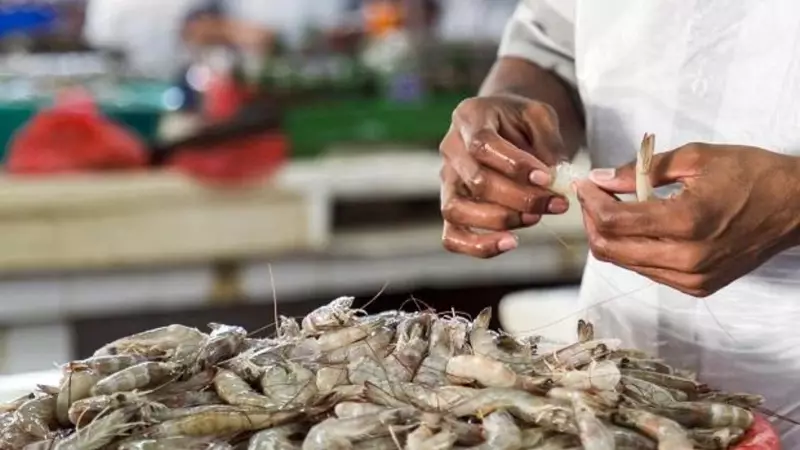
This impressive growth comes at a critical time. The United States, historically the top buyer of India's Vannamei shrimp, has imposed high import duties. A steep 58% tariff on shrimp imports from India led to a noticeable dip in trade with the US market. Exports to the US declined by 4% in value to $1,493 million and fell 11% in volume during the April-October 2025 period.

Strategic Diversification Bears Fruit
In response to the US tariff challenge, the Indian government, led by the Fisheries and Commerce Ministries, initiated a concerted drive to diversify export markets. This strategy has yielded spectacular results, with several countries dramatically increasing their imports of Indian seafood.
The most striking success story is Vietnam. Exports to Vietnam skyrocketed by 110% in value, jumping from $171.4 million in April-October 2024 to $359 million in the same period in 2025. The volume of exports to Vietnam also saw a massive 92% increase.
Other key markets also showed explosive growth:
- Belgium: Recorded a 90% increase in imports of Indian seafood.
- China: Strengthened its position as a major market, with exports growing 19% in value to $845.67 million and 11% in quantity.
- Malaysia and Germany: Also registered significant increases in imports from India.
Government's Proactive Role and Future Outlook
Union Minister for Fisheries, Animal Husbandry and Dairying, Rajiv Ranjan Singh 'Lalan', attributed this success to proactive government measures. He stated that regular reviews with stakeholders, including the Marine Products Export Development Authority (MPEDA) and exporters, were conducted to identify and penetrate alternative markets.
"India's seafood sector has shown remarkable resilience despite the unprecedented 58% US tariff on shrimp," commented a senior official from the Fisheries Ministry. The data underscores a notable eastward pivot in India's export strategy, with Southeast Asia and China becoming increasingly vital trading partners.
While the United States remains the single-largest destination for Indian seafood by value, its share is declining as other nations rapidly fill the gap. This successful diversification not only mitigates the risk from protectionist policies in one country but also opens up new, sustainable avenues for growth for India's vital fisheries sector, which supports millions of livelihoods along the country's vast coastline.