

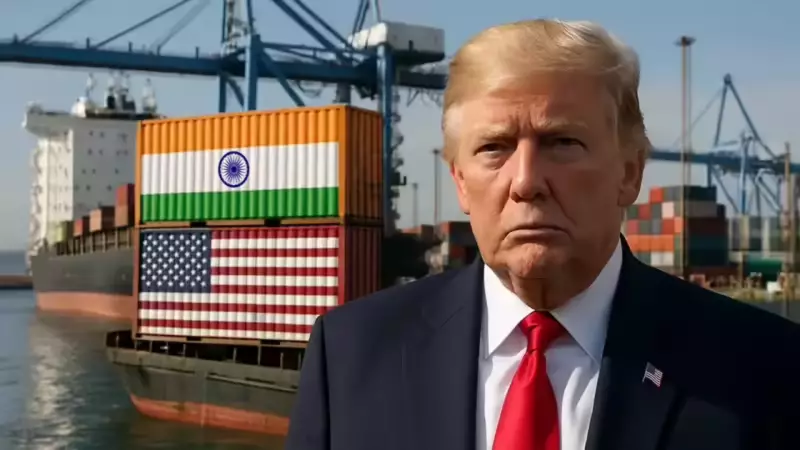
Sharp Decline in India-US Trade as Tariffs Bite
India's exports to the United States witnessed a dramatic 28.5% contraction between May and October 2025, according to recent data from the Global Trade Research Initiative (GTRI). The aggressive tariff increases implemented by Washington have severely impacted multiple key sectors, with total shipments dropping from $8.83 billion to $6.31 billion during this critical six-month period.
Escalating Tariff Structure and Sectoral Impact
The timeline of US tariff hikes reveals a rapid escalation that caught Indian exporters off guard. Duties rose from 10% in April to 25% in early August, followed by a sharp jump to 50% by late August. This sudden increase positioned Indian goods among the most heavily taxed products in the American market, surpassing China's 30% tariffs and significantly exceeding Japan's 15% rate.
GTRI's analysis categorized exports into three distinct segments, each showing significant declines:

Tariff-exempt goods, including smartphones, pharmaceuticals, and petroleum products, accounted for 40.3% of October exports but still suffered a 25.8% decline, falling from $3.42 billion in May to $2.54 billion.
Uniform global tariff items, comprising iron, steel, aluminium, copper, and auto parts, represented 7.6% of shipments and declined 23.8%, dropping from $629 million to $480 million.
The most severe impact was felt in labour-intensive sectors such as gems and jewellery, solar panels, textiles, garments, chemicals, and seafood, which faced the full 50% tariff rate. Exports in this crucial category plummeted 31.2%, wiping out nearly $1.5 billion in revenue.
Critical Export Categories Face Unprecedented Pressure
Even traditionally strong performing categories couldn't escape the tariff fallout. Smartphone exports, which represent India's largest product line to the US, experienced a staggering 36% decline from $2.29 billion in May to just $1.50 billion in October. Monthly shipments showed a consistent downward trend over the five-month period before registering a slight recovery in October.
The pharmaceutical sector demonstrated relative resilience with only a 1.6% dip, while petroleum products declined by 15.5%. Interestingly, the metals and auto parts segment saw its decline attributed more to weak US industrial demand rather than tariff discrimination, since these products faced uniform treatment across all supplying nations.
Urgent Calls for Government Intervention
Against this challenging backdrop, GTRI has strongly urged the Indian government to operationalize the Export Promotion Mission and intensify diplomatic efforts to persuade the US to remove an additional 25% Russia-related duty on Indian products. The think tank expressed concern that the Mission, announced in March and approved on November 12, "still exists only on paper."
GTRI highlighted that delays in scheme implementation and disbursals could seriously undermine the Mission's objectives. "Nearly eight months into the fiscal year, no schemes are operational, while long-running programs such as the Market Access Initiative and the Interest Equalisation Scheme have made no payments this year," the report noted.
The Export Promotion Mission, with an outlay of Rs 25,060 crore for 2025–26 to 2030–31, aims to support MSMEs, first-time exporters, and labour-intensive sectors. GTRI emphasized that removing the additional tariff would effectively halve the US burden to 25%, providing critical relief to struggling Indian exporters during this challenging period of trade relations.






