

India's Strategic Advantage in US Trade Deal Through Venezuelan Oil Processing
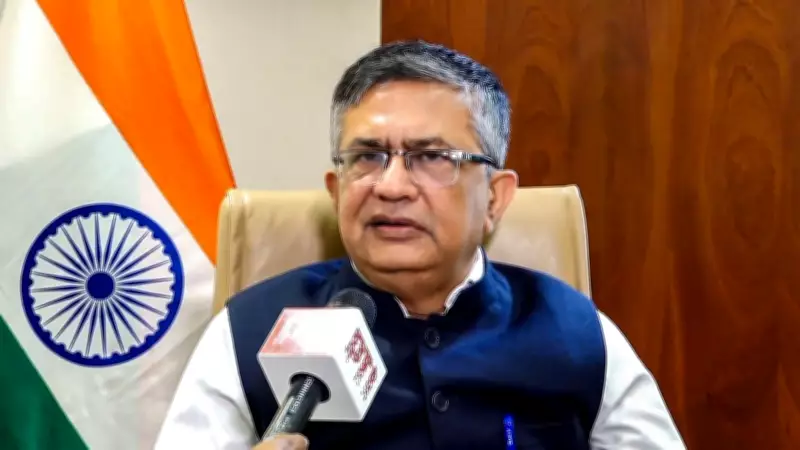
National Stock Exchange CEO and Managing Director Ashish Chauhan has provided detailed insights into why India stands to gain significant advantages through the newly announced India-United States trade agreement, particularly regarding Venezuelan oil imports. The trade deal, outlined by US President Donald Trump, includes provisions for India to purchase Venezuelan crude instead of Russian oil, creating unique opportunities for the Indian economy.
India's Refinery Capabilities: A Key Differentiator
According to Chauhan, India possesses a distinct advantage over many other nations when it comes to processing Venezuelan crude oil. Venezuelan oil is among the heaviest grades of crude in the world, often considered "un-processable" by many refineries globally. Most older and smaller refineries across various countries lack the capability to handle this specific type of crude effectively.
Chauhan explained that India's refineries have been specifically designed to process diverse crude varieties due to the country's heavy dependence on imported oil. "Indian refineries have been designed to process any crude because of our dependence on imported crude — almost 85% of our needs comes from imports," he noted during an interview with ANI on January 3.

Two-Fold Benefits for India
The NSE chief outlined two primary advantages for India in this arrangement:
- Technical Superiority: India's advanced refinery technology and infrastructure allow for efficient processing of heavy Venezuelan crude, similar to Russian crude that Indian refineries already handle successfully.
- Economic Advantage: Venezuelan crude typically comes at discounted prices because many countries cannot process it effectively. This creates favorable pricing conditions for India while showcasing the country's refining expertise on the global stage.
"Venezuelan crude will come at some discounts, because it is not going to be able to be processed by all, and India's role and technology for the refining comes into play. So, India has some specific advantages," Chauhan emphasized.
Broader Implications of the Trade Deal
Chauhan described the trade agreement as a "very nice outcome after almost a year of waiting" and praised Prime Minister Narendra Modi for securing favorable terms for India. He highlighted that the deal represents more than just tariff reductions — it sends a strong signal about the strengthening relationship between the world's largest economy and one of its fastest-growing partners.
The executive noted that the uncertainty surrounding trade relations had been a significant factor holding back Foreign Portfolio Investments in 2025. "One of the reasons FPIs have been holding back in 2025 was largely due to trade uncertainties. Because it was not only the tariffs which matter, but also the signal that it gives, saying that India and the US are decidedly together," he explained.
Win-Win Situation for Both Nations
Chauhan characterized the agreement as mutually beneficial, pointing to the substantial bilateral trade volume that reached approximately $210 billion in 2024, comprising $135 billion in goods trade and $85 billion in services trade. Beyond these numbers, he emphasized the growing importance of Global Capability Centres established by US companies in India, making a strong strategic partnership essential.
"Overall, it is a win-win deal. America will continue to have a complimentary framework in terms of technology and labor needs, while India needs to provide employment to a large number of people. These kinds of bilateral deals are putting India at par or in even better position than peers," Chauhan stated.
Key Trade Deal Provisions
The trade agreement comes months after the US imposed combined 50% tariffs on Indian imports, including a 25% reciprocal tariff and an additional 25% tariff related to India's purchase of Russian oil. Under the new arrangement, President Trump announced a reduction of these duties to 18%.

While specific details of the agreement remain undisclosed, the announcement includes commitments from India to reduce tariffs and non-tariff barriers against US products, implement 'Buy American' provisions, and commit to purchasing $500 billion worth of US agricultural, coal, energy, and technology products over time.
Economic Impact and Future Outlook
Chief Economic Advisor V Anantha Nageswaran echoed similar sentiments about the tariff reduction, noting that it removes "the biggest stumbling block" for foreign capital inflows into India. The trade deal is expected to enhance economic stability and strengthen bilateral relations amid shifting global dynamics.
Chauhan concluded with an optimistic outlook: "As the US moves decisively away from China, India will get a fillip moving forward." This strategic realignment positions India favorably in the evolving global economic landscape, with its refinery capabilities providing a tangible competitive advantage in the energy sector.





