

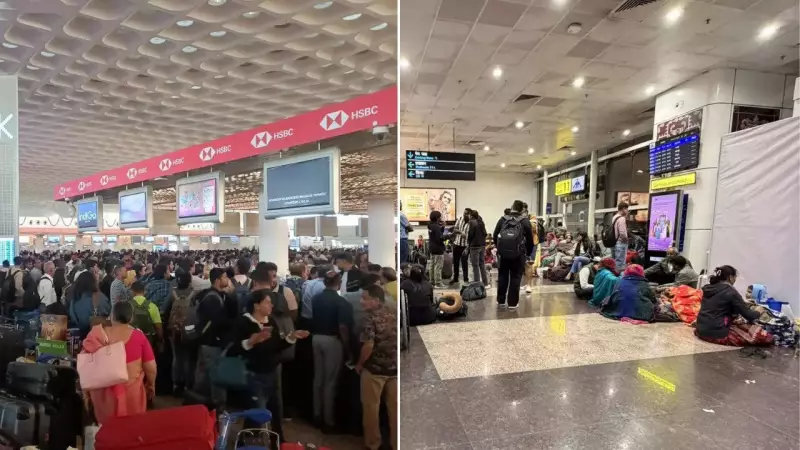
India's aviation sector is reeling under a severe operational crisis as the country's largest carrier, IndiGo, entered its fourth consecutive day of massive disruptions on Friday. Airports across the nation descended into chaos, with thousands of passengers left stranded without basic amenities like food, water, or clear information, while piles of unattended luggage grew.
Scale of the Disruption: Cancellations and Airport Chaos
The crisis peaked on Thursday when IndiGo cancelled a staggering over 550 domestic and international flights, a number far exceeding its typical daily cancellation rate of 170–200. Major airports in Mumbai, Bengaluru, Delhi, Hyderabad, Pune, Kolkata, Chennai, and Goa bore the brunt of the cancellations.
According to PTI data, airport-wise cancellations included 118 in Mumbai, 100 in Bengaluru, 75 in Hyderabad, 35 in Kolkata, 26 in Chennai, and 11 in Goa. The ripple effect of these cancellations created scenes of utter pandemonium. Frustrated passengers took to social media platform X, sharing images of people sleeping on luggage, overflowing check-in areas, and endless queues.

One passenger from Bengaluru airport described a four-hour ordeal, noting that some had been stranded for over 13 hours. "Every single Indigo flight has been delayed significantly and then cancelled," the user wrote. Another passenger reported a direct quote from an airline staff member: "The plane is ready, but we don't have a pilot to fly it."
Root Causes: Pilot Shortage and Regulatory Changes
The Directorate General of Civil Aviation (DGCA) pinpointed the core issue, stating the disruptions stemmed from a misjudgment of manpower needs under newly implemented Flight Duty Time Limitation (FDTL) norms. These revised rules limit pilot duty hours and night landings to enhance safety.
Despite a two-year notice period for these changes, the Federation of Indian Pilots (FIP) criticized IndiGo for poor planning, alleging the airline "inexplicably adopted a hiring freeze." Data reveals the stark gap: for December, IndiGo has 2,357 captains and 2,194 first officers, a number deemed insufficient under the new regulations. Compounding the problem, the airline had increased its domestic winter schedule by 6%, widening the chasm between available pilots and scheduled flights.
In response, IndiGo has requested temporary exemptions from certain FDTL provisions for its A320 fleet until February 10, 2026. The airline assured the regulator that normalized operations would be restored by that date.
Consequences: Soaring Fares and Regulatory Scrutiny
The capacity crunch led to an immediate spike in airfares on other airlines. Tickets for routes like Delhi-Bengaluru for Friday or Saturday ranged from Rs 11,000 to an exorbitant Rs 43,145, while Mumbai-Kolkata fares touched Rs 19,000. One passenger lamented that a last-minute ticket to Bengaluru had become "pricier than a seat at a Taylor Swift concert."
The DGCA has intervened forcefully, holding emergency meetings and directing IndiGo to stabilize operations immediately and prevent fare hikes due to reduced capacity. A DGCA inspection at Delhi's Terminal 1 found passenger-handling manpower to be "inadequate," and the airline has been ordered to urgently increase staff across affected terminals.
Furthermore, the regulator has mandated IndiGo to submit a detailed roadmap on pilot hiring, training, roster restructuring, and safety assessments, with 15-day progress reports becoming compulsory.
IndiGo, which operates over 65% of India's domestic market with a fleet of more than 400 aircraft, issued a public apology on X. "We extend a heartfelt apology to all our customers and industry stakeholders who have been impacted by these events," the statement read, urging passengers to check their flight status before heading to the airport. The airline warned that more cancellations are likely in the coming days, with operations potentially stabilizing only by February after a trimmed schedule from December 8.






