

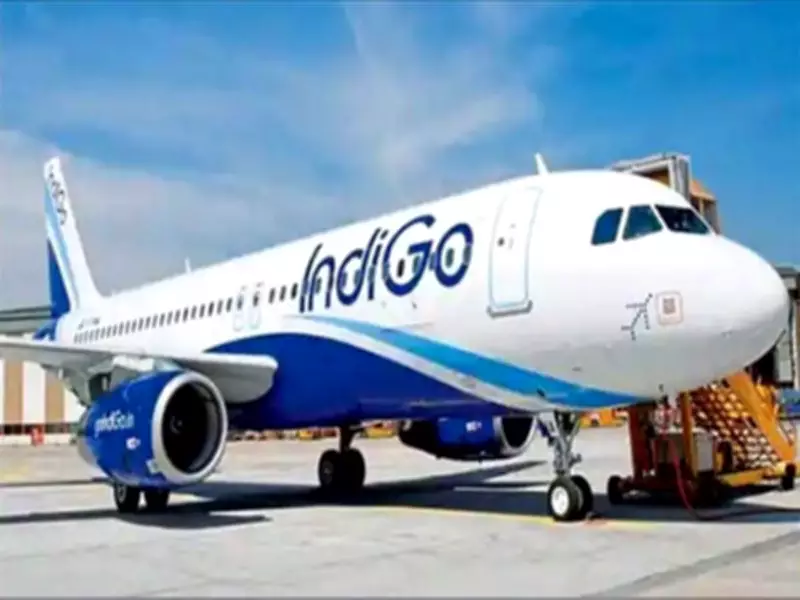
IndiGo Warns of Demand Impact from Rising Airfares Amid Middle East Conflict
The country's largest airline, IndiGo, has issued a cautionary statement regarding the potential effects of escalating costs on air travel demand. In response to the ongoing tensions in the Middle East, the airline highlighted that any further increase in operational expenses could lead to higher airfares, which may subsequently reduce passenger demand.
International Flight Schedules Affected by Regional Instability
IndiGo revealed that its international flight operations for the upcoming summer schedule will be subject to variations based on the evolving situation in the Middle East. The conflict involving the US, Israel, and Iran has already contributed to a rise in jet fuel prices and prompted airspace restrictions, disrupting airline operations in the region.
For Indian carriers, jet fuel expenses constitute approximately 40 percent of total operating costs, making them highly sensitive to fluctuations in fuel prices. An IndiGo spokesperson stated in a communication to PTI, "IndiGo's international schedule was planned at similar levels to winter, but the deployed scale will, of course, vary based on ongoing circumstances in the Middle East."

Cost Escalations and Fuel Surcharges Implemented
The spokesperson further elaborated on the financial pressures facing the aviation sector, noting, "It should be noted that there is a very material escalation in operating costs, with fuel and forex related costs expected to continue to increase very substantially, in addition to what is already an escalating cost environment." To mitigate some of these rising expenses, IndiGo has introduced fuel surcharges ranging from Rs 425 to Rs 2,300 on domestic and international flight tickets, effective from March 14.
Other major airlines, including Air India, Air India Express, and Akasa Air, have also implemented similar fuel surcharges. However, IndiGo warned that these measures, along with other necessary fare increases, could dampen consumer demand for air travel.
Summer Schedule and Operational Adjustments
IndiGo plans to commence its domestic summer schedule in April with nearly 2,000 daily flights. The number of flights planned for this summer is almost equivalent to the 2025 summer schedule but lower than the services scheduled for the ongoing winter season. This reduction follows significant operational disruptions experienced in early December last year, which led to a scaled-back winter schedule.
The Directorate General of Civil Aviation (DGCA) has approved the summer schedule for domestic flights, set to run from March 29 to October 24. Despite these plans, the airline emphasized the fluidity of the current operating environment, stating, "This is an extremely fluid operating environment which the airline will be closely monitoring and recalibrating its capacity accordingly both in domestic and international."
Additional Challenges for Airlines
Beyond elevated fuel prices, airlines are grappling with other complexities that inflate operational costs. Sudden airspace curbs in the Middle East and increased insurance premiums are adding to the financial burdens and logistical challenges for carriers. These factors collectively contribute to a heightened cost structure that may necessitate further fare adjustments.
IndiGo's warning underscores the broader implications of geopolitical tensions on the aviation industry, where cost pass-throughs to consumers could lead to a contraction in travel demand. As the situation develops, airlines will need to navigate these uncertainties while striving to maintain operational efficiency and market competitiveness.






