IndiGo Implements Fuel Surcharge as Airlines Grapple with Middle East Airspace Disruptions
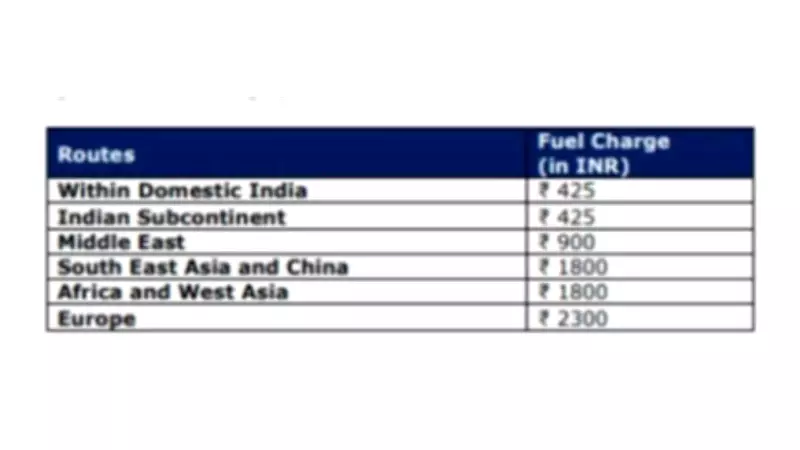
In a significant development for Indian aviation, budget carrier IndiGo has announced the introduction of fuel surcharges on both domestic and international routes, effective from March 14. This move closely follows a similar decision by Air India, which implemented its own surcharge on March 10. The coordinated action comes as airlines face mounting operational pressures due to sharply rising jet fuel prices, which have been exacerbated by escalating geopolitical tensions in the Gulf region.
Geopolitical Tensions Force Major Flight Rerouting and Cancellations
The escalating conflict between Israel and Iran has created substantial disruption to global aviation routes, compelling airlines to cancel flights, implement rerouting strategies, and take longer alternative paths to avoid sensitive airspace. This has resulted in significantly increased operational costs across the industry. According to aviation experts, the situation has become particularly challenging for routes connecting India with Europe and key Middle Eastern transit hubs.
Hari Ganapathy, co-founder of travel platform Pickyourtrail, provides crucial insight into the operational changes: "Several routes that previously passed through Iranian airspace are currently being rerouted. For example, many India-Europe routes that earlier flew over Iran are now being rerouted via Russia. This increases both travel time and operational costs for airlines."

Dubai Routes Hardest Hit with Significant Cancellations
The disruption has particularly affected routes to major transit hubs including Dubai, Doha, and Abu Dhabi. Ganapathy reveals that flights to Dubai have been among the most severely impacted, accounting for an alarming 50-65% of all flight cancellations recorded during the current week. Despite these substantial operational challenges, he notes that the fundamental travel demand remains resilient rather than collapsing.
"Travellers are becoming more flexible with routing and travel dates," Ganapathy observes. "Many are booking closer to departure and monitoring flight routes more closely as they adapt to the changing aviation landscape."
European Routes Face Capacity Crunch and Soaring Prices
Akash Rastogi, director of Argosy Travels in Gurgaon, highlights the severe impact on European routes: "Most European airlines are either fully booked for the next two to three weeks or are offering flights at significantly inflated prices. As a result, fares are likely to remain high as airlines deal with limited capacity, higher fuel costs, and longer routes."
The decision by both IndiGo and Air India to introduce fuel surcharges represents a direct response to these mounting challenges, particularly the increased aviation turbine fuel costs and operational difficulties caused by airspace restrictions across parts of West Asia.
Tourism Industry Warns of Prolonged Airfare Elevation
According to Ravi Gosain, president of the Indian Association of Tour Operators, the conflict has created substantial uncertainty for international travellers, especially those planning routes through the Middle East. Travel companies are now dedicating considerable resources to rerouting passengers and adjusting itineraries wherever flights face disruption or airspace restrictions are imposed.
Rajiv Mehra, general secretary of the Federation of Associations in Indian Tourism & Hospitality, emphasizes the particular sensitivity of leisure travel to geopolitical tensions: "Travel, particularly leisure travel, thrives when peace prevails. We are seeing cancellations for bookings to the UAE and Europe." Mehra further warns that higher fuel prices, rising insurance costs, and longer routes could maintain elevated airfare levels if the current situation persists.

Strong International Travel Demand Persists Despite Challenges
Travel industry representatives confirm that the disruption has already led to widespread cancellations and rerouting across multiple international corridors. However, Nishant Pitti, founder and chairman of EaseMyTrip, points to the resilience of the travel ecosystem: "While around 350 flights were cancelled on peak disruption days, airlines have already begun phased resumption of Gulf routes. Demand for international travel remains strong as travellers explore alternative destinations."
The aviation industry now faces a complex balancing act between managing operational challenges, maintaining passenger safety, and responding to sustained travel demand while navigating the uncertain geopolitical landscape affecting global air travel routes.