

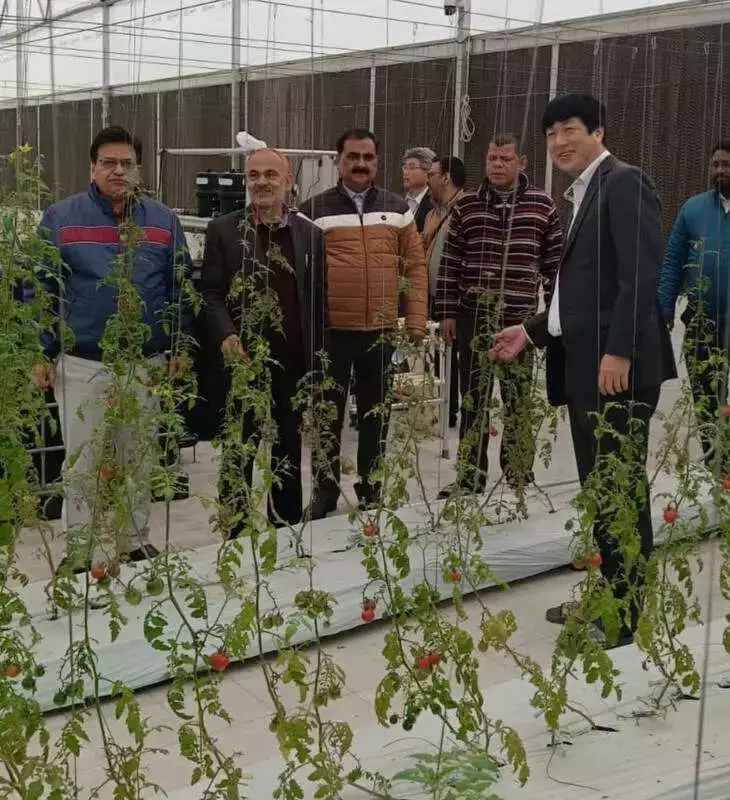
A high-level delegation from Japan visited the Chandra Shekhar Azad University of Agriculture and Technology (CSAUAT) in Kanpur on Tuesday, marking a significant step in an international agricultural partnership. The visit, conducted under a memorandum of understanding (MoU) between the Uttar Pradesh government and Japan, focused on transferring cutting-edge Japanese farming technologies to Indian fields to bolster the agriculture-based economy.
Delegation Aims to Strengthen Farm Economy with Technology
Leading the Japanese team, Dr. Ishikawa Koji, an advisor to Japan's Ministry of Agriculture, Forestry and Fisheries, clarified the mission's core objective. He emphasized that the purpose was to bring sophisticated Japanese agricultural technology to India, directly aiming to strengthen the nation's farming economy. The delegation included key members such as Sushil Yamamoto, Shogo Yamane, and Shusaku Nakajima.
Micronutrient Magic and Hydroponic Wonders on Display
The visit featured hands-on observations of advanced research trials. The delegation, alongside university scientists including director of research RK Yadav, PK Singh, Keshav Arya, and Rajiv, examined trials by Japan's Tomatec Company. These trials studied the effects of specialized micronutrients on cauliflower and radish crops.

Akinori Kozaki, a representative from Tomatec Company, made a notable claim, stating that using their Japanese micronutrient-enriched fertilizers could increase vegetable crop yields by up to 40%. This potential boost represents a major leap in productivity for local farmers.
Furthermore, the group inspected an established IMEC Japanese hydroponic technology system inside a university polyhouse. Director of Research RK Yadav explained the impressive results: using this soil-less farming technology, the university is producing approximately double the amount of sweet cherry tomatoes. This high-quality produce is currently fetching a market price of around 150 rupees per kilogram, demonstrating the commercial viability of the technology.
A Fruitful Collaboration for Future Farming
The collaborative session between Japanese experts and Indian agricultural scientists underscores a growing trend of knowledge exchange in critical sectors. The integration of Japanese precision technology, like targeted micronutrients and efficient hydroponic systems, with India's vast agricultural landscape holds promise for enhancing food security, farmer incomes, and sustainable practices. This initiative in Kanpur could serve as a model for similar technological transfers across Uttar Pradesh and other Indian states, potentially revolutionizing vegetable cultivation with significant economic benefits.






