

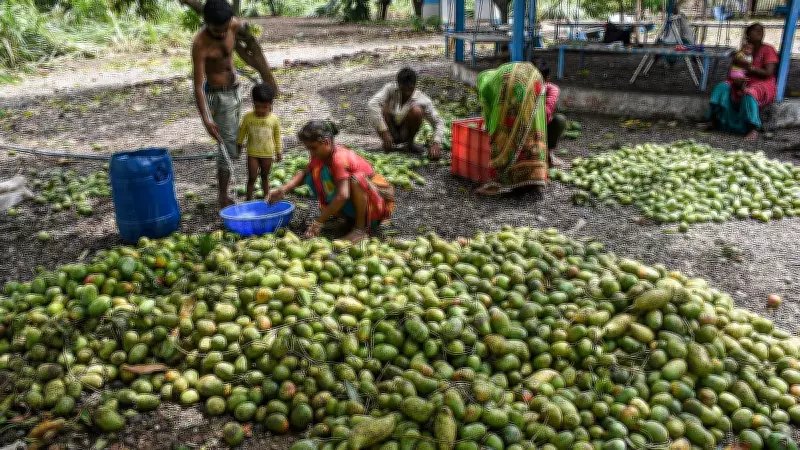
Karnataka Mango Exporters Pivot to Western Markets as Gulf Trade Faces Challenges
Mango growers in the southern Indian state of Karnataka are strategically redirecting their export focus toward the United States and United Kingdom, responding to growing uncertainty in their traditional Middle Eastern markets. This significant shift comes as exporters who have long relied on Gulf nations for revenue now confront unpredictable trade conditions that threaten their established business models.
Traditional Markets Show Signs of Instability
For years, Karnataka's premium mango varieties have found enthusiastic buyers across multiple Middle Eastern destinations including Abu Dhabi, Iran, the United Arab Emirates, Kuwait, and Iraq. These markets have consistently provided substantial export volumes and reliable income streams for Indian growers. However, recent developments have introduced concerning volatility that has prompted exporters to reconsider their geographic distribution strategy.
The uncertainty stems from multiple factors affecting the Gulf region's import patterns and economic stability. While specific details remain confidential among industry insiders, the collective apprehension has reached a point where proactive diversification has become essential for business continuity.

Strategic Expansion into Western Markets
Recognizing the need for market diversification, Karnataka's agricultural exporters are now actively pursuing opportunities in the United States and United Kingdom. These developed markets present both challenges and substantial potential rewards for Indian mango growers.
The transition involves several critical considerations:
- Compliance with stringent import regulations regarding pesticide residues and food safety standards
- Development of sophisticated cold chain logistics for extended transportation
- Understanding and catering to different consumer preferences in Western markets
- Navigating complex tariff structures and trade agreements
Industry representatives emphasize that while the Middle East will remain an important destination, reducing dependency on any single region has become a strategic imperative. The simultaneous cultivation of multiple export channels provides crucial insulation against regional economic fluctuations.
Broader Implications for Karnataka's Agricultural Economy
This market reorientation carries significant implications for Karnataka's agricultural sector, which employs thousands directly in mango cultivation and processing. Successful penetration of Western markets could potentially:
- Command premium pricing for high-quality Indian mango varieties
- Establish year-round demand patterns to complement seasonal Middle Eastern purchases
- Create opportunities for value-added products beyond fresh fruit exports
- Strengthen India's position in global agricultural trade networks
The transition period will require substantial investment in certification processes, packaging innovation, and market intelligence gathering. However, industry leaders express cautious optimism that the long-term benefits will justify the initial challenges and costs associated with entering these sophisticated markets.
As Karnataka's mango growers navigate this pivotal moment in their export strategy, their adaptability may serve as a model for other Indian agricultural sectors facing similar global market dynamics. The coming seasons will reveal whether this strategic pivot successfully creates sustainable alternatives to traditional Middle Eastern trade relationships.






