Kolkata Auto-Rickshaw Crisis: LPG Shortage Slashes Workdays, Disrupts Transport
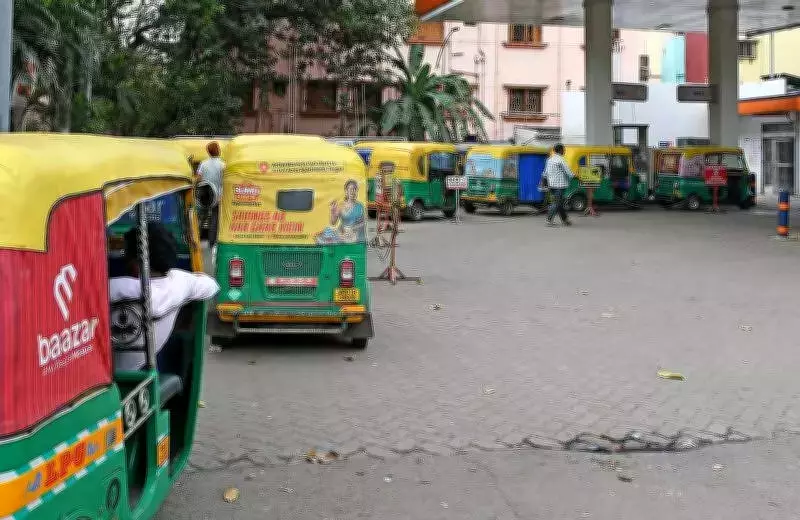
Kolkata is grappling with a severe auto-rickshaw crisis as long queues at LPG fuel stations have drastically reduced operational days for drivers. Autos that typically run six days a week are now limited to just four days, severely impacting last-mile connectivity across the city.
Fuel Access Challenges and Operational Downturn
Auto operators report that while LPG fuel is available, accessing it has become a major hurdle. Two key factors are exacerbating the situation. First, not all stations can consistently dispense LPG, with some running dry and forcing longer queues at others. Second, drivers who previously refueled in smaller quantities multiple times daily are now filling tanks to the brim, increasing dispensing time and depleting pumps faster.
This has led to a nearly 30% reduction in autos on most routes, crippling transportation for daily commuters. "It is impossible to get auto gas without standing in queue for four-five hours. Half of the day is gone just trying to refuel," said Mustafa, an operator on the Chandni–Lohapool route.

Impact on Drivers and Route Adjustments
Drivers across Kolkata are feeling the pinch. Alok Kumar, who plies the Behala-Rashbehari-Gariahat route, stated, "We can't operate more than four days a week now. At least three days are lost to refuelling." Tarun Shankar Rath, operating on the Tollygunge–Jadavpur route, noted that autos are making fewer trips, managing only eight round trips daily at best, with a full 20-litre tank lasting just two days.
To conserve fuel, operators are shortening longer routes, which typically range from 4 km to 6 km, to avoid running dry midway. This adjustment further limits service availability.
Passenger Struggles and Economic Toll
Passengers are bearing the brunt of the disruption. College student Ananya Dhar, a Belgachhia resident, shared, "Earlier, I could get an auto within minutes. Now I often have to wait 20–30 minutes during peak hours." Office-goer Subhajit Guha added, "Queues at auto stands have become longer than bus queues. It defeats the purpose of last-mile connectivity."
The economic impact on drivers is mounting. Gautam Biswas of the South Kolkata Auto Operators Welfare Union warned, "Drivers are losing half a day's income every couple of days. With rising fuel prices, this is becoming unsustainable." Sanjit Sardar, operating on the Ultadanga–Sovabazar route, echoed this, saying, "We are sacrificing earnings just to secure fuel. This cannot continue."
Vicious Cycle of Panic Refuelling
Operators describe a "vicious cycle" where fear of fuel shortages leads to panic refuelling, worsening congestion at stations. Sanjib Das, who runs on the Tollygunge–Behala Chowrasta route, explained, "We are not even waiting for the tank to fall empty any more. If we get a chance, we refill immediately. No one wants to take a risk."
The situation intensifies at night, with Das noting waits from 6 pm to midnight at stations in areas like Behala Chowrasta, New Alipore, or Parnasree. Many pumps shut by 11 pm, forcing some drivers to wait overnight for reopening at 7 am.
Supply and Demand Imbalance
A manager at a south Kolkata gas station attributed the crisis to demand surges. "Supply is steady, but demand has surged unpredictably. Panic refilling and bunching of vehicles during certain hours are creating artificial shortages," they said.
This LPG shortage highlights broader challenges in Kolkata's urban transport system, urging immediate attention to restore normalcy for both operators and commuters.