

Kolkata Dry Fruit Market Reels as Iran Conflict Chokes Supply Through Strait of Hormuz
The escalating military tensions between Israel, Iran, and the United States in the Middle East have created a severe ripple effect far beyond energy markets, now critically impacting the supply of dry fruits to Kolkata. The strategic Strait of Hormuz, a vital maritime chokepoint, has become a flashpoint, imperiling not just oil tankers but also cargo ships carrying essential food commodities. This disruption has triggered a sharp and unprecedented price surge for Iranian-sourced dry fruits in Kolkata's historic markets, with increases ranging from 40% to over 100% in recent weeks.
Steep Price Hikes Hit Popular Dry Fruits
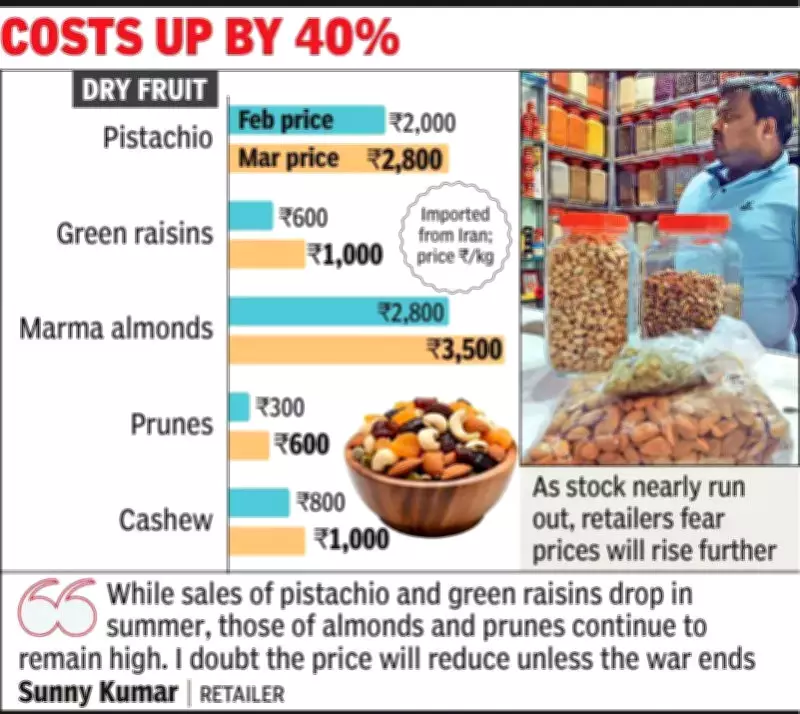
At the iconic New Market and other traditional retail hubs, the price shock is palpable. Pistachio prices have skyrocketed by 40%, jumping from approximately Rs 2,000 per kilogram to Rs 2,800 per kg. Despite marketing efforts by American companies promoting Californian varieties, Kolkata's markets predominantly source the prized Iranian pistachio, whose shipments have ground to a halt.
"The pistachio price that was hovering around Rs 2,000 a kg has increased to Rs 2,800 a kg as shipment has stopped and stocks have begun to dwindle," explained Randhir Kumar, a fourth-generation retailer at the century-old Evergreen stores.

The crisis extends beyond pistachios. Green raisins have seen a 40% price increase, rising from Rs 600 to Rs 1,000 per kg. Similarly, premium Marma almonds, previously retailing at Rs 2,800 per kg, now command prices as high as Rs 3,500 per kg. Perhaps most dramatically, the price of prunes—a key ingredient in biryanis and traditional sweets—has effectively doubled, climbing from Rs 300 per kg to between Rs 500 and Rs 600 per kg.
Supply Chain Disruption and Alternative Sourcing Challenges
All these affected dry fruits share a common origin: Iran. The outbreak of conflict and subsequent maritime disruptions in the Strait of Hormuz have choked off these vital supplies. Retailers report that shipments have stopped entirely, leading to rapidly depleting inventories.
"While sales of pistachio and green raisins drop in summer, those of almonds and prunes continue to remain high. We are trying to source Marma almonds from other places, but I doubt the price will reduce unless the war ends and trading returns in the region," stated Sunny Kumar, another fourth-generation dry fruit merchant.
The supply crunch has created a domino effect in the market. With Iranian dry fruits becoming scarce and expensive, demand for domestically grown alternatives has spiked. Notably, the price of Indian cashews has risen from Rs 800 per kg to Rs 1,000 per kg. This shift is altering local consumption patterns, with many sweet manufacturers reportedly increasing production of cashew-based sweets like cashew barfi, while reducing those reliant on pistachio.
Broader Regional Impact and Future Concerns
The conflict's impact is not confined to Iranian goods. Supplies from Afghanistan have also been severely hit. Following the halt of direct shipments via the Wagah Border two years ago due to India-Pakistan tensions, Afghan exports were being rerouted through Iranian ports. The closure of this lone Iranian route has now further choked the arrival of dry fruits from Afghanistan into the Indian market.
Furthermore, retailers express growing anxiety about other staples. While prices for dates imported from Saudi Arabia and Oman have remained stable so far, imports are already down by 25%. The timing is particularly concerning; the war erupted during Ramzan, and with Eid-ul-Fitr recently concluded, pre-stocked inventories are nearly exhausted.
Retailers universally fear that unless the conflict de-escalates and maritime trade through the Strait of Hormuz normalizes, prices across the entire dry fruit spectrum will continue their upward trajectory, placing further strain on consumers and businesses in Kolkata and beyond.






