Republic of Korea Session at PPIS 2026 Highlights Deepening Punjab-Korea Economic Partnership
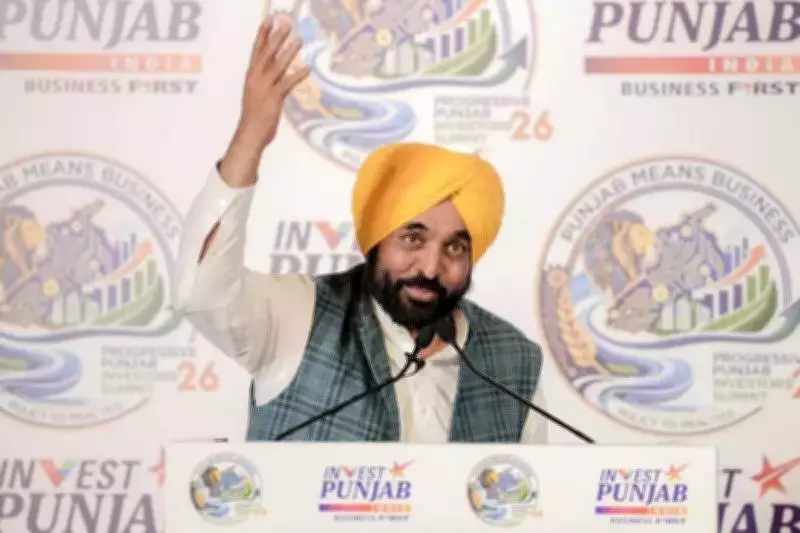
The Progressive Punjab Investors Summit (PPIS) 2026 in Chandigarh featured a significant Republic of Korea Country Session that underscored the rapidly expanding economic collaboration between Punjab and South Korea. The session brought together key stakeholders, including representatives from the Government of Punjab, the Embassy of the Republic of Korea, industry leaders, and trade promotion institutions, to explore concrete avenues for strengthening bilateral industrial cooperation.
Strengthening Bilateral Economic Relations
Eui-Jin Chon, Minister Counsellor at the Embassy of the Republic of Korea, emphasized the substantial growth in India-Korea economic ties. She noted that over 670 Korean companies are currently operating in India, with the next wave of investments expected to target high-potential sectors such as shipbuilding, semiconductors, MSME collaboration, and advanced manufacturing.
"The partnership between Korea and Punjab will continue to expand given Punjab's strong industrial base," Chon stated confidently. She also highlighted Korea's strategic interest in enhancing cooperation with India in emerging fields like defence, space, and artificial intelligence, while stressing the importance of institutionalizing people-to-people connections to further deepen bilateral relations.

Facilitating Trade and Investment Linkages
Jaewook (Jake) Lee, Executive Director of the Korea Trade-Investment Promotion Agency (KOTRA), detailed the agency's role in promoting trade and investment linkages between Korean companies and global partners. He reiterated KOTRA's keen interest in facilitating Korean investments into Punjab's priority sectors, signaling strong institutional support for future collaborations.
B K Lee, President of Sunjin India, elaborated on "Punjab's potential to emerge as a strong engine of industrial growth." He emphasized the significant opportunity to build technology-driven industrial partnerships between Korean companies and Punjab's manufacturing ecosystem. "Collaboration in IT manufacturing, food processing, and industrial trade can further strengthen economic momentum between Korea and Punjab," he noted, pointing to specific areas for mutual benefit.
Punjab's Economic Transformation and New Initiatives
Addressing the session, Punjab Minister Dr. Baljit Kaur highlighted the state's ongoing economic transformation. "While Punjab has a strong agricultural legacy, the state is actively promoting new sectors to engage the next generation in modern industry and business," she explained. Dr. Kaur emphasized that Punjab is strategically positioning itself as a gateway for industrial growth, innovation, and resilient economic development, moving beyond its traditional agricultural base.
A key outcome of the session was the signing of a Memorandum of Understanding (MoU) between DCM Group of Schools, Punjab, and TAGHIVE, Republic of Korea. This agreement aims to strengthen collaboration in education technology and digital learning solutions. The MoU was exchanged between DCM Group of Schools CEO Anirudh Gupta and TAGHIVE CEO Pankaj Aggarwal in the presence of dignitaries, marking a step forward in bilateral educational and technological exchange.
Future Prospects and Collaborative Sectors
The discussions at the PPIS 2026 session outlined a clear roadmap for future cooperation, with a focus on:
- Advanced Manufacturing: Leveraging Punjab's industrial base for high-tech production.
- Technology Collaboration: Partnerships in IT, semiconductors, and AI-driven industries.
- MSME Linkages: Enhancing support for small and medium enterprises through Korean expertise.
- Education Technology: Expanding digital learning initiatives through institutional agreements.
- Emerging Sectors: Exploring opportunities in defence, space, and food processing.
The Republic of Korea Country Session at PPIS 2026 successfully reinforced the commitment of both Punjab and Korea to foster a robust, multi-faceted economic partnership, setting the stage for increased investments and collaborative projects in the coming years.