

India's LPG Supply Resumes as Ships Cross Blocked Strait of Hormuz
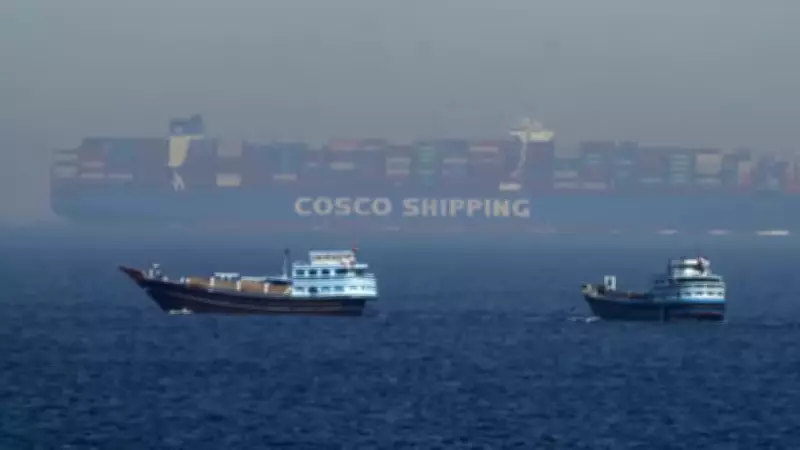
In a significant development for India's energy security, two ships carrying a total of 92,700 tonnes of LPG have successfully crossed the Strait of Hormuz, which had been blocked by Iran for a fortnight. These vessels, named Shivalik and Nandadevi, are scheduled to arrive at Indian ports in Mundra and Kandla on Monday and Tuesday, respectively.
Easing of Curbs Amid Diplomatic Efforts
The movement of these ships signals a potential easing of restrictions in the war-torn corridor, following India's intensified engagement with Iran. This included a recent conversation between Prime Minister Narendra Modi and Iranian President Masoud Pezeshkian on Thursday. Indian authorities are actively coordinating with governments in West Asia to ensure the safe passage of vessels, as confirmed by a top official on Saturday.
The LPG on these two ships can fill approximately 68 lakh cylinders, which is substantial compared to India's average daily demand of 55 lakh cylinders. Ministry of External Affairs spokesperson Randhir Jaiswal stated, "As a result of multiple contacts with all concerned, some ships destined for India have been able to cross the Strait of Hormuz... Several remain on standby in Gulf region."

Supply Shortages and Government Response
Despite this positive development, supply remains short of overall demand, leading to a spike in LPG cylinder bookings to 88.8 lakh on Friday. The government has acknowledged public concern but urged people to avoid panic booking. India imports 60% of its LPG needs, with 85-90% sourced from Gulf countries that rely on the Strait of Hormuz for shipping.
To mitigate the crisis, ports are according priority berthing to LPG vessels. Rajesh Kumar Sinha, special secretary in the shipping ministry, noted that during the last three days, six LPG carriers from other parts of the world were given priority berthing at major ports. These ports are also providing safe anchorage areas for loaded vessels bound for the Gulf but currently unable to transit.
Current Shipping Status and Safety Measures
As of Friday, there were 24 Indian-flagged vessels to the west of Hormuz. Two have crossed safely, leaving 22 Indian-flagged vessels in the Persian Gulf. Sinha detailed their composition:
- Six LPG vessels
- One liquefied natural gas carrier
- Four crude oil tankers
- One chemical products carrier
- Three container ships
- Two bulk carriers
- One dredger, one empty vessel, and three on dry docks for maintenance
He assured that Indian seafarers in the region are safe. Additionally, all major and minor ports have been directed to offer relief in charges such as anchorage, berth hire, and storage for West Asia-bound cargo. Lease extensions have been granted in certain cases to accommodate cancelled or returned export cargo.
Broader Implications and Future Coordination
India continues to emphasize the unimpeded transit of goods and energy, urging Iran to avoid targeting civilian infrastructure, including energy assets across the region. Jaiswal added, "We propose to continue to remain in touch and coordinate with all countries concerned to ensure safe and unimpeded transit for them in our effort to ensure our energy security."
This development comes amid ongoing tensions in the region, including conflicts such as the Israel-Iran war, but highlights India's proactive diplomatic and logistical efforts to secure its energy supplies. With another 10 ships carrying crude and gas on standby in the Persian Gulf, the situation remains fluid, but the recent crossings offer a glimmer of hope for stabilizing LPG availability in India.






