

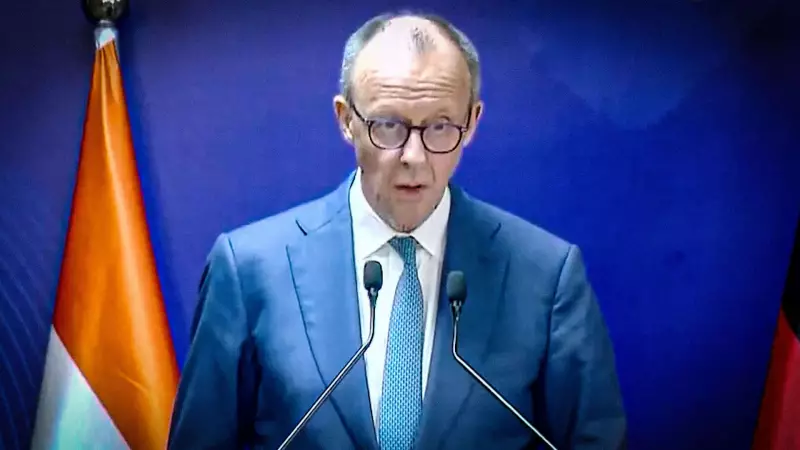
German Chancellor Friedrich Merz, standing alongside Prime Minister Narendra Modi in Gujarat, has set a bold vision for the future of India-Germany relations, describing India as a "partner of choice" in a shifting world order. The high-level meeting on January 12, 2026, underscored a mutual commitment to elevate strategic and economic cooperation to new heights.
A Strategic Partnership Forged in Shared Values
Addressing a joint press conference, Chancellor Merz extended his gratitude to PM Modi for the invitation to Gujarat, interpreting it as a significant gesture reflecting the depth of bilateral ties and personal rapport between the leaders. He pointed to Gujarat's robust economic landscape as a living testament to the shared political values and development priorities that bind the two democracies.
The Chancellor explicitly highlighted the critical need to finalise the long-pending India-European Union Free Trade Agreement (FTA). He emphasised that this pact is essential to fully realise the untapped economic potential between India and the EU bloc, a move that would create a more predictable and prosperous trade environment for businesses on both sides.

Concrete Steps: From Defence to Global Supply Chains
Beyond trade talks, the visit yielded tangible outcomes aimed at strengthening practical collaboration. A key announcement was the confirmation of a signed Memorandum of Understanding (MoU) designed to deepen cooperation in the defence industrial sector.
This agreement is poised to enhance collaboration in defence innovation, co-production, and the integration of global supply chains, marking a significant step in the strategic partnership. This move aligns with India's 'Make in India' initiative and Germany's expertise in high-end engineering, creating a synergy for defence manufacturing.
Navigating a New Global Order Together
Chancellor Merz's remarks were framed within the context of evolving global power dynamics. His characterisation of India as Germany's "partner of choice" signals a clear strategic alignment, recognising India's pivotal role on the world stage. The discussions reinforced the consensus that both nations must proactively strengthen their cooperation across multiple domains to navigate contemporary geopolitical and economic challenges effectively.
The choice of Gujarat as the venue for this diplomatic engagement was itself a powerful symbol, showcasing India's economic prowess and reform-oriented governance to a key European leader. The outcomes of this meeting set a clear roadmap for enhanced India-Germany ties, with the India-EU FTA and defence collaboration at its core, promising a more interconnected and resilient partnership for the years ahead.






